

- Pozycja w BGG
- BGG #5521
- Ocena BGG
- 7,0
Backstories: Alone Under the Ice
- 1–6 graczy
- 50–70 min
- Złożoność 1,2/5
- 2024
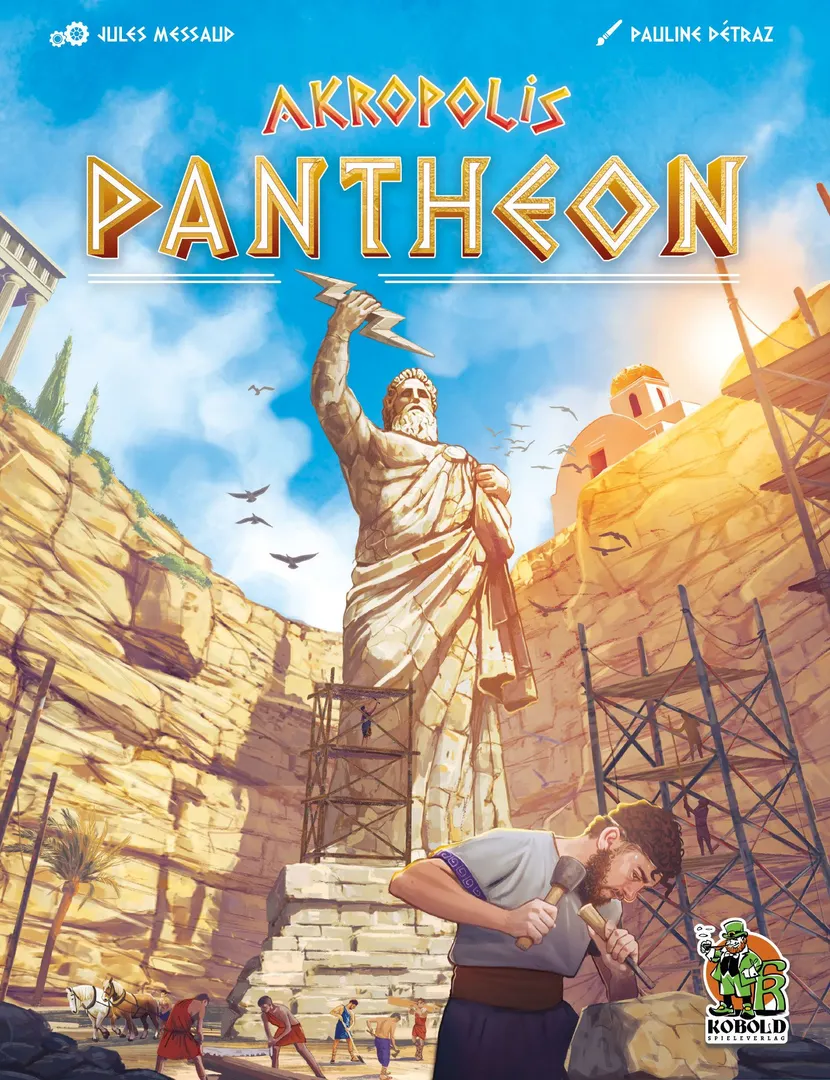
Pomoc w zasadach gry Akropolis: Pantheon
Zrozumiałe wyjaśnienia tur, efektów kart i spornych sytuacji z odnośnikami do oficjalnych źródeł i zapisaną historią pytań.
Co chcesz wiedzieć?
Odpowiedzi pochodzą z oficjalnej instrukcji, ze stroną do sprawdzenia.
Akropolis: Pantheon to dodatek do gry Akropolis wydany w 2026 roku dla 1–4 graczy, z rozgrywką trwającą 25 minut i dla osób od 8 lat. Projekt gry: Jules Messaud. Główne mechaniki: Cooperative Game.





Po angielsku
The time for rivalries is over! At the height of their glory, the once-opposing Cities now join forces to build a grand Capital together and honor the gods. Erect splendid Divine Altars dedicated to the protectors of the Capital, and let its aura shine throughout the ancient world. Game Overview The Architects’ goal is to work together to construct the Capital and achieve the highest possible score by using the best strategy. You must therefore join forces and play cooperatively. Setup Together, players choose one of the three available scenarios: Corinth, Sparta, or Athens, each offering an increasing level of difficulty. Each player receives a starting tile, while the remaining tiles form the heart of the Capital, placed in the center of the play area. Three Architectural Challenge tiles are revealed, along with their corresponding Divine Altars. Players also receive two Stone cubes and three City tiles, which they keep in hand like cards. Unlike the base game, there is no river. Turn Structure On their turn, each player may: Add a tile to their City in order to complete an Architectural Challenge and gain a Divine Altar. Contribute to the construction of the Capital by placing their tile in the center of the play area, allowing points to be scored at the end of the game. At the end of the turn, draw a tile to always have three in hand. Architectural Challenges & Divine Altars Each completed Challenge allows you to place a Divine Altar in the Capital. In this expansion, Squares function differently: for a Square to be counted at the end of the game, an Altar must have been built there in honor of Hestia, Hermes, Ares, Zeus, or Demeter, depending on the Square’s color. End of the Game The game ends when all City tiles have been played. Only the Squares in the Capital adorned with a Divine Altar are valid and scored. Personal Cities do not grant any points. The final score is compared to the chosen Scenario’s target score. Managing Stones, coordinating placements, and anticipating Challenges are essential to achieving collective victory. Akropolis Pantheon is a cooperative expansion for the game Akropolis. The base game is required to play.
Według katalogu Akropolis: Pantheon obsługuje od 1 do 4 graczy. Ten zakres odpowiada liczbie graczy podanej przez wydawcę, więc grę można przygotować dla dowolnej grupy w jego granicach. Przygotowanie, niektóre zasady i punktacja mogą jednak różnić się w zależności od liczby graczy; dokładną konfigurację sprawdź w instrukcji swojego wydania.
Podany czas rozgrywki w Akropolis: Pantheon wynosi 25 minut. To szacunek wydawcy dla pełnej partii. Rzeczywisty czas zależy od grupy, liczby graczy i znajomości zasad: pierwsze partie zwykle trwają dłużej, a doświadczone grupy kończą szybciej. Przygotowanie gry i tłumaczenie zasad nie są wliczone w ten szacunek.
Katalog podaje dla Akropolis: Pantheon wiek od 8 lat. To zalecenie wydawcy, które uwzględnia wymagania dotyczące czytania, złożoność zasad i drobne elementy, a nie tylko tematykę. Młodsi gracze często mogą dołączyć z pomocą dorosłego; sprawdź zalecenie wiekowe swojego wydania i weź pod uwagę doświadczenie grupy z grami planszowymi.
Akropolis: Pantheon ma ocenę złożoności 2,3 na 5 według graczy BoardGameGeek, co czyni ją grą raczej lekką. Ocena pokazuje, ile znajomości zasad, planowania i podejmowania decyzji wymaga typowa rozgrywka. Cięższe gry wymagają dłuższego pierwszego tłumaczenia, dlatego przed wieczorem z grami warto skorzystać z przewodnika przygotowania.
Akropolis: Pantheon należy do tych kategorii: Expansion for Base-game. Główne mechaniki to Cooperative Game. Kategorie opisują temat i świat gry, a mechaniki to, co gracze faktycznie robią w swojej turze. Każda mechanika prowadzi do strony katalogu z podobnymi grami, co pomaga znaleźć coś porównywalnego na kolejny wieczór.
Autorzy wymienieni przy Akropolis: Pantheon to: Jules Messaud. Te informacje pochodzą z opublikowanych danych gry i wskazują osoby odpowiedzialne za jej projekt, a nie ilustratorów czy wydawców. Strony autorów w MeepleRules zbierają inne tytuły tych samych twórców, co pomaga, gdy gra ci się podoba i szukasz podobnych.
W katalogu Akropolis: Pantheon figuruje jako dodatek do Akropolis. Dodatki dokładają nową zawartość, zasady lub scenariusze do gry podstawowej i zwykle nie nadają się do samodzielnej gry, więc do korzystania z niego potrzebujesz gry Akropolis. Sprawdź, czy twoje wydanie gry Akropolis jest zgodne, bo niektóre dodatki zmieniano między wydaniami.