
- Pozycja w BGG
- BGG #9915
- Ocena BGG
- 7,9
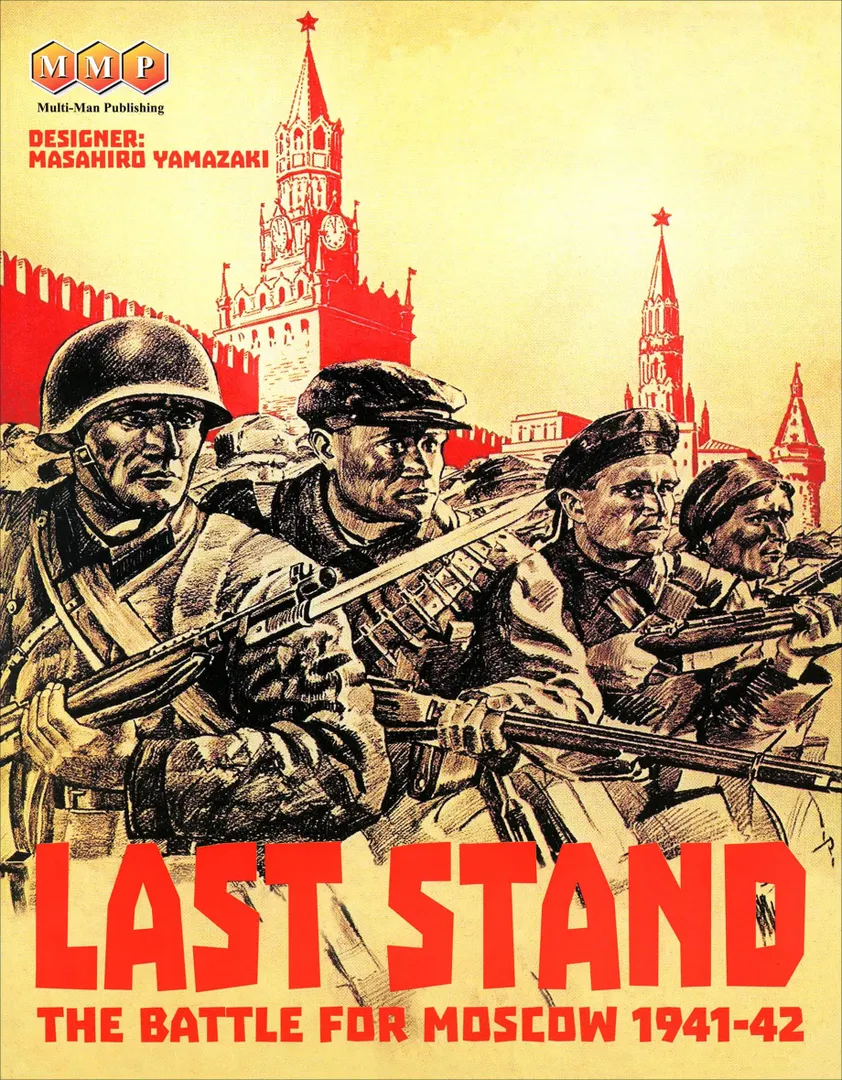
Last Stand: The Battle for Moscow 1941-42
- 1–2 graczy
- 180–600 min
- Złożoność 2,8/5
- 2008
1993
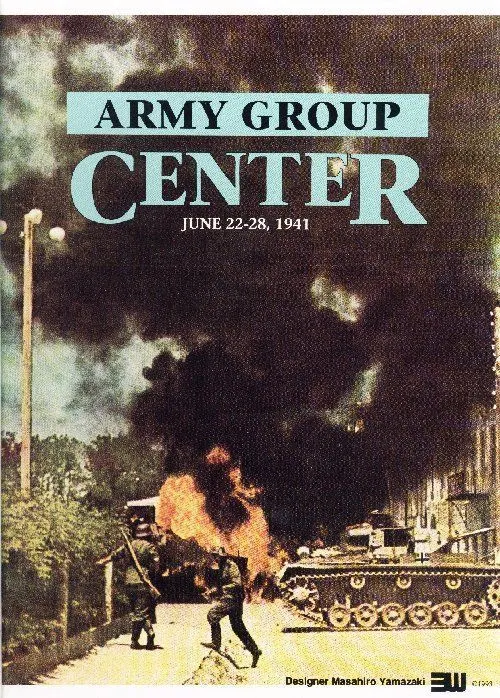
Pomoc w zasadach gry Army Group Center: June 22-28, 1941
Zrozumiałe wyjaśnienia tur, efektów kart i spornych sytuacji z odnośnikami do oficjalnych źródeł i zapisaną historią pytań.
Co chcesz wiedzieć?
Odpowiedzi pochodzą z oficjalnej instrukcji, ze stroną do sprawdzenia.
Army Group Center: June 22-28, 1941 to gra planszowa wydana w 1993 roku dla 1–2 graczy, z rozgrywką trwającą 300 minut i dla osób od 12 lat. Projekt gry: Masahiro Yamazaki. Główne mechaniki: Dice Rolling, Hexagon Grid i Simulation.



Po angielsku
Army Group Center: The Opening Blitz on Minsk, June 22-28, 1941 is an operational level game of the German Blitzkrieg Campaign of June 22, 1941 against the Soviet Union. Specifically, the game covers the attempt by German Army Group Center to encircle the Soviet Forces deployed on the front ar Belorussia, centered on the city of Minsk. The surprise attack was executed as planning by two Panzer groups, commanded by Colonel Generals Hoth and Guderian. The Soviet commander of the Western Front forces, General Pavlov, was taken completely by surprise, and, by order of the Soviet Supreme Command, dispatched his mobile forces directly into the German pincers. Most of the Soviet forces, including the mobile reserves, were thrown into disarray by the German first strike and were eliminated piecemeal. On June 28 the Germans closed their first major pocket of the war in the east. It extended from Belostok (Bialystok) to Minsk. 287,000 Soviet troops surrendered in this pocket, and in addition 2585 tanks and 1449 guns were captured. By July 3 the German forces had swept Belorussia of Soviet resistance with the single exception of the garrison at the fortress at Brest. From there they drove on to their next objectives of Smolensk and the Dnieper River, and from there towards Moscow. Army Group Center is a two player game in which one player controls the German forces, the other the Soviet. The game is presented in three separate scenarios, the first historical, the second and third hypothetical. The historical scenario is largely a one-sided affair and should be played by those wishing to glean the historical lessons of the German blitzkrieg campaign. For those wishing more balanced play, the second and third scenarios are recommended in which a hypothetical situation is postulated where the Soviets were aware of the German invasion plans and had prepared accordingly. Army Group Center was published by 3W in 1993. The Japanese edition is published by Masahiro Yamazaki with improved components; both of counters and game-map. The English edition for the revised edition is provided and may be downloaded. Game Scale: Game Turn: 12 hours Hex: 6.25 miles / 10 kilometers Units: Regiment to Division Game Inventory (3W): One 20-page Army Group Center rulebook One 22 x 34" full color mapsheet Three dual-side printed countersheets (500 1/2" counters) Four Player Aid charts One 10-sided die Solitaire Playability: High Complexity Level: Medium-High Players: 2 or more Playing Time: 5 hours Components (Six Angles edition) One magazine booklet One 22" x 34" game map Four counter sheets (528 counters) Two charts and tables
Według katalogu Army Group Center: June 22-28, 1941 obsługuje od 1 do 2 graczy. Ten zakres odpowiada liczbie graczy podanej przez wydawcę, więc grę można przygotować dla dowolnej grupy w jego granicach. Przygotowanie, niektóre zasady i punktacja mogą jednak różnić się w zależności od liczby graczy; dokładną konfigurację sprawdź w instrukcji swojego wydania.
Podany czas rozgrywki w Army Group Center: June 22-28, 1941 wynosi 300 minut. To szacunek wydawcy dla pełnej partii. Rzeczywisty czas zależy od grupy, liczby graczy i znajomości zasad: pierwsze partie zwykle trwają dłużej, a doświadczone grupy kończą szybciej. Przygotowanie gry i tłumaczenie zasad nie są wliczone w ten szacunek.
Katalog podaje dla Army Group Center: June 22-28, 1941 wiek od 12 lat. To zalecenie wydawcy, które uwzględnia wymagania dotyczące czytania, złożoność zasad i drobne elementy, a nie tylko tematykę. Młodsi gracze często mogą dołączyć z pomocą dorosłego; sprawdź zalecenie wiekowe swojego wydania i weź pod uwagę doświadczenie grupy z grami planszowymi.
Army Group Center: June 22-28, 1941 ma ocenę złożoności 3,1 na 5 według graczy BoardGameGeek, co czyni ją grą średnio złożoną. Ocena pokazuje, ile znajomości zasad, planowania i podejmowania decyzji wymaga typowa rozgrywka. Cięższe gry wymagają dłuższego pierwszego tłumaczenia, dlatego przed wieczorem z grami warto skorzystać z przewodnika przygotowania.
Army Group Center: June 22-28, 1941 należy do tych kategorii: Wargame i World War II. Główne mechaniki to Dice Rolling, Hexagon Grid i Simulation. Kategorie opisują temat i świat gry, a mechaniki to, co gracze faktycznie robią w swojej turze. Każda mechanika prowadzi do strony katalogu z podobnymi grami, co pomaga znaleźć coś porównywalnego na kolejny wieczór.
Autorzy wymienieni przy Army Group Center: June 22-28, 1941 to: Masahiro Yamazaki. Te informacje pochodzą z opublikowanych danych gry i wskazują osoby odpowiedzialne za jej projekt, a nie ilustratorów czy wydawców. Strony autorów w MeepleRules zbierają inne tytuły tych samych twórców, co pomaga, gdy gra ci się podoba i szukasz podobnych.
W katalogu Army Group Center: June 22-28, 1941 figuruje jako gra podstawowa. Można w nią grać samodzielnie, korzystając z elementów z pudełka, bez żadnego innego tytułu. Dodatki, jeśli istnieją, dokładają nową zawartość lub zasady i są wymienione w katalogu osobno, z odnośnikiem do tej gry podstawowej.