

- Pozycja w BGG
- BGG #10 123
- Ocena BGG
- 6,5
The Halls of Montezuma
- 2 graczy
- 240 min
- Złożoność 3,1/5
- 2009
2000
Pomoc w zasadach gry Austerlitz 1805: Napoleon's Greatest Victory
Zrozumiałe wyjaśnienia tur, efektów kart i spornych sytuacji z odnośnikami do oficjalnych źródeł i zapisaną historią pytań.
Co chcesz wiedzieć?
Odpowiedzi pochodzą z oficjalnej instrukcji, ze stroną do sprawdzenia.
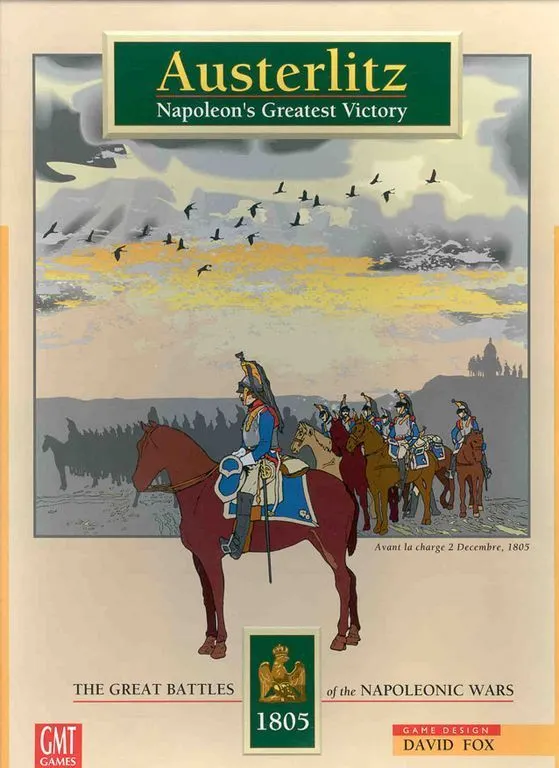
Austerlitz 1805: Napoleon's Greatest Victory to gra planszowa wydana w 2000 roku dla 1–2 graczy, z rozgrywką trwającą 240–480 minut i dla osób od 12 lat. Projekt gry: David A. Fox. Główne mechaniki: Dice Rolling, Hexagon Grid i Simulation.




Po angielsku
Before tomorrow evening, that army will be mine. So claimed Napoleon Bonaparte to his staff on the night of December 1, 1805, as he watched the Austro-Russian Allied army settle into its positions near Austerlitz for the battle that was certain to come the next morning. It was not an idle boast. Napoleon's Grande Armee mustered 75,000 men, well-led, superbly trained, and completely confident of victory. And the next day, they would win the most decisive victory of Napoleon's career. The Battle of Austerlitz was Napoleon's tactical masterpiece. Facing an Allied army 72,000 men strong, he blocked a massive Allied flanking movement aimed at his right wing, launched an attack that smashed the Allied center, and then scattered the remnants so thoroughly that by the night of December 2nd the Allied Third Coalition was in ruins. The battle contained many moments of high drama: the French right wing holding on despite 3-to-1 odds, desperately waiting for help from Davout's corps rushing to the battlefield after an epic forced march; a massive cavalry melee fought on the northern half of the field between the opposing cavalry reserves; the clash of the French and Russian Imperial Guards on the Pratzen Heights that decided the course of the battle. Austerlitz 1805 is a detailed wargame, on a tactical level, with infantry battalions, cavalry regiments, and artillery batteries, featuring... A chit-based Command system where players randomly draw command chits to determine which division or corps may activate at that moment -- activation is not automatic. Commanders must roll to activate when their chit is drawn, and missing the die-roll leads to the Command Breakdown Table -- disasters can happen. A Combat system that includes all of the detail that fans of Napoleonic tactics know and love. All of the formations are there -- line, column, skirmish -- each with their own advantages and disadvantages. Players will soon learn that proper unit interaction is crucial for victory, with artillery wearing down the enemy line, infantry creating a breakthrough, and cavalry exploiting the breakthrough with a thundering charge. Special units and rules to add a distinctive historical flavor: the Tirailleurs Po and Tirailleurs Corse, elite battalions of French skirmishers; the exotic Mamelukes of the French Imperial Guard, matched against the Russian Cossacks; the fearsome French Grand Battery; the early morning Fog that blanketed the battlefield and so bedeviled the battle's opening moves. Six scenarios -- two full-battle scenarios; three smaller one or two map scenarios covering the significant actions, plus a learning scenario providing an introduction to the game's mechanics. Game Scale: Game Turn: 20 minutes Hex: 150 yards / 137 meters Units: infantry battalions, cavalry regiments, and artillery batteries Solitaire Playability: High Complexity Level: Medium Players: 2 or more Playing Time: 4-8 hours
Według katalogu Austerlitz 1805: Napoleon's Greatest Victory obsługuje od 1 do 2 graczy. Ten zakres odpowiada liczbie graczy podanej przez wydawcę, więc grę można przygotować dla dowolnej grupy w jego granicach. Przygotowanie, niektóre zasady i punktacja mogą jednak różnić się w zależności od liczby graczy; dokładną konfigurację sprawdź w instrukcji swojego wydania.
Podany czas rozgrywki w Austerlitz 1805: Napoleon's Greatest Victory wynosi 240–480 minut. To szacunek wydawcy dla pełnej partii. Rzeczywisty czas zależy od grupy, liczby graczy i znajomości zasad: pierwsze partie zwykle trwają dłużej, a doświadczone grupy kończą szybciej. Przygotowanie gry i tłumaczenie zasad nie są wliczone w ten szacunek.
Katalog podaje dla Austerlitz 1805: Napoleon's Greatest Victory wiek od 12 lat. To zalecenie wydawcy, które uwzględnia wymagania dotyczące czytania, złożoność zasad i drobne elementy, a nie tylko tematykę. Młodsi gracze często mogą dołączyć z pomocą dorosłego; sprawdź zalecenie wiekowe swojego wydania i weź pod uwagę doświadczenie grupy z grami planszowymi.
Austerlitz 1805: Napoleon's Greatest Victory ma ocenę złożoności 3,3 na 5 według graczy BoardGameGeek, co czyni ją grą średnio złożoną. Ocena pokazuje, ile znajomości zasad, planowania i podejmowania decyzji wymaga typowa rozgrywka. Cięższe gry wymagają dłuższego pierwszego tłumaczenia, dlatego przed wieczorem z grami warto skorzystać z przewodnika przygotowania.
Austerlitz 1805: Napoleon's Greatest Victory należy do tych kategorii: Wargame i Napoleonic. Główne mechaniki to Dice Rolling, Hexagon Grid i Simulation. Kategorie opisują temat i świat gry, a mechaniki to, co gracze faktycznie robią w swojej turze. Każda mechanika prowadzi do strony katalogu z podobnymi grami, co pomaga znaleźć coś porównywalnego na kolejny wieczór.
Autorzy wymienieni przy Austerlitz 1805: Napoleon's Greatest Victory to: David A. Fox. Te informacje pochodzą z opublikowanych danych gry i wskazują osoby odpowiedzialne za jej projekt, a nie ilustratorów czy wydawców. Strony autorów w MeepleRules zbierają inne tytuły tych samych twórców, co pomaga, gdy gra ci się podoba i szukasz podobnych.
W katalogu Austerlitz 1805: Napoleon's Greatest Victory figuruje jako gra podstawowa. Można w nią grać samodzielnie, korzystając z elementów z pudełka, bez żadnego innego tytułu. Dodatki, jeśli istnieją, dokładają nową zawartość lub zasady i są wymienione w katalogu osobno, z odnośnikiem do tej gry podstawowej.