
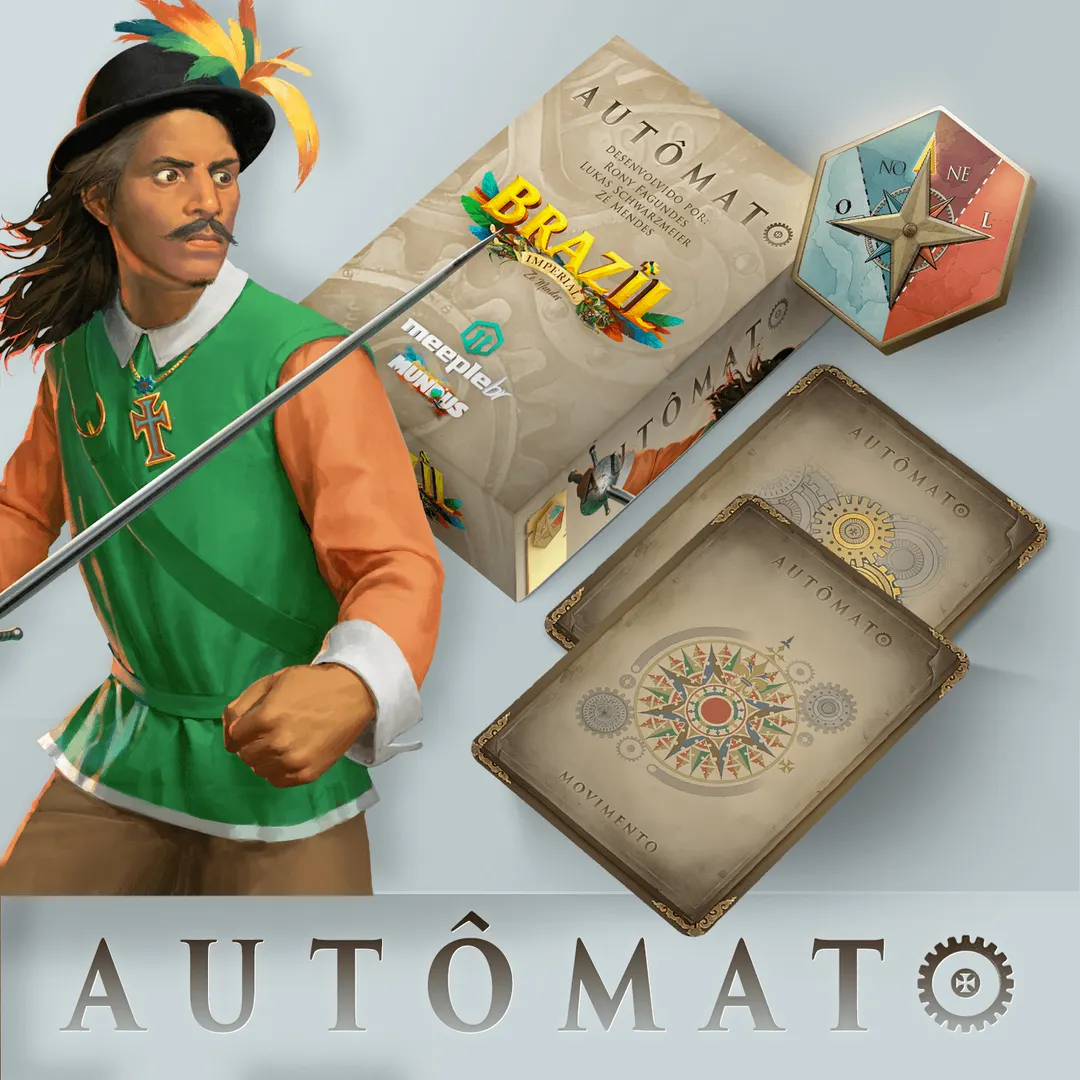
- Ocena BGG
- 7,7
Brazil: Imperial – Autômato
- 1–4 graczy
- 100 min
- Złożoność 2,8/5
- 2022

2021
Pomoc w zasadach gry Brazil: Imperial
Zrozumiałe wyjaśnienia tur, efektów kart i spornych sytuacji z odnośnikami do oficjalnych źródeł i zapisaną historią pytań.
Dla 1 gracza
Co chcesz wiedzieć?
Odpowiedzi pochodzą z oficjalnej instrukcji, ze stroną do sprawdzenia.
Brazil: Imperial to gra planszowa wydana w 2021 roku dla 1–4 graczy, z rozgrywką trwającą 100 minut i dla osób od 14 lat. Projekt gry: Zé Mendes. Główne mechaniki: Variable Player Powers, Tile Placement i Grid Movement.





Po angielsku
Take on the role of one of the great monarchs of the past, and show your valor! You will arrive in a vast and rich territory, but the road to the prosperity is filled with challenges. In Brazil: Imperial, you need to construct buildings, manage resources, explore the land, create trade, acquire the support of the greatest personalities of the country, and recruit a powerful army to protect your interest against the rival states. If you make the right choices, you can complete missions to progress to a more advanced era, receiving new interesting options of development and victory points. In the end, the best monarch receives the title of Brazilian Emperor and constructs a new era of prosperity, freedom and peace! In more detail, while playing in a modular map board that recreate real regions, you use a combination of worker placement, area majority, and individual powers to construct an empire in Brazil between the 16th and 19th centuries. You start by choosing one of the available monarchs and its personal game board and components; some monarchs are strong in combat, while others prioritize science or exploration. You receive tasks that advance you to a new era when you complete them, giving you access to more power constructions as you move into the second and third eras of the game, then you choose a starting point on the shared map. On each turn, you can participate in an action phase and a movement phase. You manage actions on your individual game board, and you have these seven choices: Deploy: Summon one military unit to explore and defend your territory. Frame: Buy cards that represent famous historic figures to receive special powers and victory points. Build: Construct farms, mines, cities, and other structures to generate resources and do other things. Renovate: Overhaul an old building to produce new resources. Manufacture: Produce basic resources — wood, sugar cane, cotton, or coffee — to receive victory points, improve your "action arches", and have raw material for more valuable products. Harbor: Go to the port to receive a small amount of basic resources. Trade: Sell your basic resources to receive gold and special cards to improve your empire. During the movement phase, you can explore hidden places or attack other players. For combat, you check the power of the troops involved in the conflict to determine the winner, with cards being able to modify these values. Once a player completes their goals in the third era, the game ends and players tally their scores. Brazil: Imperial was developed with the concept of it being "Euro X", a new style of game that combines Eurogames (in which you collect and manage resources) and 4x games (in which you explore, expand, exploit and exterminate). A new concept of maps was also introduced in this game. All maps are different and created with modular boards that recreate real regions of Brazil and the world. Each game you can focus on resource management, combat, or a combination of both, depending on your choice of monarch and the interaction with other players.
Według katalogu Brazil: Imperial obsługuje od 1 do 4 graczy. Ten zakres odpowiada liczbie graczy podanej przez wydawcę, więc grę można przygotować dla dowolnej grupy w jego granicach. Przygotowanie, niektóre zasady i punktacja mogą jednak różnić się w zależności od liczby graczy; dokładną konfigurację sprawdź w instrukcji swojego wydania.
Podany czas rozgrywki w Brazil: Imperial wynosi 100 minut. To szacunek wydawcy dla pełnej partii. Rzeczywisty czas zależy od grupy, liczby graczy i znajomości zasad: pierwsze partie zwykle trwają dłużej, a doświadczone grupy kończą szybciej. Przygotowanie gry i tłumaczenie zasad nie są wliczone w ten szacunek.
Katalog podaje dla Brazil: Imperial wiek od 14 lat. To zalecenie wydawcy, które uwzględnia wymagania dotyczące czytania, złożoność zasad i drobne elementy, a nie tylko tematykę. Młodsi gracze często mogą dołączyć z pomocą dorosłego; sprawdź zalecenie wiekowe swojego wydania i weź pod uwagę doświadczenie grupy z grami planszowymi.
Brazil: Imperial ma ocenę złożoności 3,0 na 5 według graczy BoardGameGeek, co czyni ją grą średnio złożoną. Ocena pokazuje, ile znajomości zasad, planowania i podejmowania decyzji wymaga typowa rozgrywka. Cięższe gry wymagają dłuższego pierwszego tłumaczenia, dlatego przed wieczorem z grami warto skorzystać z przewodnika przygotowania.
Brazil: Imperial należy do tych kategorii: Territory Building, Exploration i City Building. Główne mechaniki to Variable Player Powers, Tile Placement i Grid Movement. Kategorie opisują temat i świat gry, a mechaniki to, co gracze faktycznie robią w swojej turze. Każda mechanika prowadzi do strony katalogu z podobnymi grami, co pomaga znaleźć coś porównywalnego na kolejny wieczór.
Autorzy wymienieni przy Brazil: Imperial to: Zé Mendes. Te informacje pochodzą z opublikowanych danych gry i wskazują osoby odpowiedzialne za jej projekt, a nie ilustratorów czy wydawców. Strony autorów w MeepleRules zbierają inne tytuły tych samych twórców, co pomaga, gdy gra ci się podoba i szukasz podobnych.
W katalogu Brazil: Imperial figuruje jako gra podstawowa. Można w nią grać samodzielnie, korzystając z elementów z pudełka, bez żadnego innego tytułu. Dodatki, jeśli istnieją, dokładają nową zawartość lub zasady i są wymienione w katalogu osobno, z odnośnikiem do tej gry podstawowej.