

- Pozycja w BGG
- BGG #1299
- Ocena BGG
- 7,2
Bonsai
- 1–4 graczy
- 40 min
- Złożoność 1,8/5
- 2023
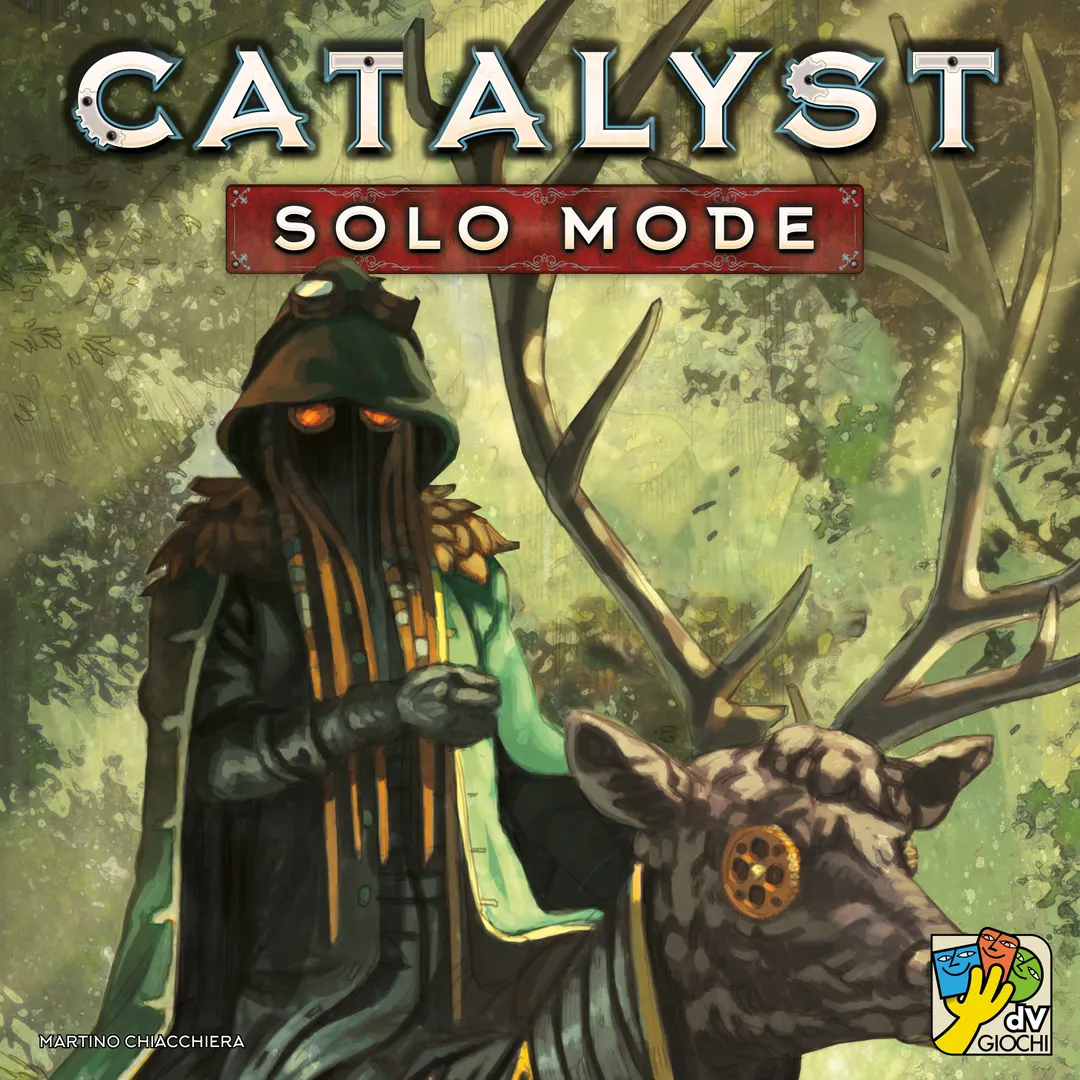
Pomoc w zasadach gry Catalyst: Solo mode
Zrozumiałe wyjaśnienia tur, efektów kart i spornych sytuacji z odnośnikami do oficjalnych źródeł i zapisaną historią pytań.
Co chcesz wiedzieć?
Odpowiedzi pochodzą z oficjalnej instrukcji, ze stroną do sprawdzenia.
Catalyst: Solo mode to dodatek do gry Catalyst wydany w 2019 roku dla 1 gracza, z rozgrywką trwającą 20–30 minut i dla osób od 8 lat. Projekt gry: Martino Chiacchiera. Główne mechaniki: Set Collection i Open Drafting.


Po angielsku
The official solo mode of Catalyst - originally released as a promotional set of rules in IoGioco game magazine. GOAL OF THE GAME Confront your skills against a fearsome Artificial Intelligence (AI). PREPARATION Choose the difficulty level: easy (+10 PV), standard (+20 PV), advanced (+30 PV). Follow the instructions for preparing a 2-player game. You are the first player. Return all building cards to the box with the exception of a building costing 1, one that costs 2, one that costs 3 and one that costs 4. They must all be of a different color and randomly selected (e.g.: play with the blue “1” building, the “2” red building, the “3” yellow building and the “4” green building). PLAYING THE GAME Play multiple turns in a row until the game ends. During each of your turns you must perform one of the three actions of the game, with the following additions to the normal rules: Collect Contributions: you get coins as usual, and the AI gets a military power token. Recruit a Catalyst: You recruit a Catalyst as usual, then take the first card to the left of the one you recruited and place it, without looking at it, in the deck of AI's scoring pile. If you recruit the first Catalyst to the right of the deck (the one on the space marked with “+1”), then place the top card of the draw pile, without looking at it, in the scoring pile of the AI. Activate a Catalyst: activate a Catalyst as usual, then place the card on top of the drawing deck, without looking at it, in the AI’s scoring pile. Note: When you get coins or actions to recruit a Catalyst through a Catalyst or a building’s effects, and when you spend Chain activation tokens to activate Catalysts, the additions to the normal rules (see above) do not apply: This means that while you perform the effect of an activated Catalyst or building, the AI does not get any military power tokens nor you must put cards in its scoring pile. THE END OF YOUR TURN As in the standard rules, after you have chosen and performed one action (and possibly the AI has gained a card in its scoring pile or a military power token), your turn is over. If one or more spaces of the board are empty, slide the other cards to the right until there are no gaps, then draw new cards from the deck to fill the board back up to 5 cards. THE END OF THE GAME When the last card of the reserve deck is discarded or put on the board, the game ends immediately. Count your VPs as usual, including the goal card’s points. The AI instead obtains the VPs written on the cards in its scoring pile, the VPs provided by each pair of its military power tokens (and for the majority), and additional VPs depending on the difficulty level chosen (see Preparation). If you scored at least 1 VP more than the AI, you won – otherwise, try harder! —description from the publisher
Według katalogu Catalyst: Solo mode obsługuje 1 gracza. To liczba graczy podana przez wydawcę, więc gra jest zaprojektowana dokładnie dla takiej liczby uczestników. Warianty dla grup innej wielkości, jeśli w ogóle istnieją, opisano w instrukcji twojego wydania; sprawdź ją uważnie, zanim przygotujesz inną konfigurację stołu.
Podany czas rozgrywki w Catalyst: Solo mode wynosi 20–30 minut. To szacunek wydawcy dla pełnej partii. Rzeczywisty czas zależy od grupy, liczby graczy i znajomości zasad: pierwsze partie zwykle trwają dłużej, a doświadczone grupy kończą szybciej. Przygotowanie gry i tłumaczenie zasad nie są wliczone w ten szacunek.
Katalog podaje dla Catalyst: Solo mode wiek od 8 lat. To zalecenie wydawcy, które uwzględnia wymagania dotyczące czytania, złożoność zasad i drobne elementy, a nie tylko tematykę. Młodsi gracze często mogą dołączyć z pomocą dorosłego; sprawdź zalecenie wiekowe swojego wydania i weź pod uwagę doświadczenie grupy z grami planszowymi.
Catalyst: Solo mode należy do tych kategorii: Card Game i Expansion for Base-game. Główne mechaniki to Set Collection i Open Drafting. Kategorie opisują temat i świat gry, a mechaniki to, co gracze faktycznie robią w swojej turze. Każda mechanika prowadzi do strony katalogu z podobnymi grami, co pomaga znaleźć coś porównywalnego na kolejny wieczór.
Autorzy wymienieni przy Catalyst: Solo mode to: Martino Chiacchiera. Te informacje pochodzą z opublikowanych danych gry i wskazują osoby odpowiedzialne za jej projekt, a nie ilustratorów czy wydawców. Strony autorów w MeepleRules zbierają inne tytuły tych samych twórców, co pomaga, gdy gra ci się podoba i szukasz podobnych.
W katalogu Catalyst: Solo mode figuruje jako dodatek do Catalyst. Dodatki dokładają nową zawartość, zasady lub scenariusze do gry podstawowej i zwykle nie nadają się do samodzielnej gry, więc do korzystania z niego potrzebujesz gry Catalyst. Sprawdź, czy twoje wydanie gry Catalyst jest zgodne, bo niektóre dodatki zmieniano między wydaniami.