- Ocena BGG
- 8,4
Combat Commander: Battle Pack #4 – New Guinea
- 2 graczy
- 180 min
- Złożoność 3,0/5
- 2011
2008
Pomoc w zasadach gry Combat Commander: Pacific
Zrozumiałe wyjaśnienia tur, efektów kart i spornych sytuacji z odnośnikami do oficjalnych źródeł i zapisaną historią pytań.
Dla 2 graczy
Co chcesz wiedzieć?
Odpowiedzi pochodzą z oficjalnej instrukcji, ze stroną do sprawdzenia.
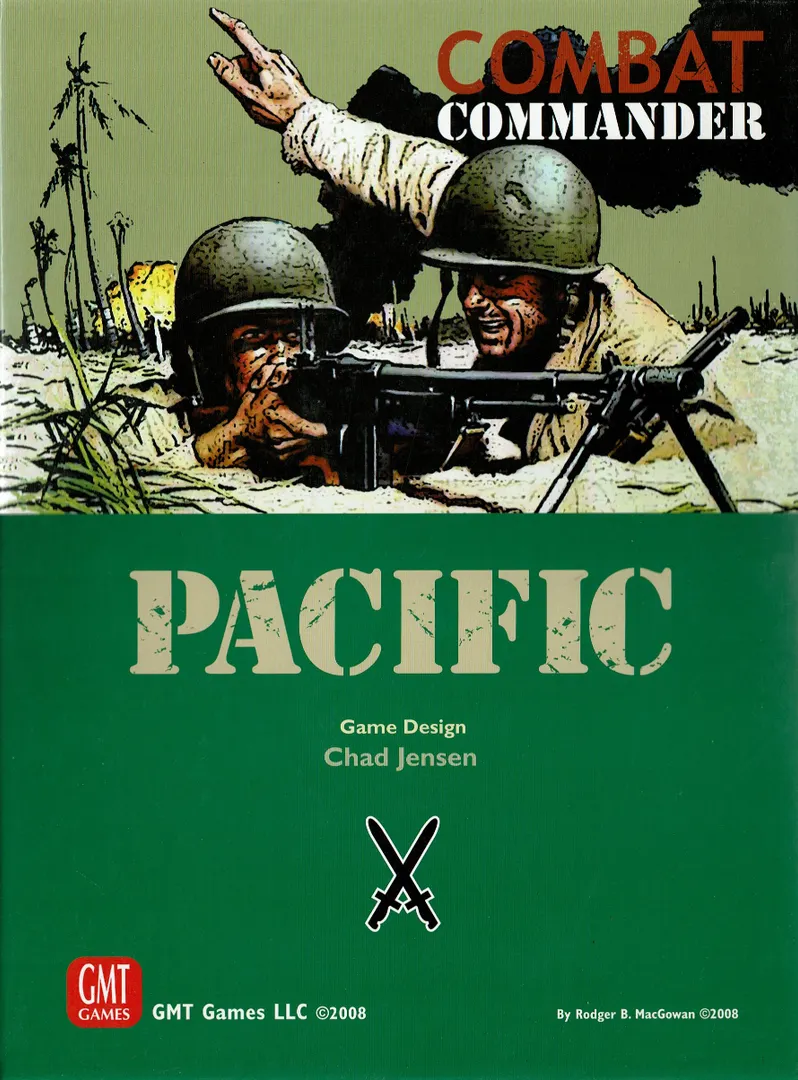
Combat Commander: Pacific to gra planszowa wydana w 2008 roku dla 2 graczy, z rozgrywką trwającą 180 minut i dla osób od 12 lat. Projekt gry: Chad Jensen, John Foley i Kai Jensen. Główne mechaniki: Hexagon Grid, Simulation i Line of Sight.









Po angielsku
Combat Commander:Pacific is a card-driven board game covering tactical infantry combat in the Pacific Theater of World War II. CC:P's main theme is the addition of three new factions to the Combat Commander family: Imperial Japan the Pacific US - with a strong emphasis on the US Marine Corps the Pacific Commonwealth - focusing on Indian and ANZAC forces CC:P is a stand alone game in the card-driven Combat Commander game series. While utilizing Combat Commander: Europe's basic rules, CC:P includes numerous rule tweaks and additions in order to more accurately portray tactical warfare as experienced by the participants in and around the Pacific and Indian Oceans. This slightly ramps up the complexity of the Combat Commander series while at the same time imparting a bit more depth and realism. Just a few of the additions include: Banzai attacks; BARs and Thompson SMGs; Beach landings & river crossings; Hidden movement; Caves; Scouts; Aircraft; Bayonets; Mortar spotting; Treetop snipers; Reconnoitering. SCALE: Each hex of a Combat Commander map is roughly 100 feet across (about 30 meters). Each complete Player Turn abstractly represents several seconds of real time. Each complete Game Turn abstractly represents several minutes of real time. UNITS: Due in part to the unique composition of late-war USMC squads and the imbedding of specialized weapon teams within IJA squads, the units in the game are represented by 4-6 man Teams and 8-13 man Squads. Radios — and individual weapons larger than a rifle — are represented by their own counters. Individual Aircraft are also represented with their own counters. VICTORY: Players attempt to achieve victory by moving their combat units across the game map to attack their opponent’s combat units and occupy as many objectives as possible. The degree to which a player succeeds or fails is measured by a scenario’s specific Objective chits, the destruction of enemy units, and the exiting of friendly units off the opponent’s board edge. GAME FLOW: A game of Combat Commander is divided into several Time segments. There is no sequence of play to follow, however: each Time segment is divided into a variable number of Player Turns, each of which may consist of one or more Fate Card "Orders" conducted by the active player. Fate Card "Actions" may generally be conducted by either player at any time. "Events" and die roll "Triggers" — both good and bad — will occur at random intervals to add a bit of chaos and uncertainty to each player’s perfect plan. CC:P includes twelve maps featuring terrain specific to the PTO. CC:P's playbook includes: twelve scenarios. Pacific version of the Random Scenario Generator utilizing the new maps and nationalities. This random scenario system provides an almost unending variety of map configurations, force structures, and combat situations. section detailing the differences between CC:P and Combat Commander's first two volumes in order that players familiar with those earlier games can jump right into their first scenario with minimal rules reading. examples of play. Design & Development notes as well as numerous play hints. Components: 352x large counters (5/8") 280x small counters (1/2") 220x 2.5 x 3.5 cards 6x 2-sided 17 x 22 maps (twelve maps in total) 3x 2-sided 8.5 x 11 nation-specific player aid sheets 2x 1-sided 8.5 x 11 generic player aid sheets 1x 32-page Rulebook 1x 32-page Playbook 1x Track Display NOTE: Combat Commander:Pacific is a stand-alone game. You do NOT need to own any other Combat Commander game in order to play it, though familiarity with the system would be a plus.
Według katalogu Combat Commander: Pacific obsługuje 2 graczy. To liczba graczy podana przez wydawcę, więc gra jest zaprojektowana dokładnie dla takiej liczby uczestników. Warianty dla grup innej wielkości, jeśli w ogóle istnieją, opisano w instrukcji twojego wydania; sprawdź ją uważnie, zanim przygotujesz inną konfigurację stołu.
Podany czas rozgrywki w Combat Commander: Pacific wynosi 180 minut. To szacunek wydawcy dla pełnej partii. Rzeczywisty czas zależy od grupy, liczby graczy i znajomości zasad: pierwsze partie zwykle trwają dłużej, a doświadczone grupy kończą szybciej. Przygotowanie gry i tłumaczenie zasad nie są wliczone w ten szacunek.
Katalog podaje dla Combat Commander: Pacific wiek od 12 lat. To zalecenie wydawcy, które uwzględnia wymagania dotyczące czytania, złożoność zasad i drobne elementy, a nie tylko tematykę. Młodsi gracze często mogą dołączyć z pomocą dorosłego; sprawdź zalecenie wiekowe swojego wydania i weź pod uwagę doświadczenie grupy z grami planszowymi.
Combat Commander: Pacific ma ocenę złożoności 3,3 na 5 według graczy BoardGameGeek, co czyni ją grą średnio złożoną. Ocena pokazuje, ile znajomości zasad, planowania i podejmowania decyzji wymaga typowa rozgrywka. Cięższe gry wymagają dłuższego pierwszego tłumaczenia, dlatego przed wieczorem z grami warto skorzystać z przewodnika przygotowania.
Combat Commander: Pacific należy do tych kategorii: Wargame i World War II. Główne mechaniki to Hexagon Grid, Simulation i Line of Sight. Kategorie opisują temat i świat gry, a mechaniki to, co gracze faktycznie robią w swojej turze. Każda mechanika prowadzi do strony katalogu z podobnymi grami, co pomaga znaleźć coś porównywalnego na kolejny wieczór.
Autorzy wymienieni przy Combat Commander: Pacific to: Chad Jensen, John Foley i Kai Jensen. Te informacje pochodzą z opublikowanych danych gry i wskazują osoby odpowiedzialne za jej projekt, a nie ilustratorów czy wydawców. Strony autorów w MeepleRules zbierają inne tytuły tych samych twórców, co pomaga, gdy gra ci się podoba i szukasz podobnych.
W katalogu Combat Commander: Pacific figuruje jako gra podstawowa. Można w nią grać samodzielnie, korzystając z elementów z pudełka, bez żadnego innego tytułu. Dodatki, jeśli istnieją, dokładają nową zawartość lub zasady i są wymienione w katalogu osobno, z odnośnikiem do tej gry podstawowej.