- Pozycja w BGG
- BGG #11 400
- Ocena BGG
- 6,5
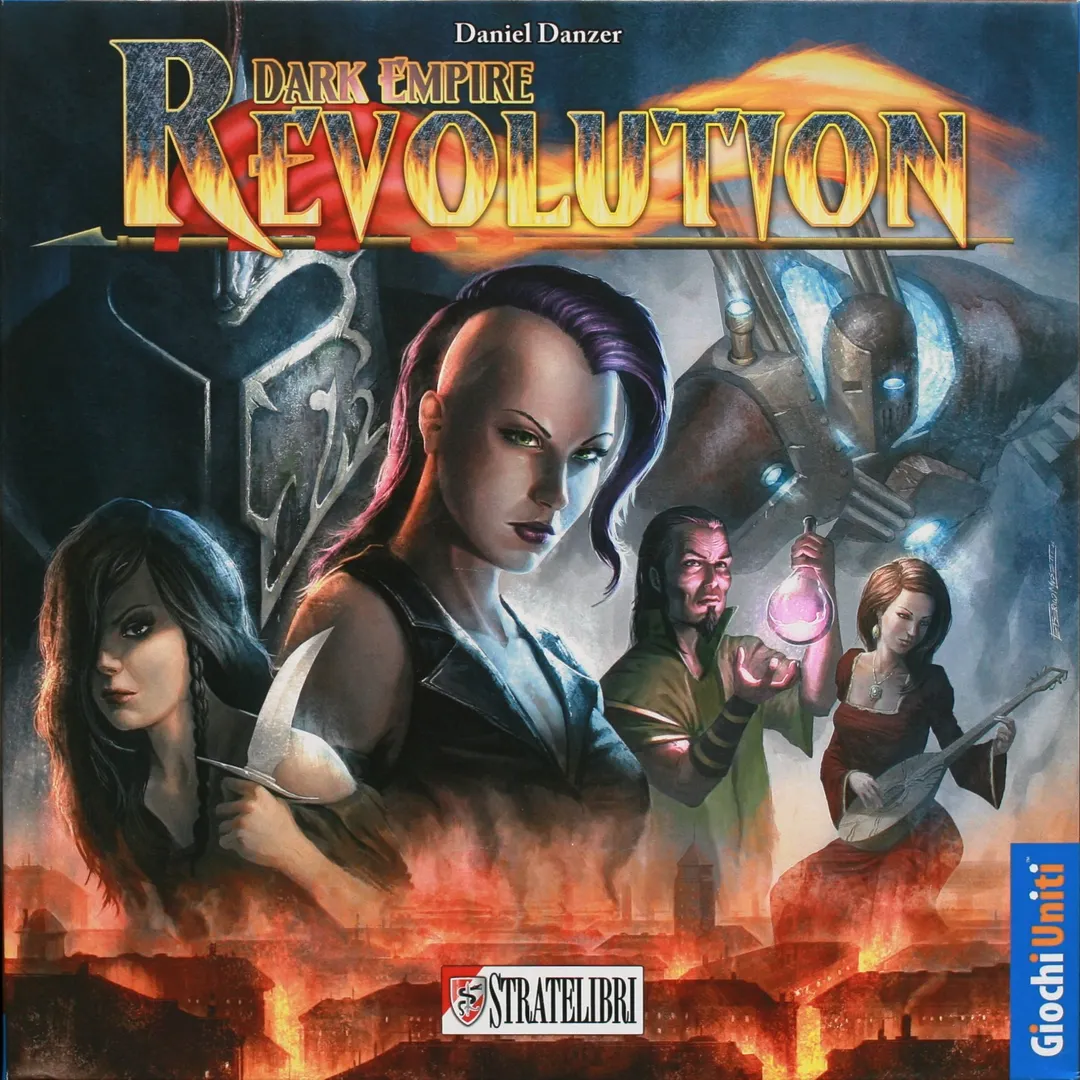
Dark Empire: Revolution
2013
Pomoc w zasadach gry Dark Empire: Revolution
Zrozumiałe wyjaśnienia tur, efektów kart i spornych sytuacji z odnośnikami do oficjalnych źródeł i zapisaną historią pytań.
- 3–5 graczy
- 60 min
- 12+
- Złożoność 2,6/5

Dla 3 graczy
Asystent zasad gry Dark Empire: Revolution
Co chcesz wiedzieć?
Odpowiedzi pochodzą z oficjalnej instrukcji, ze stroną do sprawdzenia.
Dark Empire: Revolution to gra planszowa wydana w 2013 roku dla 3–5 graczy, z rozgrywką trwającą 60 minut i dla osób od 12 lat. Projekt gry: Daniel Danzer. Główne mechaniki: Hand Management, Simultaneous Action Selection i Traitor Game.
O grze
Po angielsku
In the state of R’yan, five factions of the population rise against Emperor Flaut III: Students, Beggars, the City Guard, Alchemists, and the Apparats, medieval robots with a living soul, implemented by said Alchemists. These factions must work together to overcome the Emperor, but only one will eventually rule the future country. Otherwise, Flaut III suppresses the revolution and retains control... In Dark Empire: Revolution, each faction consists of a total of 13 cards: three cards with a value of 4-6 and two cards with values 7-8. There are ten additional cards which can be added to the strength of any faction card already in play. The table represents Vindoban, the capital of R`yan, where the emperor deploys his army on one side and the insurgent people gather on the other. The game is played over a series of turns ("weeks"). After four weeks, a month is completed with an intermediate scoring, and after three months a final scoring ends the game. Each player starts with a hand of seven cards, one random “secret goal” faction that the player attempts to guide to victory, and a set of "temporary support" cards. With these cards you secretly “bid” on the faction you believe will win the next month’s scoring by having accumulated the most points. Gameplay: players simultaneously place one card each in the centre of the table, either towards the revolutionary forces, or as a traitor on the emperor's side adding this value to an “Emperor card” already placed in that location. This happens three times, but you are only allowed to place one of your three cards as a traitor. The week is then resolved and the player who provided the most support for the strongest faction puts aside one of his cards for this faction to be scored; in addition, this player is immediately awarded 2 extra points. The player who played the highest single card for this faction (not necessarily the same player!) is awarded 1 point. But beware - when the emperor (his card plus all traitors) gained more points than each single faction, the Emperor card is placed to the scoring! The table is cleared and the next week begins. After four weeks, a month is over and an intermediate scoring takes place. If you are correct with your prediction of this month’s winner you gain another 6 points. After three months the final scoring occurs, determining the winner: the “secret goals” are revealed and the collected points of each player are added to the cards scored for their faction during the course of the game. The faction with the highest score wins the revolution - and the game. But: if the emperor can put down the rebellion - then the faction with the lowest score wins the game. Or, if the winning faction is too far ahead, it is immediately overthrown by all the others and the faction with the second highest score wins the game.
Autorzy
Wydawcy
- Giochi Uniti
- Stratelibri
- spielpunk
Pytania i odpowiedzi
Według katalogu Dark Empire: Revolution obsługuje od 3 do 5 graczy. Ten zakres odpowiada liczbie graczy podanej przez wydawcę, więc grę można przygotować dla dowolnej grupy w jego granicach. Przygotowanie, niektóre zasady i punktacja mogą jednak różnić się w zależności od liczby graczy; dokładną konfigurację sprawdź w instrukcji swojego wydania.
Podany czas rozgrywki w Dark Empire: Revolution wynosi 60 minut. To szacunek wydawcy dla pełnej partii. Rzeczywisty czas zależy od grupy, liczby graczy i znajomości zasad: pierwsze partie zwykle trwają dłużej, a doświadczone grupy kończą szybciej. Przygotowanie gry i tłumaczenie zasad nie są wliczone w ten szacunek.
Katalog podaje dla Dark Empire: Revolution wiek od 12 lat. To zalecenie wydawcy, które uwzględnia wymagania dotyczące czytania, złożoność zasad i drobne elementy, a nie tylko tematykę. Młodsi gracze często mogą dołączyć z pomocą dorosłego; sprawdź zalecenie wiekowe swojego wydania i weź pod uwagę doświadczenie grupy z grami planszowymi.
Dark Empire: Revolution ma ocenę złożoności 2,6 na 5 według graczy BoardGameGeek, co czyni ją grą raczej lekką. Ocena pokazuje, ile znajomości zasad, planowania i podejmowania decyzji wymaga typowa rozgrywka. Cięższe gry wymagają dłuższego pierwszego tłumaczenia, dlatego przed wieczorem z grami warto skorzystać z przewodnika przygotowania.
Dark Empire: Revolution należy do tych kategorii: Card Game, Comic Book / Strip i Bluffing. Główne mechaniki to Hand Management, Simultaneous Action Selection i Traitor Game. Kategorie opisują temat i świat gry, a mechaniki to, co gracze faktycznie robią w swojej turze. Każda mechanika prowadzi do strony katalogu z podobnymi grami, co pomaga znaleźć coś porównywalnego na kolejny wieczór.
Autorzy wymienieni przy Dark Empire: Revolution to: Daniel Danzer. Te informacje pochodzą z opublikowanych danych gry i wskazują osoby odpowiedzialne za jej projekt, a nie ilustratorów czy wydawców. Strony autorów w MeepleRules zbierają inne tytuły tych samych twórców, co pomaga, gdy gra ci się podoba i szukasz podobnych.
W katalogu Dark Empire: Revolution figuruje jako gra podstawowa. Można w nią grać samodzielnie, korzystając z elementów z pudełka, bez żadnego innego tytułu. Dodatki, jeśli istnieją, dokładają nową zawartość lub zasady i są wymienione w katalogu osobno, z odnośnikiem do tej gry podstawowej.