
- Ocena BGG
- 7,1
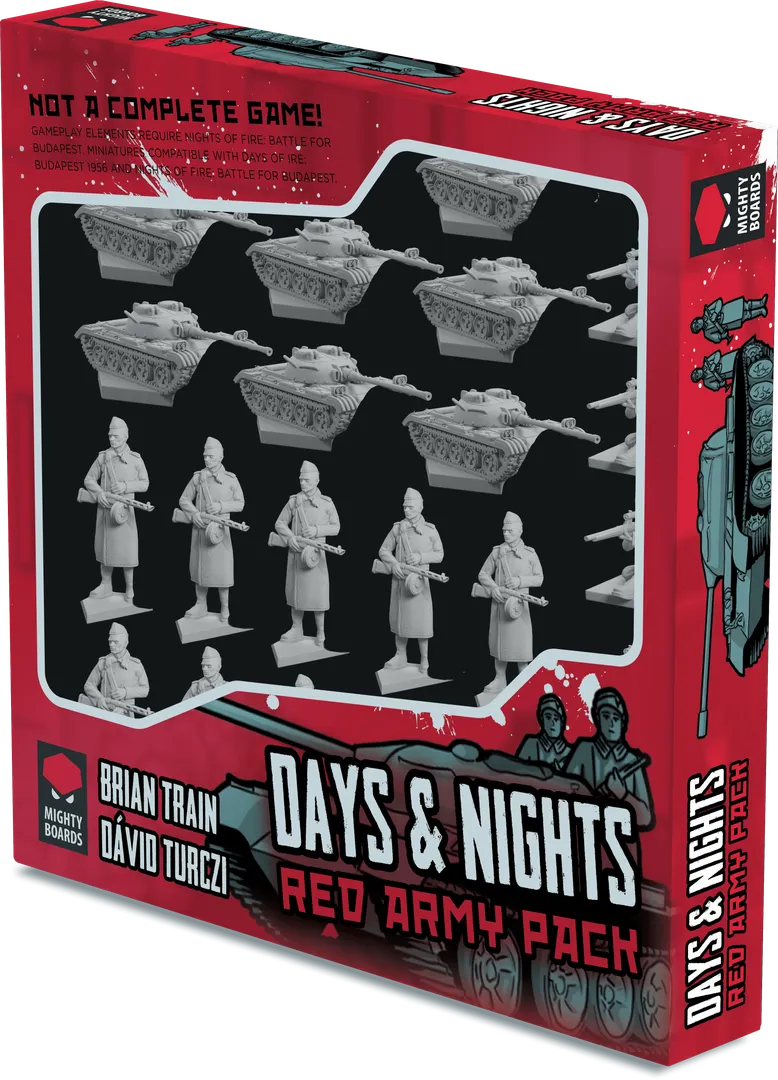
Days & Nights: Red Army Pack
- 1–3 graczy
- 60–120 min
- Złożoność 2,0/5
- 2018
2016
Pomoc w zasadach gry Days of Ire: Budapest 1956
Zrozumiałe wyjaśnienia tur, efektów kart i spornych sytuacji z odnośnikami do oficjalnych źródeł i zapisaną historią pytań.
Dla 1 gracza
Co chcesz wiedzieć?
Odpowiedzi pochodzą z oficjalnej instrukcji, ze stroną do sprawdzenia.
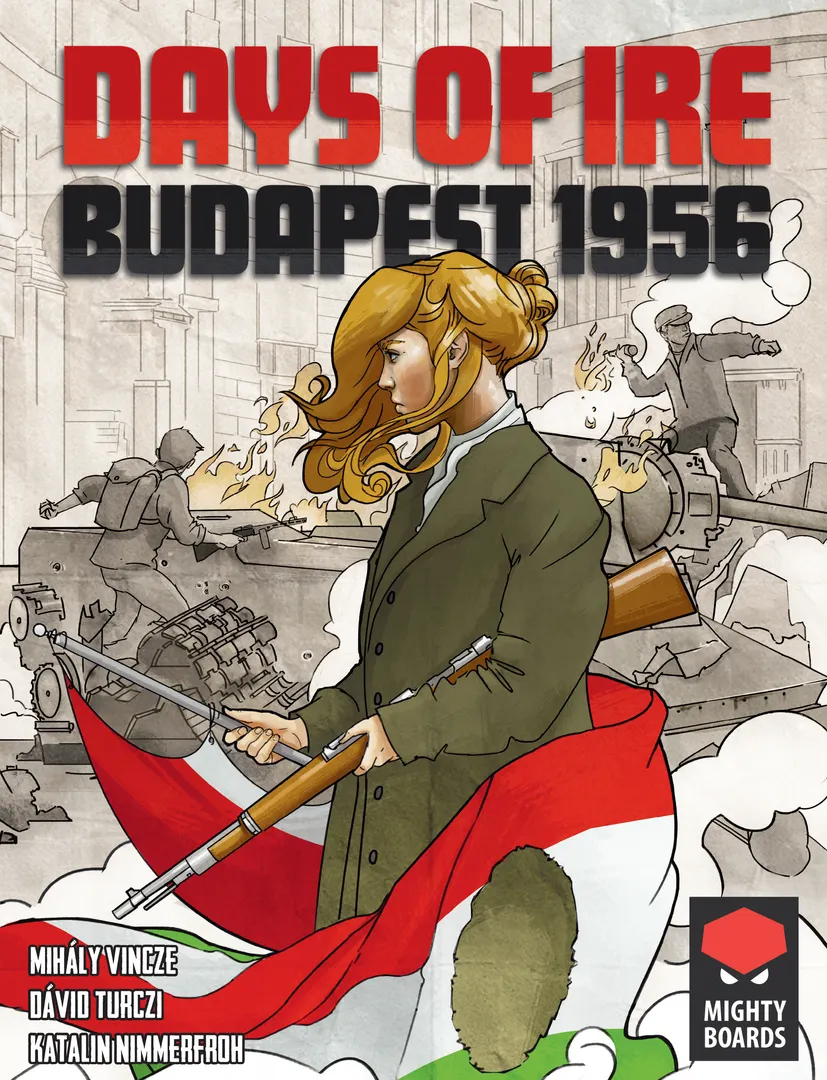
Days of Ire: Budapest 1956 to gra planszowa wydana w 2016 roku dla 1–4 graczy, z rozgrywką trwającą 60–90 minut i dla osób od 10 lat. Projekt gry: Dávid Turczi, Mihály Vincze i Katalin Nimmerfroh. Główne mechaniki: Hand Management, Dice Rolling i Cooperative Game.
Po angielsku
It's 1956, and waves of protest in Poland are once again showing cracks of the Eastern European communist bloc. Emboldened by these signs, students and intellectuals in Budapest, the Hungarian capital, organize a protest of previously unseen magnitudes. As the communist leadership sweeps in to kill the movement in its tracks a violent response is provoked, thus sparking the Revolution of the 23rd of October. One player takes charge of the Soviet forces trying to shape the headlines to his liking and uses the militia and snipers of the State Protection Authority to stop the revolutionaries at all cost. The other player(s) (from 1-3 opponents) co-operatively play as the ringleaders of the revolutionary forces collecting resources (represented as icons on their cards) and recruiting other fighters to ensure the revolution's events end up in favor of their side, while fighting off tanks and soldiers in this exciting, historically inspired card driven game. Days of Ire: Budapest 1956 is played over seven days — the last week of October 1956. The Soviet commander plays headline cards at the beginning of every turn, gathering Command Points and triggering effects that sometimes help, sometimes hinder the revolutionary effort. This card-play, reminiscent of well-known card-driven wargames (CDG) such as Twilight Struggle or Labyrinth: War on Terror, is what drives the tempo and the strategic thrust of the game. The other player(s) form the revolutionary side. They collect cards and fighters for two reasons: to resolve events for boosts to their side, and to fight off militia, snipers, and Soviet tanks in a drastic fight for survival. They have to manage their positions while spreading across Budapest, carefully dividing their actions as a team and always keeping an eye on their morale lest they run out of cards. This team-playing aspect — reminiscent of highly successful cooperative games such as Pandemic — guarantees ease of access to players who would otherwise be more intimidated by a traditional CDG. If any of the revolutionary ringleaders suffer too many wounds, or if they fail to resolve enough events by the end of the game, history changes and the revolution falls. But if they keep the streets of Budapest free from oppression, the revolution lives on, to fight another day. Historical Note: In real life, the revolution succeeded, and Hungary was free for less than a week. On the 4th of November, the Soviet forces quickly recaptured the country, but that is a subject for a different game...
Według katalogu Days of Ire: Budapest 1956 obsługuje od 1 do 4 graczy. Ten zakres odpowiada liczbie graczy podanej przez wydawcę, więc grę można przygotować dla dowolnej grupy w jego granicach. Przygotowanie, niektóre zasady i punktacja mogą jednak różnić się w zależności od liczby graczy; dokładną konfigurację sprawdź w instrukcji swojego wydania.
Podany czas rozgrywki w Days of Ire: Budapest 1956 wynosi 60–90 minut. To szacunek wydawcy dla pełnej partii. Rzeczywisty czas zależy od grupy, liczby graczy i znajomości zasad: pierwsze partie zwykle trwają dłużej, a doświadczone grupy kończą szybciej. Przygotowanie gry i tłumaczenie zasad nie są wliczone w ten szacunek.
Katalog podaje dla Days of Ire: Budapest 1956 wiek od 10 lat. To zalecenie wydawcy, które uwzględnia wymagania dotyczące czytania, złożoność zasad i drobne elementy, a nie tylko tematykę. Młodsi gracze często mogą dołączyć z pomocą dorosłego; sprawdź zalecenie wiekowe swojego wydania i weź pod uwagę doświadczenie grupy z grami planszowymi.
Days of Ire: Budapest 1956 ma ocenę złożoności 2,8 na 5 według graczy BoardGameGeek, co czyni ją grą raczej lekką. Ocena pokazuje, ile znajomości zasad, planowania i podejmowania decyzji wymaga typowa rozgrywka. Cięższe gry wymagają dłuższego pierwszego tłumaczenia, dlatego przed wieczorem z grami warto skorzystać z przewodnika przygotowania.
Days of Ire: Budapest 1956 należy do tych kategorii: Wargame, Political i Modern Warfare. Główne mechaniki to Hand Management, Dice Rolling i Cooperative Game. Kategorie opisują temat i świat gry, a mechaniki to, co gracze faktycznie robią w swojej turze. Każda mechanika prowadzi do strony katalogu z podobnymi grami, co pomaga znaleźć coś porównywalnego na kolejny wieczór.
Autorzy wymienieni przy Days of Ire: Budapest 1956 to: Dávid Turczi, Mihály Vincze i Katalin Nimmerfroh. Te informacje pochodzą z opublikowanych danych gry i wskazują osoby odpowiedzialne za jej projekt, a nie ilustratorów czy wydawców. Strony autorów w MeepleRules zbierają inne tytuły tych samych twórców, co pomaga, gdy gra ci się podoba i szukasz podobnych.
W katalogu Days of Ire: Budapest 1956 figuruje jako gra podstawowa. Można w nią grać samodzielnie, korzystając z elementów z pudełka, bez żadnego innego tytułu. Dodatki, jeśli istnieją, dokładają nową zawartość lub zasady i są wymienione w katalogu osobno, z odnośnikiem do tej gry podstawowej.