

- Pozycja w BGG
- BGG #9307
- Ocena BGG
- 7,9
WARIGIN
- 2–3 graczy
- 15–60 min
- Złożoność 2,3/5
- 2018
2011
Pomoc w zasadach gry Eragra: The Game of Eras and the First Step
Zrozumiałe wyjaśnienia tur, efektów kart i spornych sytuacji z odnośnikami do oficjalnych źródeł i zapisaną historią pytań.
Co chcesz wiedzieć?
Odpowiedzi pochodzą z oficjalnej instrukcji, ze stroną do sprawdzenia.
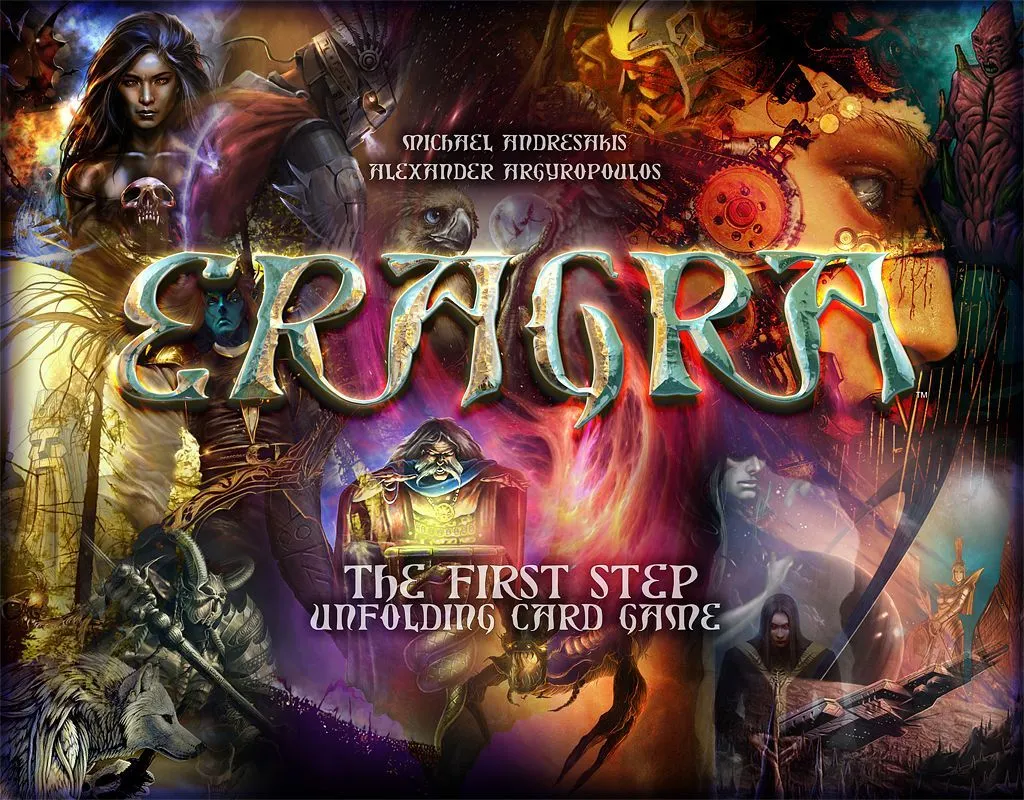
Eragra: The Game of Eras and the First Step to gra planszowa wydana w 2011 roku dla 2–4 graczy, z rozgrywką trwającą 90 minut i dla osób od 11 lat. Projekt gry: Michael Andresakis i Alexander Argyropoulos. Główne mechaniki: Variable Player Powers, Hand Management i Area Movement.



Po angielsku
Eragra is moving through 2 different worlds, the Ancient - an unknown and legendary Era and the Future, after our days, there where our planet has become a vast desert full of Machines and Cyber-Environments. In the Ancient World ('Kingdoms and AntiKingdoms Division Age), the Summoners (you) own several decks. The basic one is the Duel Stack that consists mostly of Figures and Characters which belong to the Eragra Saga as well as several new Card Leagues such as Ploys Ad Hoc (Artefacts n' Constructions), Relics, Walls, Incantations and many other. The next 2 Stacks are the Mastery (10 cards) and the Grim (15 cards) one where you must Unfold, meaning you cannot use them from the beginning of the Duel. The rest of the cards form a Common Space which can be used by all the Summoners! There, a War of Incantations and Artefacts take place and the most powerful combinations with Minions wins Purpose in the Ancient World is to send as many Rival Minions as you can, to Limbo, in order to collect as many as you can from your Crystals (max. 25). The next step is to enter the Future World which can be done by activating 1 specific card from your Mastery Stack, a Vortex called Cyberspace. You can enter there any time you want but will you have enough Crystals? If you enter the Future World, then the rest Summoners must follow you with the Crystals they have collected from the first phase. Tough balance? No, the game in the Future World is totally different and much faster. In this world all change, so the rules. The Future Stack is divided in 4 parts. Each Summoner owns a Stack of 30 cards. The cards you handle here are Viruses, Machines, Weapons, Ambushes, Resources & Future Survivors. Here you use your collected Crystals. Each Future card has the sing of a Crystal along with a number. For example you may have a Hybrid Machine and on it the Crystal sing and the number 3. Since you activate this card, place the equivalent Crystals on it. That means, your rivals have to beat this card thrice. Following this way, this Machine will be destroyed. Each time the rival wins a small battle, you remove a Crystal from your card and gives it to him. This world is faster since the Machines are moving in each round and carry dangerous tools capable of the ultimate destruction.. here the Duel here may last...few minutes!! Final Goal' of the Duel is to remove by any mean the Crystals from your rival(s) or to destroy their Future Survivor (there are 4 Future Survivors (1 for each one of you): A Hacker, a Cybermage, a Rebel and a member of the Torrius Syndicate who are protected by your Machines). In this game you will find more and more things to discover while you play. The point is to combine your cards well. You will enjoy it more, if you play with more than 1 rival and then you will face the brutality of Eragra. You can create Alliances with a rival Summoner to defeat another, but at the same time you must defeat your ally too. Your only true ally is your Minions. Are you ready?
Według katalogu Eragra: The Game of Eras and the First Step obsługuje od 2 do 4 graczy. Ten zakres odpowiada liczbie graczy podanej przez wydawcę, więc grę można przygotować dla dowolnej grupy w jego granicach. Przygotowanie, niektóre zasady i punktacja mogą jednak różnić się w zależności od liczby graczy; dokładną konfigurację sprawdź w instrukcji swojego wydania.
Podany czas rozgrywki w Eragra: The Game of Eras and the First Step wynosi 90 minut. To szacunek wydawcy dla pełnej partii. Rzeczywisty czas zależy od grupy, liczby graczy i znajomości zasad: pierwsze partie zwykle trwają dłużej, a doświadczone grupy kończą szybciej. Przygotowanie gry i tłumaczenie zasad nie są wliczone w ten szacunek.
Katalog podaje dla Eragra: The Game of Eras and the First Step wiek od 11 lat. To zalecenie wydawcy, które uwzględnia wymagania dotyczące czytania, złożoność zasad i drobne elementy, a nie tylko tematykę. Młodsi gracze często mogą dołączyć z pomocą dorosłego; sprawdź zalecenie wiekowe swojego wydania i weź pod uwagę doświadczenie grupy z grami planszowymi.
Eragra: The Game of Eras and the First Step ma ocenę złożoności 3,2 na 5 według graczy BoardGameGeek, co czyni ją grą średnio złożoną. Ocena pokazuje, ile znajomości zasad, planowania i podejmowania decyzji wymaga typowa rozgrywka. Cięższe gry wymagają dłuższego pierwszego tłumaczenia, dlatego przed wieczorem z grami warto skorzystać z przewodnika przygotowania.
Eragra: The Game of Eras and the First Step należy do tych kategorii: Card Game, Fantasy i Dice. Główne mechaniki to Variable Player Powers, Hand Management i Area Movement. Kategorie opisują temat i świat gry, a mechaniki to, co gracze faktycznie robią w swojej turze. Każda mechanika prowadzi do strony katalogu z podobnymi grami, co pomaga znaleźć coś porównywalnego na kolejny wieczór.
Autorzy wymienieni przy Eragra: The Game of Eras and the First Step to: Michael Andresakis i Alexander Argyropoulos. Te informacje pochodzą z opublikowanych danych gry i wskazują osoby odpowiedzialne za jej projekt, a nie ilustratorów czy wydawców. Strony autorów w MeepleRules zbierają inne tytuły tych samych twórców, co pomaga, gdy gra ci się podoba i szukasz podobnych.
W katalogu Eragra: The Game of Eras and the First Step figuruje jako gra podstawowa. Można w nią grać samodzielnie, korzystając z elementów z pudełka, bez żadnego innego tytułu. Dodatki, jeśli istnieją, dokładają nową zawartość lub zasady i są wymienione w katalogu osobno, z odnośnikiem do tej gry podstawowej.