

Estate: Raise the Realm – Interactive Expansion Pack
- 1–5 graczy
- 20–100 min
- 2026
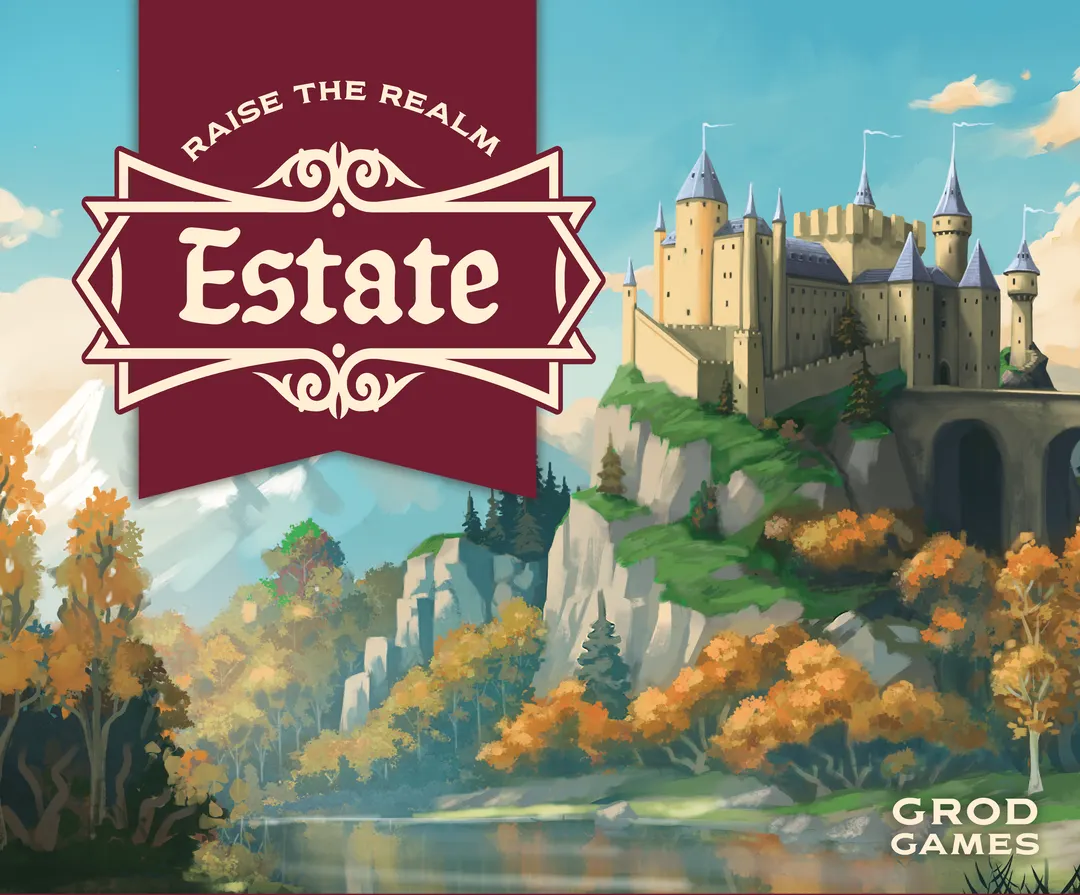
2026
Pomoc w zasadach gry Estate: Raise the Realm
Zrozumiałe wyjaśnienia tur, efektów kart i spornych sytuacji z odnośnikami do oficjalnych źródeł i zapisaną historią pytań.
Dla 1 gracza
Co chcesz wiedzieć?
Odpowiedzi pochodzą z oficjalnej instrukcji, ze stroną do sprawdzenia.
Estate: Raise the Realm to gra planszowa wydana w 2026 roku dla 1–5 graczy, z rozgrywką trwającą 20–100 minut i dla osób od 14 lat. Projekt gry: Devon Grodkiewicz i Kathryn Hahn. Główne mechaniki: Variable Set-up, End Game Bonuses i Drawing.


Po angielsku
It is a time of rebuilding after the Great War. Do you have what it takes? In Estate, players take on the role of a Noble Leader of a Great House who is bequeathed an Estate post war. Each Leader begins the game with resources, a special ability, a unique build of construction(s) and/or citizen(s) cards within their Estate, a Family Secret objective, and workers prepared to rebuild. A worker placement reconstruction challenge, players must use their workers wisely to optimize their Estate’s growth over the five Eras of game play. Workers can be used to take one of four main actions each turn: play citizen/construction Estate Cards, gather resources from the center game board, produce on Production Cards within their growing Estate, and draw new citizen/construction Estate Cards to join the cause. As the Eras progress and your Estate grows, worker actions become more powerful. Don’t forget the Era Events! Revealed at the start of each Era, Era Events impact game play (either positively or negatively) for that Era while also introducing a public Era Objective players can compete for. Time is limited and not on your side, and careful consideration must be made when determining the best actions for your rise to power. Optimizing your leader’s special ability and family secret objective will also provide valuable victory points at game end. Game Play: Estate is played over a series of five Eras (rounds). Within each Era, players take turns placing one worker at a time, proceeding clockwise. The Era ends when each player has used all available workers. Era Start: At the start of each Era, an Era Event is revealed and its effect announced. Era Events have consequences that affect the game play for the duration of the Era and also introduce an Era Objective that players compete for, with awards for 1st: 6 Victory Points, 2nd: 1 Card & 1 Resource, and 3rd: 1 Resource. During the Era: Workers may take 1 of 4 actions on the Player Mat: Play an Estate Card: Play an Estate card for the resource cost located in the cards top left corner. When played, add a cube to the corresponding Estate tracker - Noble (Crown symbol), Production(Money Bag), or Commoner (Scythe Symbol). Draw Estate Cards: The player may draw from either the Market or the Estate deck at random. Once done, replenish the Market. Produce on Cards in Estate: Activate production cards within your Estate to take their effect and gain resources / cards / and more! It is possible a player may have more production cards than they can produce on, make sure to check the progress in your production row to confirm. Take an Era Action: Move your worker from the player mat to the game board to perform an available Era or Progress action. (Some Era Actions may not be available yet if the player has not progressed the Estate to access that Era. End of Era: The Era ends when all workers have been used across all players. Before resetting for the next Era, any cards with End of Era effects activate. Players then score the Era Objective. Era Reset: Take the following steps to reset the board for the next Era: Add 1 resource to each of the accumulating resource action spaces on the game board Refresh the Market - remove all cards and replenish All players withdraw their workers back to their Estate player mat Reset the Leader Special Ability token Reveal the next Era Event —description from the publisher
Według katalogu Estate: Raise the Realm obsługuje od 1 do 5 graczy. Ten zakres odpowiada liczbie graczy podanej przez wydawcę, więc grę można przygotować dla dowolnej grupy w jego granicach. Przygotowanie, niektóre zasady i punktacja mogą jednak różnić się w zależności od liczby graczy; dokładną konfigurację sprawdź w instrukcji swojego wydania.
Podany czas rozgrywki w Estate: Raise the Realm wynosi 20–100 minut. To szacunek wydawcy dla pełnej partii. Rzeczywisty czas zależy od grupy, liczby graczy i znajomości zasad: pierwsze partie zwykle trwają dłużej, a doświadczone grupy kończą szybciej. Przygotowanie gry i tłumaczenie zasad nie są wliczone w ten szacunek.
Katalog podaje dla Estate: Raise the Realm wiek od 14 lat. To zalecenie wydawcy, które uwzględnia wymagania dotyczące czytania, złożoność zasad i drobne elementy, a nie tylko tematykę. Młodsi gracze często mogą dołączyć z pomocą dorosłego; sprawdź zalecenie wiekowe swojego wydania i weź pod uwagę doświadczenie grupy z grami planszowymi.
Estate: Raise the Realm ma ocenę złożoności 3,0 na 5 według graczy BoardGameGeek, co czyni ją grą średnio złożoną. Ocena pokazuje, ile znajomości zasad, planowania i podejmowania decyzji wymaga typowa rozgrywka. Cięższe gry wymagają dłuższego pierwszego tłumaczenia, dlatego przed wieczorem z grami warto skorzystać z przewodnika przygotowania.
Estate: Raise the Realm należy do tych kategorii: Fantasy, Medieval i Renaissance. Główne mechaniki to Variable Set-up, End Game Bonuses i Drawing. Kategorie opisują temat i świat gry, a mechaniki to, co gracze faktycznie robią w swojej turze. Każda mechanika prowadzi do strony katalogu z podobnymi grami, co pomaga znaleźć coś porównywalnego na kolejny wieczór.
Autorzy wymienieni przy Estate: Raise the Realm to: Devon Grodkiewicz i Kathryn Hahn. Te informacje pochodzą z opublikowanych danych gry i wskazują osoby odpowiedzialne za jej projekt, a nie ilustratorów czy wydawców. Strony autorów w MeepleRules zbierają inne tytuły tych samych twórców, co pomaga, gdy gra ci się podoba i szukasz podobnych.
W katalogu Estate: Raise the Realm figuruje jako gra podstawowa. Można w nią grać samodzielnie, korzystając z elementów z pudełka, bez żadnego innego tytułu. Dodatki, jeśli istnieją, dokładają nową zawartość lub zasady i są wymienione w katalogu osobno, z odnośnikiem do tej gry podstawowej.