- Ocena BGG
- 8,6
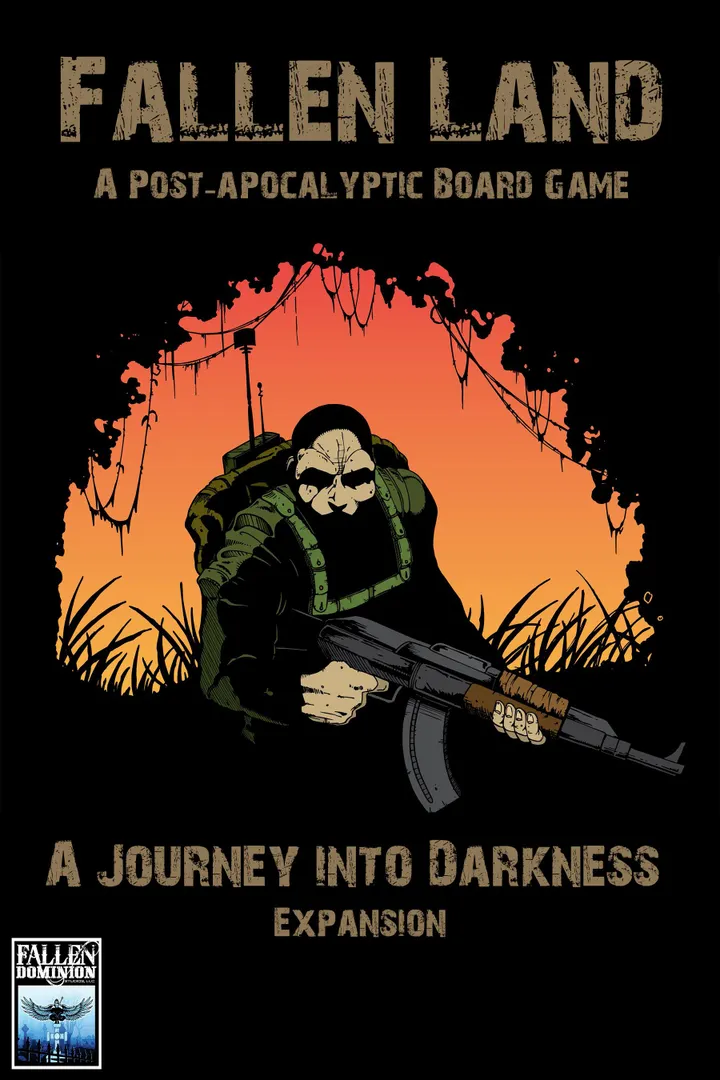
Fallen Land: A Journey into Darkness
- 1–6 graczy
- 60–360 min
- 2017
2017
Pomoc w zasadach gry Fallen Land: A Post Apocalyptic Board Game
Zrozumiałe wyjaśnienia tur, efektów kart i spornych sytuacji z odnośnikami do oficjalnych źródeł i zapisaną historią pytań.
Dla 2 graczy
Co chcesz wiedzieć?
Odpowiedzi pochodzą z oficjalnej instrukcji, ze stroną do sprawdzenia.
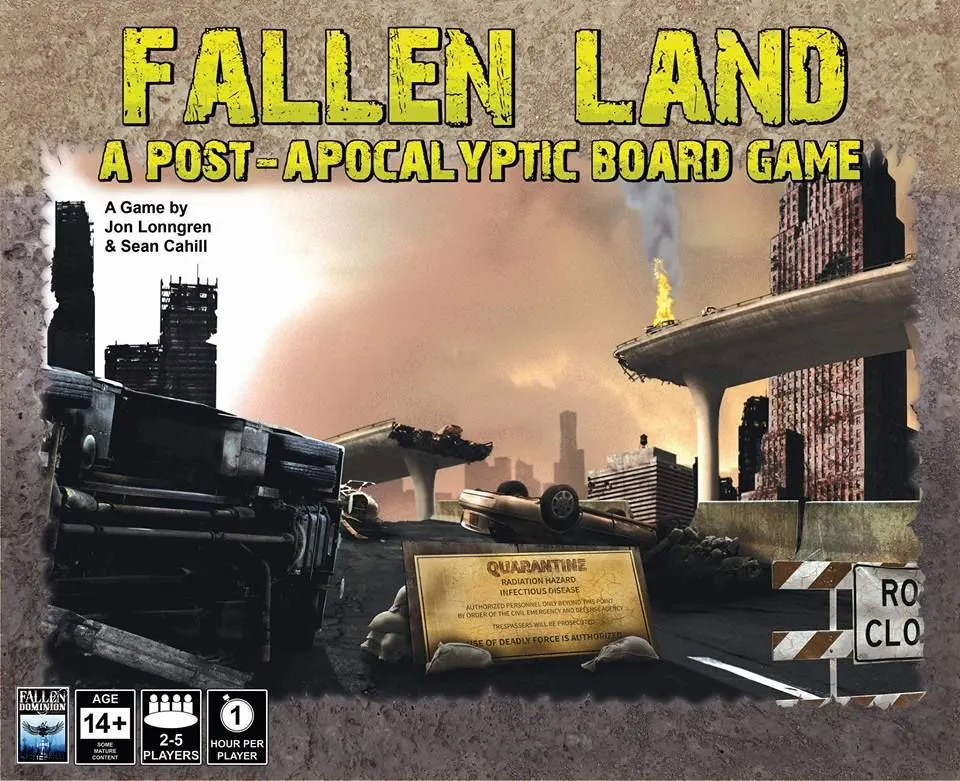
Fallen Land: A Post Apocalyptic Board Game to gra planszowa wydana w 2017 roku dla 2–5 graczy, z rozgrywką trwającą 120–300 minut i dla osób od 14 lat. Projekt gry: Sean Cahill i Jon Lonngren. Główne mechaniki: Variable Player Powers, Trading i Area Movement.
Po angielsku
Set in a post-apocalyptic sci-fi setting, Fallen Land: A Post Apocalyptic Board Game is a hybrid game that combines the elements of a strategy board game, with card building and role-playing. It is driven by macabre stories of a world gone mad and features adventure, politics and economics to deliver an unlimited sandbox experience. Each game the variables change: cards, player interactions, stories, strategies and threats. While the game has a strong pulp influence, its roots stem from Cold War studies. We have expanded upon this research to arrive at our game’s premise: What would happen after a nuclear and biological apocalypse? Our answer is Fallen Land. As a player, you are the leader of a unique faction of survivors competing for primacy in the ruinous aftermath of post-apocalyptic America. You must manage and enhance your town, protect your citizens and secure resources. You will also have to make and break treaties to endure, amidst a myriad of bribery and betrayal by the other players. But that is just where the adventure begins! You must also direct your agents (a party of characters), to explore the rugged landscape, establish your territory and solidify your agenda. Game play is comprised of Turns. Each represents one month and is divided into Phases and Sub-Phases. The First Player resolves each Phase and Sub-Phase followed clockwise by the other players, before proceeding to the next Phase or Sub-Phase. A Turn is over when all players have had the opportunity to act or pass on each Phase. I. Effects Phase * 1.) Resolve. II. Town Business Phase * 1.) Deal. 2.) Resource Production. 3.) Auction House. 4.) Roll 1d10 on Town Events Chart. 5.) Financial period. ~Sell. ~Purchase. ~Hire (NPCMs). III. Party Exploits Phase * 1.) NPCMs move. 2.) Choose Party Exploits (4 weeks to spend). ~Movement, spend 1 week. ~Encounter, spend 1 week. ~PVP, spend 1 week. ~Resource, spend 2 weeks. ~Healing, spend 2 weeks. ~Mission, spend 3 weeks. IV. End Turn Phase * 1.) Adjust Turn Marker. 2.) Pass the First Player Sheet. Resolve an Action Card in each Phase or Sub-Phase as directed by the card. A player's town is simulated by a Town Play Mat. Players organize their owned Resources, inventory, Party Characters, excess Characters and movement bonuses here. In addition, Town Play Mats can be upgraded three different ways: Town Defense Chips, Town Technologies and Action Cards. The first two upgrades are available for purchase during the Town Business Phase. However, Action Cards are dealt at the beginning of each Turn and are also drawn as a reward. Players also manage their Party consisting of five Character Cards. Characters may be equipped with gear (Spoils Cards), to increase their Base Skills. A party can move around the map, draw Encounter and Mission cards (stories) which contain Skill Checks (challenges) and even attack another player's Party in PVP. Dice are rolled for these many "deeds" to determine the outcome. There are seven decks of cards. These are drawn and played throughout the game. Some are stories, such as Encounter and Mission Cards, Characters are a Faction's agents, and Spoils are equipment/vehicle/gear. Lastly, Action Cards modify the story and/or game play. To win, one of two Victory Conditions is necessary, either 20 Prestige or 80 Town Health. Prestige represents your reputation as a leader, while Town Health represents your town’s prosperity and number of its citizens. Both conditions are marked on their respective Victory Tracks bordering the map. Adventure and intrigue await! We hope you have the opportunity to play Fallen Land and that you enjoy playing it as much as we have enjoyed creating it for you.
Według katalogu Fallen Land: A Post Apocalyptic Board Game obsługuje od 2 do 5 graczy. Ten zakres odpowiada liczbie graczy podanej przez wydawcę, więc grę można przygotować dla dowolnej grupy w jego granicach. Przygotowanie, niektóre zasady i punktacja mogą jednak różnić się w zależności od liczby graczy; dokładną konfigurację sprawdź w instrukcji swojego wydania.
Podany czas rozgrywki w Fallen Land: A Post Apocalyptic Board Game wynosi 120–300 minut. To szacunek wydawcy dla pełnej partii. Rzeczywisty czas zależy od grupy, liczby graczy i znajomości zasad: pierwsze partie zwykle trwają dłużej, a doświadczone grupy kończą szybciej. Przygotowanie gry i tłumaczenie zasad nie są wliczone w ten szacunek.
Katalog podaje dla Fallen Land: A Post Apocalyptic Board Game wiek od 14 lat. To zalecenie wydawcy, które uwzględnia wymagania dotyczące czytania, złożoność zasad i drobne elementy, a nie tylko tematykę. Młodsi gracze często mogą dołączyć z pomocą dorosłego; sprawdź zalecenie wiekowe swojego wydania i weź pod uwagę doświadczenie grupy z grami planszowymi.
Fallen Land: A Post Apocalyptic Board Game ma ocenę złożoności 3,7 na 5 według graczy BoardGameGeek, co czyni ją grą średnio złożoną. Ocena pokazuje, ile znajomości zasad, planowania i podejmowania decyzji wymaga typowa rozgrywka. Cięższe gry wymagają dłuższego pierwszego tłumaczenia, dlatego przed wieczorem z grami warto skorzystać z przewodnika przygotowania.
Fallen Land: A Post Apocalyptic Board Game należy do tych kategorii: Card Game, Economic i Adventure. Główne mechaniki to Variable Player Powers, Trading i Area Movement. Kategorie opisują temat i świat gry, a mechaniki to, co gracze faktycznie robią w swojej turze. Każda mechanika prowadzi do strony katalogu z podobnymi grami, co pomaga znaleźć coś porównywalnego na kolejny wieczór.
Autorzy wymienieni przy Fallen Land: A Post Apocalyptic Board Game to: Sean Cahill i Jon Lonngren. Te informacje pochodzą z opublikowanych danych gry i wskazują osoby odpowiedzialne za jej projekt, a nie ilustratorów czy wydawców. Strony autorów w MeepleRules zbierają inne tytuły tych samych twórców, co pomaga, gdy gra ci się podoba i szukasz podobnych.
W katalogu Fallen Land: A Post Apocalyptic Board Game figuruje jako gra podstawowa. Można w nią grać samodzielnie, korzystając z elementów z pudełka, bez żadnego innego tytułu. Dodatki, jeśli istnieją, dokładają nową zawartość lub zasady i są wymienione w katalogu osobno, z odnośnikiem do tej gry podstawowej.