- Ocena BGG
- 6,9
Florenza: Captains of Fortune
- 2–5 graczy
- 200 min
- Złożoność 1,5/5
- 2014
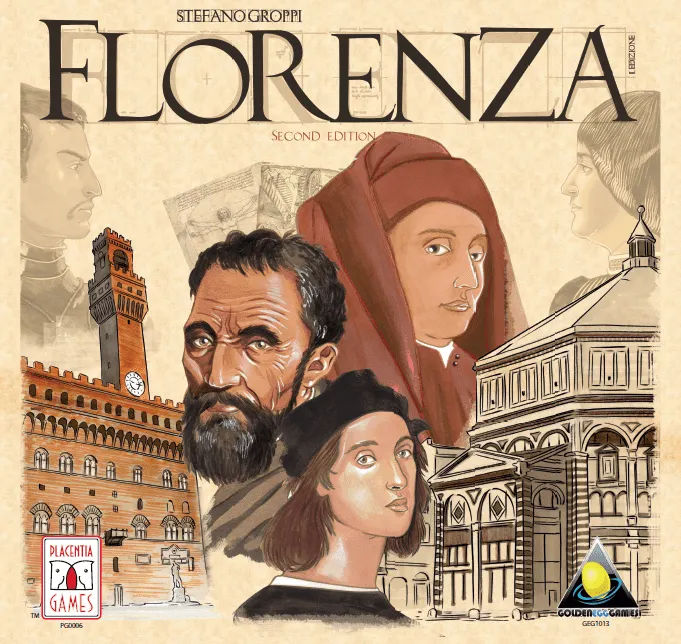
2010
Pomoc w zasadach gry Florenza
Zrozumiałe wyjaśnienia tur, efektów kart i spornych sytuacji z odnośnikami do oficjalnych źródeł i zapisaną historią pytań.
Dla 2 graczy
Co chcesz wiedzieć?
Odpowiedzi pochodzą z oficjalnej instrukcji, ze stroną do sprawdzenia.
Florenza to gra planszowa wydana w 2010 roku dla 2–5 graczy, z rozgrywką trwającą 90–120 minut i dla osób od 14 lat. Projekt gry: Stefano Groppi. Główne mechaniki: Worker Placement.


Po angielsku
In Florenza, the players are the heads of the most powerful families in Florenza during the Renaissance period. The goal of the game is to become the most famous patron of the arts by hiring the most famous artists of the period and financing their works. Each player can commission artworks in his own district, the Cathedral, or in the civic buildings of the city. Each artwork requires money and resources to complete. To earn the money and resources the artists need, the players send their workers to labor in various workshops, possibly even in their opponents’ districts. Additional workers can be earned by offering charity to the church. During the game, players will earn prestige points, primarily by completing artworks. Prestige points can be spent during the game, but at the end of the game they will be the player’s primary source of victory points. All of the characters in the game are real historical figures that lived and worked in Italy during the Renaissance. Most of them worked in Florence. All of the buildings in the game were real Renaissance workshops. The artworks the players can complete include the masterpieces of some of the most famous artists in the world. Note from the designers directly from the rulebook: "We apologize if we included some characters in the game who never worked in Florence during the Renaissance, but we wanted to include all of the most important artists (in our opinion) from that golden age of Italian art and culture. Michelangelo, for example, left an important mark on the history of the city—and the Renaissance period—even if he was only in Florence for a short time. We also added some portraits of military leaders (created by Ivan Zoni) to the rulebook. They are not involved in the game, but they were influential members of public life during this era. The names of the buildings, parts of the Cathedral, and the workshops are in the literal form they had in Italy during the 1400-1600 period. Some of them are unchanged in the modern Italian language, some have changed a little, and others have completely disappeared or remain only in some dialects. We chose to maintain those words, without translating them into a language that the real artists didn’t know. We hope you agree with our choice, and we hope you have a good time playing Florenza!"
Według katalogu Florenza obsługuje od 2 do 5 graczy. Ten zakres odpowiada liczbie graczy podanej przez wydawcę, więc grę można przygotować dla dowolnej grupy w jego granicach. Przygotowanie, niektóre zasady i punktacja mogą jednak różnić się w zależności od liczby graczy; dokładną konfigurację sprawdź w instrukcji swojego wydania.
Podany czas rozgrywki w Florenza wynosi 90–120 minut. To szacunek wydawcy dla pełnej partii. Rzeczywisty czas zależy od grupy, liczby graczy i znajomości zasad: pierwsze partie zwykle trwają dłużej, a doświadczone grupy kończą szybciej. Przygotowanie gry i tłumaczenie zasad nie są wliczone w ten szacunek.
Katalog podaje dla Florenza wiek od 14 lat. To zalecenie wydawcy, które uwzględnia wymagania dotyczące czytania, złożoność zasad i drobne elementy, a nie tylko tematykę. Młodsi gracze często mogą dołączyć z pomocą dorosłego; sprawdź zalecenie wiekowe swojego wydania i weź pod uwagę doświadczenie grupy z grami planszowymi.
Florenza ma ocenę złożoności 3,7 na 5 według graczy BoardGameGeek, co czyni ją grą średnio złożoną. Ocena pokazuje, ile znajomości zasad, planowania i podejmowania decyzji wymaga typowa rozgrywka. Cięższe gry wymagają dłuższego pierwszego tłumaczenia, dlatego przed wieczorem z grami warto skorzystać z przewodnika przygotowania.
Florenza należy do tych kategorii: Economic, City Building i Renaissance. Główne mechaniki to Worker Placement. Kategorie opisują temat i świat gry, a mechaniki to, co gracze faktycznie robią w swojej turze. Każda mechanika prowadzi do strony katalogu z podobnymi grami, co pomaga znaleźć coś porównywalnego na kolejny wieczór.
Autorzy wymienieni przy Florenza to: Stefano Groppi. Te informacje pochodzą z opublikowanych danych gry i wskazują osoby odpowiedzialne za jej projekt, a nie ilustratorów czy wydawców. Strony autorów w MeepleRules zbierają inne tytuły tych samych twórców, co pomaga, gdy gra ci się podoba i szukasz podobnych.
W katalogu Florenza figuruje jako gra podstawowa. Można w nią grać samodzielnie, korzystając z elementów z pudełka, bez żadnego innego tytułu. Dodatki, jeśli istnieją, dokładają nową zawartość lub zasady i są wymienione w katalogu osobno, z odnośnikiem do tej gry podstawowej.