
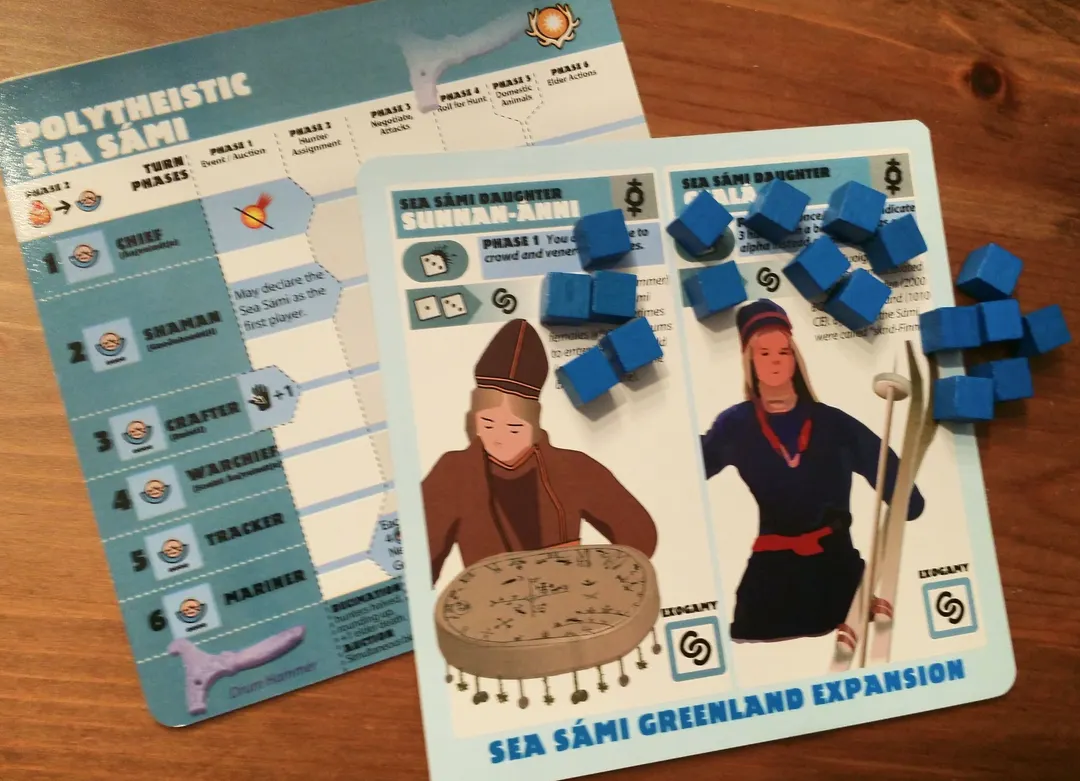
- Ocena BGG
- 6,9
Greenland: Sea Sámi
- 1–4 graczy
- 60–120 min
- Złożoność 2,7/5
- 2015
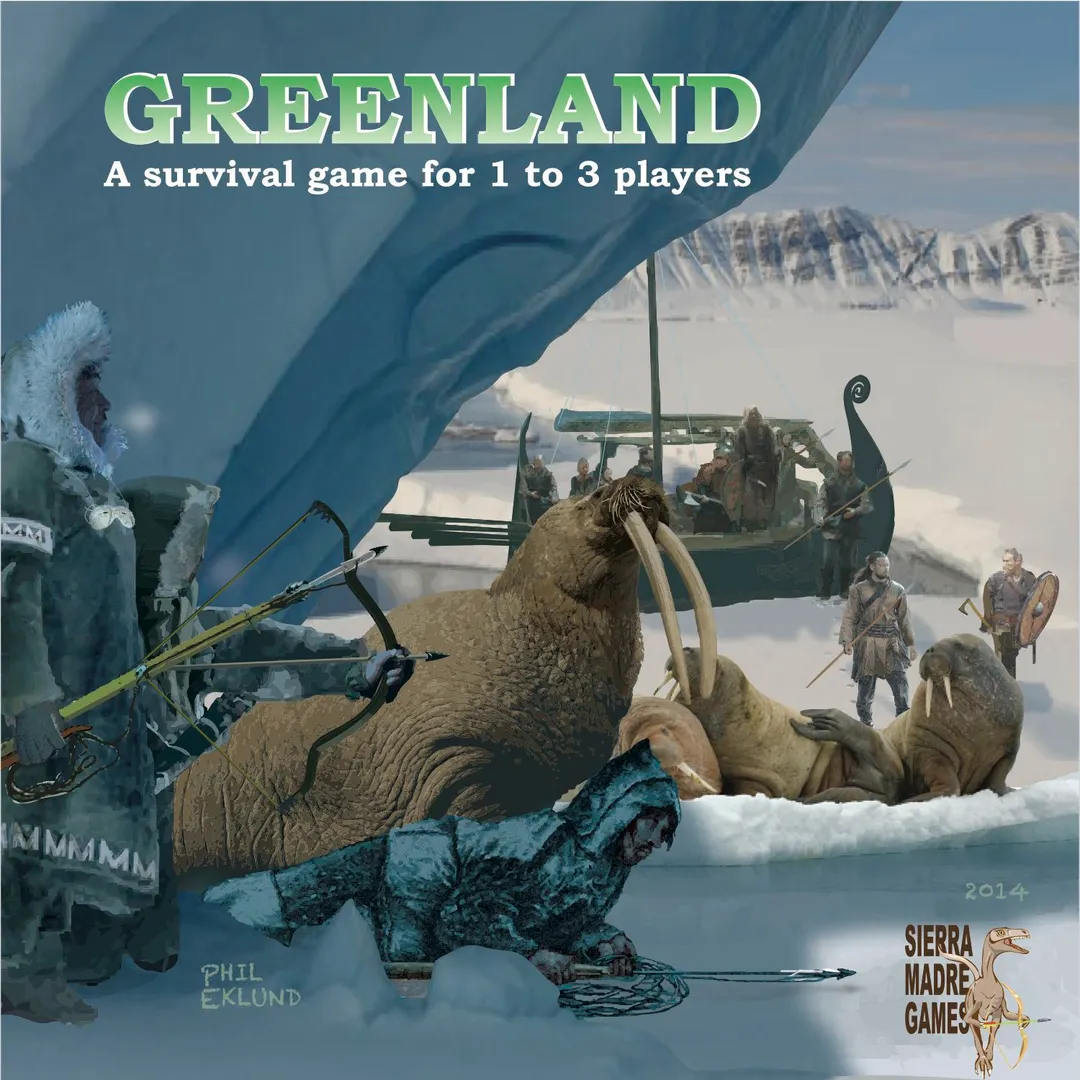
2014
Pomoc w zasadach gry Greenland
Zrozumiałe wyjaśnienia tur, efektów kart i spornych sytuacji z odnośnikami do oficjalnych źródeł i zapisaną historią pytań.
Dla 1 gracza
Co chcesz wiedzieć?
Odpowiedzi pochodzą z oficjalnej instrukcji, ze stroną do sprawdzenia.
Greenland to gra planszowa wydana w 2014 roku dla 1–3 graczy, z rozgrywką trwającą 60–120 minut i dla osób od 12 lat. Projekt gry: Phil Eklund i Philipp Klarmann. Główne mechaniki: Auction / Bidding, Dice Rolling i Simulation.


Po angielsku
The three players in Greenland represent the Tunit (green), Norse (red), and Thule (yellow) tribes inhabiting Greenland from the 11th to the 15th centuries. As a tribe, you attempt to secure food, resources, and technology to increase the size of your tribe and support children, elders, and livestock while also wiping out competing species or gathering resources to collect victory points. You must work around the weather and the extinction of natural resources as well as negotiate deals to protect your wives while you decide between monotheism or polytheism. In this tableau-building game, you'll send your population out to hunt native species of Greenland — but some might not come back. (Historically, the climate turned frigid and all but the Thule (Inuit) died out.) In the game, play takes place over six phases; all players complete each phase in turn order, then the next phase starts. Each turn is one generation. In order: Resolve events: Examples include elder deaths, animal migrations, feuds, or global cooling. If a trade ship arrives, an auction is held for its wares. Assign hunters: Hunters are assigned to hunting grounds, resource gathering, colonizing the New World, raiding other tribes for wives or animals, or promotion to an elder. Negotiate: Players can bribe others to peacefully withdraw hunters, including marrying them to their daughters. Players with a War Chief Elder can use hunters to attack others on the same card. The New World turns hostile if there are too many colonists. Resolve hunting: Roll a die for each hunter and modify it for technologies and marriages. Success can result in gaining new hunters, resources, hand cards, wives, and/or technologies. Beware, as some animals can be confused by the prey-predator relationship and your hunters might not return. Some successes let your take cards from the central play area into your hand if within hand limit. Maintain livestock: Pay to keep the animals you've already domesticated. Take elder actions: Examples include invention, domestication, proselytization, and witch-burning. If you have no elders, you can convert to monotheism. Depending on each player's ending theistic worldview, he has a variable scoring based on successful hunts (polytheism) or resource gathering (monotheism).
Według katalogu Greenland obsługuje od 1 do 3 graczy. Ten zakres odpowiada liczbie graczy podanej przez wydawcę, więc grę można przygotować dla dowolnej grupy w jego granicach. Przygotowanie, niektóre zasady i punktacja mogą jednak różnić się w zależności od liczby graczy; dokładną konfigurację sprawdź w instrukcji swojego wydania.
Podany czas rozgrywki w Greenland wynosi 60–120 minut. To szacunek wydawcy dla pełnej partii. Rzeczywisty czas zależy od grupy, liczby graczy i znajomości zasad: pierwsze partie zwykle trwają dłużej, a doświadczone grupy kończą szybciej. Przygotowanie gry i tłumaczenie zasad nie są wliczone w ten szacunek.
Katalog podaje dla Greenland wiek od 12 lat. To zalecenie wydawcy, które uwzględnia wymagania dotyczące czytania, złożoność zasad i drobne elementy, a nie tylko tematykę. Młodsi gracze często mogą dołączyć z pomocą dorosłego; sprawdź zalecenie wiekowe swojego wydania i weź pod uwagę doświadczenie grupy z grami planszowymi.
Greenland ma ocenę złożoności 3,3 na 5 według graczy BoardGameGeek, co czyni ją grą średnio złożoną. Ocena pokazuje, ile znajomości zasad, planowania i podejmowania decyzji wymaga typowa rozgrywka. Cięższe gry wymagają dłuższego pierwszego tłumaczenia, dlatego przed wieczorem z grami warto skorzystać z przewodnika przygotowania.
Greenland należy do tych kategorii: Card Game, Economic i Medieval. Główne mechaniki to Auction / Bidding, Dice Rolling i Simulation. Kategorie opisują temat i świat gry, a mechaniki to, co gracze faktycznie robią w swojej turze. Każda mechanika prowadzi do strony katalogu z podobnymi grami, co pomaga znaleźć coś porównywalnego na kolejny wieczór.
Autorzy wymienieni przy Greenland to: Phil Eklund i Philipp Klarmann. Te informacje pochodzą z opublikowanych danych gry i wskazują osoby odpowiedzialne za jej projekt, a nie ilustratorów czy wydawców. Strony autorów w MeepleRules zbierają inne tytuły tych samych twórców, co pomaga, gdy gra ci się podoba i szukasz podobnych.
W katalogu Greenland figuruje jako gra podstawowa. Można w nią grać samodzielnie, korzystając z elementów z pudełka, bez żadnego innego tytułu. Dodatki, jeśli istnieją, dokładają nową zawartość lub zasady i są wymienione w katalogu osobno, z odnośnikiem do tej gry podstawowej.