
- Pozycja w BGG
- BGG #4627
- Ocena BGG
- 7,1
Goblin Vaults
- 1–5 graczy
- 30–45 min
- Złożoność 2,2/5
- 2023
2010
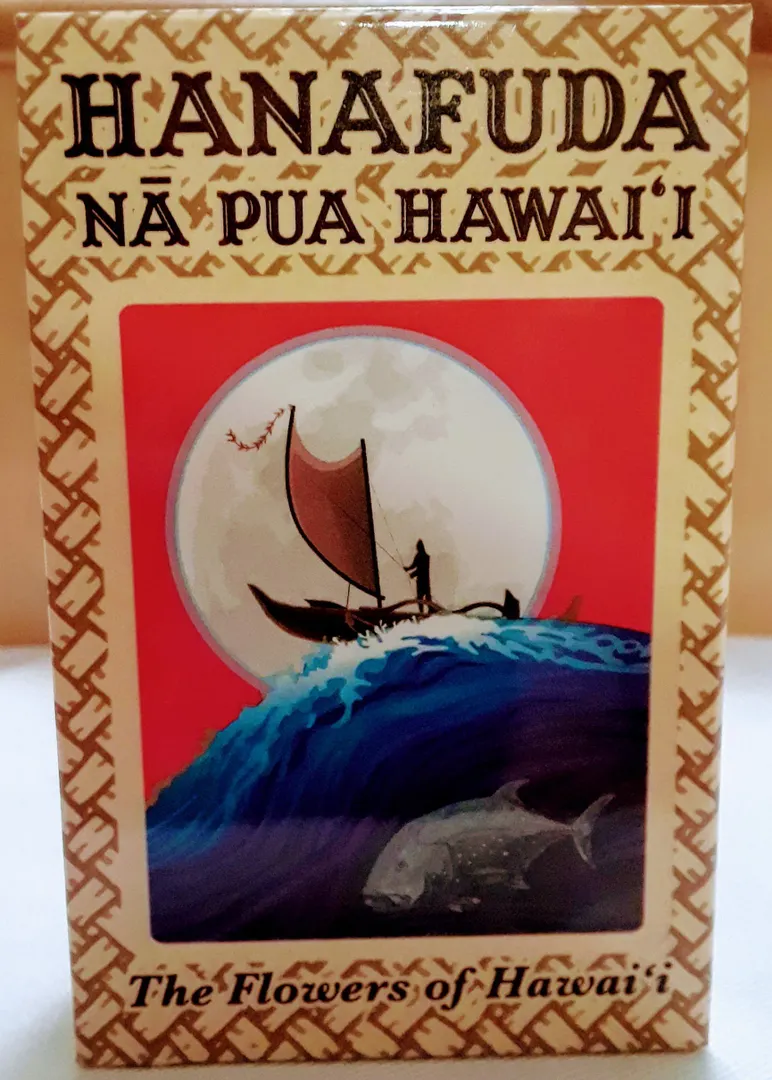
Pomoc w zasadach gry Hanafuda Nā Pua Hawai'i: The Flowers of Hawai'i
Zrozumiałe wyjaśnienia tur, efektów kart i spornych sytuacji z odnośnikami do oficjalnych źródeł i zapisaną historią pytań.
Co chcesz wiedzieć?
Odpowiedzi pochodzą z oficjalnej instrukcji, ze stroną do sprawdzenia.
Hanafuda Nā Pua Hawai'i: The Flowers of Hawai'i to gra planszowa wydana w 2010 roku dla 2–6 graczy i dla osób od 6 lat. Projekt gry: Jason Nakano. Główne mechaniki: Hand Management, Set Collection i Trick-taking.






Po angielsku
A variant of the traditional Japanese card game 'Hanafuda', this deck of cards is specifically designed for the Hawaiian Style game known as 'Sakura'. Two to six people can play, either individually or as teams of two. The 48 cards are divided into twelve 'hiki' or suits, each corresponding to a specific month. The four cards in each hiki have 20, 10, 5, and zero points. The objective of the game is to accumulate the most points by matching cards. The highest possible score is 240 points. After shuffling and cutting the deck, the 'oya' (dealer) deals cards counter-clockwise to the players; the number of cards dealt differs depending on the number of players. The oya then plays a number of cards in the center of the table, known as the "field". The remainder of the deck is set nearby as a draw stack. Play begins with the oya and moves counter-clockwise. The player draws a card from her hand and places it in the field. If the played card matches the hiki (suit) of a card in the field, the player places her card on top of the matching card to show everyone the match. She then picks up both cards and places them face-up in a "points section" in front of her. She discards any cards with no value in the 'kasu' (rubbish) pile behind the draw stack. Next, the player draws one card from the draw stack. If it matches a card in the field, she must take the pair of cards. Otherwise, the card is left in the field. This ends that player's turn. It is possible that a player may capture as many as four cards per turn. The player to the right takes the next turn. Play continues in this fashion until all the cards have been used in each player's hand. Points are then totaled. Advanced play adds a wild card and also 'yaku' (bonus combinations) in special three-card combinations that are scored at the end of the game. Holding one or more yaku causes the other players to deduct points from their score, rather than adding points to the yaku-player's score.
Według katalogu Hanafuda Nā Pua Hawai'i: The Flowers of Hawai'i obsługuje od 2 do 6 graczy. Ten zakres odpowiada liczbie graczy podanej przez wydawcę, więc grę można przygotować dla dowolnej grupy w jego granicach. Przygotowanie, niektóre zasady i punktacja mogą jednak różnić się w zależności od liczby graczy; dokładną konfigurację sprawdź w instrukcji swojego wydania.
Katalog podaje dla Hanafuda Nā Pua Hawai'i: The Flowers of Hawai'i wiek od 6 lat. To zalecenie wydawcy, które uwzględnia wymagania dotyczące czytania, złożoność zasad i drobne elementy, a nie tylko tematykę. Młodsi gracze często mogą dołączyć z pomocą dorosłego; sprawdź zalecenie wiekowe swojego wydania i weź pod uwagę doświadczenie grupy z grami planszowymi.
Hanafuda Nā Pua Hawai'i: The Flowers of Hawai'i należy do tych kategorii: Card Game. Główne mechaniki to Hand Management, Set Collection i Trick-taking. Kategorie opisują temat i świat gry, a mechaniki to, co gracze faktycznie robią w swojej turze. Każda mechanika prowadzi do strony katalogu z podobnymi grami, co pomaga znaleźć coś porównywalnego na kolejny wieczór.
Autorzy wymienieni przy Hanafuda Nā Pua Hawai'i: The Flowers of Hawai'i to: Jason Nakano. Te informacje pochodzą z opublikowanych danych gry i wskazują osoby odpowiedzialne za jej projekt, a nie ilustratorów czy wydawców. Strony autorów w MeepleRules zbierają inne tytuły tych samych twórców, co pomaga, gdy gra ci się podoba i szukasz podobnych.
W katalogu Hanafuda Nā Pua Hawai'i: The Flowers of Hawai'i figuruje jako gra podstawowa. Można w nią grać samodzielnie, korzystając z elementów z pudełka, bez żadnego innego tytułu. Dodatki, jeśli istnieją, dokładają nową zawartość lub zasady i są wymienione w katalogu osobno, z odnośnikiem do tej gry podstawowej.
