
- Pozycja w BGG
- BGG #9924
- Ocena BGG
- 8,0
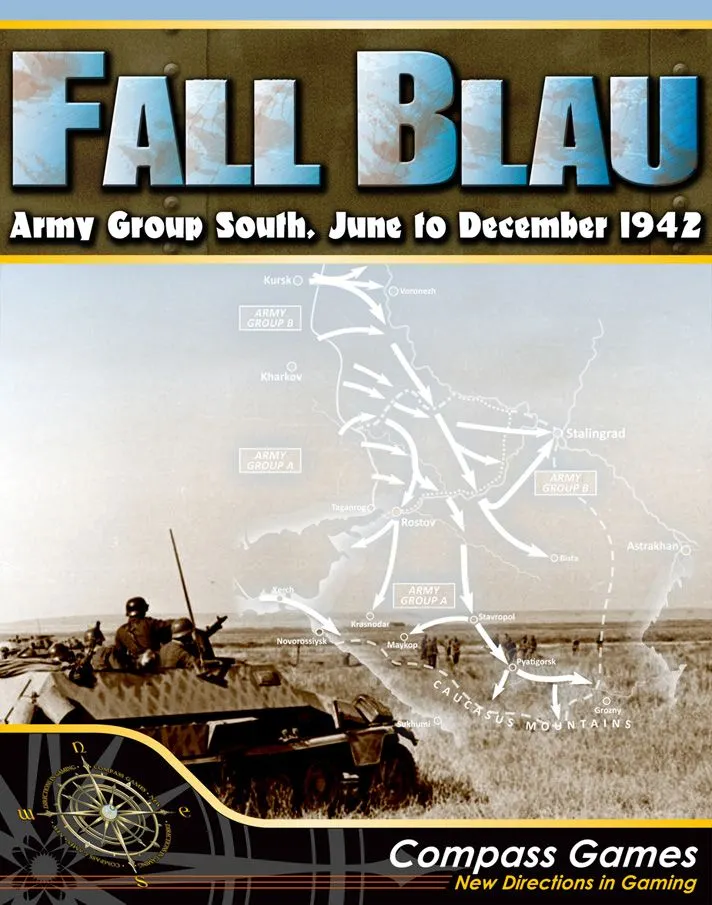
Fall Blau: Army Group South, June to December 1942
- 1–6 graczy
- 30–420 min
- Złożoność 2,9/5
- 2016
2021
Pomoc w zasadach gry Kharkov Battles: Before & After Fall Blau
Zrozumiałe wyjaśnienia tur, efektów kart i spornych sytuacji z odnośnikami do oficjalnych źródeł i zapisaną historią pytań.
Dla 2 graczy
Co chcesz wiedzieć?
Odpowiedzi pochodzą z oficjalnej instrukcji, ze stroną do sprawdzenia.
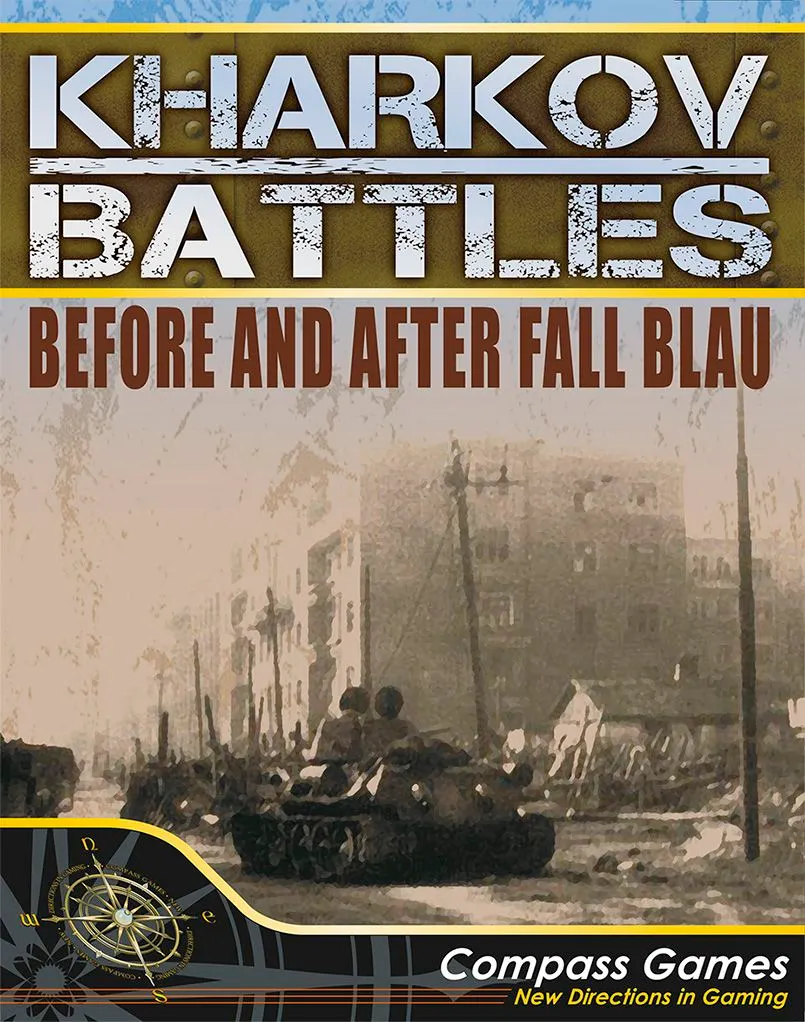
Kharkov Battles: Before & After Fall Blau to gra planszowa wydana w 2021 roku dla 2 graczy i z rozgrywką trwającą 90–4800 minut. Projekt gry: Greg Blanchett. Główne mechaniki: Dice Rolling, Grid Movement i Hexagon Grid.




Po angielsku
Kharkov Battles uses the Fall Blau basic rules to cover the Second & Third Battles of Kharkov. Basics of the system are: Stacking is 3 units per hex and combat out of a hex is restricted. Large units (mainly German divisions and Soviet corps) have Combat Ratings which pull a strength chit for combat. Typically only one unit with a strength chit may combat out of a hex along with all smaller units. Movement and Combat phases with Mobile Assaults for mechanized units during certain situations of movement. CRT for combats keys off the defender's terrain and uses column shifts for extras like air support, combined arms, fortifications, etc. Combat results have some mandatory step losses, but the rest a player's choice on taking step loss or retreating. Advances after combat are along the Path of Retreat for non-mech units, but mech or cav units may deviate. Support Points are used to allow German supply to reach units for mechanized movement and attacks during turn. Support (for Axis attacks) is traced simply a number of hexes to a HQ and then a number of hexes to a road which leads to the source. Supply is just a general trace to a source. Given the nature of the covered battles, this game has a shorter playtime and smaller space requirements making it an easier intro into the system used by Fall Blau. Included is a revised Terrain Effects Chart which should ease reference fatigue for either game. An additional map is included which is made to mate with the Fall Blau maps, allowing players to combine the two games into one "Grand Campaign" to be played into March 1943. Also included are extra counters and reinforcement charts to allow for this possibility. There are four scenarios within the game: three independent and one which requires Fall Blau to play. Independent Scenarios: Second Kharkov (K)(Six Turns/Avg Time 90-120 min)- Soviet attack and German Operation Fridericus to reduce the Izyum Salient from 12-28 May 1942. Third Kharkov (L)(Six Turns/Avg Time 90-120 min)- German drive to retake Kharkov in March 1943. Operation Star Scenario (Sixteen Turns/Avg Time 8 hrs)- Soviet drive for Kharkov and the Dnepr crossings from 2 February to 21 March 1943. Fall Blau Scenarios: January Campaign (J)(14 Turns/Avg Time 10 hrs)- Maps A & B - Soviet “Little Saturn” Operation has reached its high water mark and Popov’s 5th Tank Army is about to launch attacks of its own. Wintergewitter has failed and Fourth PanzerArmee is conducting a fighting withdrawal - 26 December 1942 to 5 February 1943. Extended Fall Blau using new counters and reinforcement charts (74 Turns/Avg Time 60-70 hrs)- All Maps (except KH) - Starting at 28 June 1942 and ending on 5 February 1943. Product Information: Complexity: 5 out of 10 Solitaire Suitability: 8 out of 10 Time Scale: 1 turn = 3 days Map Scale: 1 hex = 6.5 miles or about 10km Unit Scale: Mostly Divisions, with Corps, Brigades and Battalions, as needed. Playing Time: Less than two hours for small scenarios and up to 80 hours for the extended Fall Blau campaign Players: 2 and solitaire Components: One 22 X 34 inch winter themed main map (Map KB) One 22 X 34 inch Fall Blau extension map (Map D) One 20 x 24 inch map for Second Kharkov with 19mm hexes (Map KH) Three Countersheets – 840 counters (1/2” size, 160 for use with Fall Blau) One 24 page Rulebook Eleven Player Aid cards with various Scenario Set-Ups, Tracks, Charts and Tables (four double-sided 11x17, seven single-sided 9x11... of those, two 11x17 for use with Fall Blau and four 9x11 that need to be photocopied for use with both games) One 10-sided dice One Box and Lid set
Według katalogu Kharkov Battles: Before & After Fall Blau obsługuje 2 graczy. To liczba graczy podana przez wydawcę, więc gra jest zaprojektowana dokładnie dla takiej liczby uczestników. Warianty dla grup innej wielkości, jeśli w ogóle istnieją, opisano w instrukcji twojego wydania; sprawdź ją uważnie, zanim przygotujesz inną konfigurację stołu.
Podany czas rozgrywki w Kharkov Battles: Before & After Fall Blau wynosi 90–4800 minut. To szacunek wydawcy dla pełnej partii. Rzeczywisty czas zależy od grupy, liczby graczy i znajomości zasad: pierwsze partie zwykle trwają dłużej, a doświadczone grupy kończą szybciej. Przygotowanie gry i tłumaczenie zasad nie są wliczone w ten szacunek.
Kharkov Battles: Before & After Fall Blau ma ocenę złożoności 2,8 na 5 według graczy BoardGameGeek, co czyni ją grą raczej lekką. Ocena pokazuje, ile znajomości zasad, planowania i podejmowania decyzji wymaga typowa rozgrywka. Cięższe gry wymagają dłuższego pierwszego tłumaczenia, dlatego przed wieczorem z grami warto skorzystać z przewodnika przygotowania.
Kharkov Battles: Before & After Fall Blau należy do tych kategorii: Wargame i World War II. Główne mechaniki to Dice Rolling, Grid Movement i Hexagon Grid. Kategorie opisują temat i świat gry, a mechaniki to, co gracze faktycznie robią w swojej turze. Każda mechanika prowadzi do strony katalogu z podobnymi grami, co pomaga znaleźć coś porównywalnego na kolejny wieczór.
Autorzy wymienieni przy Kharkov Battles: Before & After Fall Blau to: Greg Blanchett. Te informacje pochodzą z opublikowanych danych gry i wskazują osoby odpowiedzialne za jej projekt, a nie ilustratorów czy wydawców. Strony autorów w MeepleRules zbierają inne tytuły tych samych twórców, co pomaga, gdy gra ci się podoba i szukasz podobnych.
W katalogu Kharkov Battles: Before & After Fall Blau figuruje jako gra podstawowa. Można w nią grać samodzielnie, korzystając z elementów z pudełka, bez żadnego innego tytułu. Dodatki, jeśli istnieją, dokładają nową zawartość lub zasady i są wymienione w katalogu osobno, z odnośnikiem do tej gry podstawowej.