
- Pozycja w BGG
- BGG #204
- Ocena BGG
- 7,5
Jaipur
- 2 graczy
- 30 min
- Złożoność 1,5/5
- 2009
1800
Pomoc w zasadach gry Koi-Koi
Zrozumiałe wyjaśnienia tur, efektów kart i spornych sytuacji z odnośnikami do oficjalnych źródeł i zapisaną historią pytań.
Co chcesz wiedzieć?
Odpowiedzi pochodzą z oficjalnej instrukcji, ze stroną do sprawdzenia.
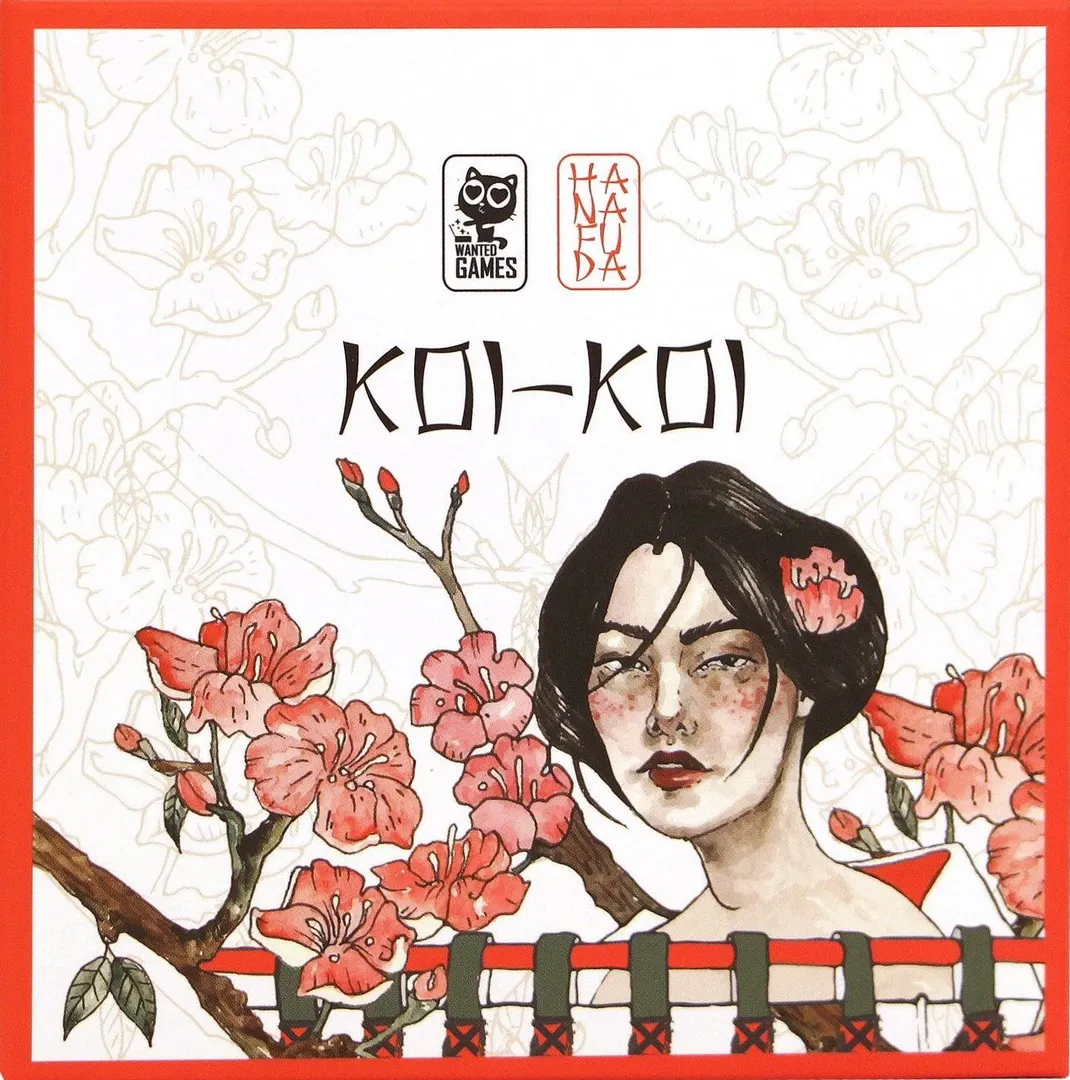
Koi-Koi to gra planszowa wydana w 1800 roku dla 2–4 graczy, z rozgrywką trwającą 30 minut i dla osób od 8 lat. Główne mechaniki: Hand Management, Set Collection i Push Your Luck.










Po angielsku
A traditional two-player Japanese card game played with the beautiful Hanafuda (literally 'Flower card') deck. Setup: the cards are all shuffled, and one card is randomly revealed: the player whom the birthday month is closer to the revealed card month is the first player and thus the dealer. The cards are shuffled again and handed out, two by two, to both players, as for the face-up talon in the middle of the table. Turn: Then each player proceeds as so: firstly, he discards a card face up on the table from his hand. If that card matches another card on the table (matching months), the player then wins both cards which he puts in his face-up collection, in front of him. The collection is always displayed in 4 columns, as so: Flowers, Ribbons, Animals and Specials. If it doesn't match anything, the discarded card stays on the table. Secondly, whether it matched or not, the player then draws the first card from the face down deck, and proceeds the same way: if it doesn't match any card, the drawn card stays on the table, but if it does match a card, the player wins both cards which he adds to his collection. Then the other player takes his turn. Turn's End: At the end of a player's turn, if he has any Yaku, he can stop the current month (inning) by stating his Yakus, then the points are scored and the next month begins. However, if he wishes to continue in order to increase his score for this month, he says "Koi-Koi" and the other player takes his turn. If later on during the game, the player who said Koi-Koi wins another Yaku OR increases his previous Yakus, he can then again stop the game or say Koi-Koi, as many times as he wants. But if a player gets a Yaku in a game where his opponent already said Koi-Koi, then he gets the right either to say Koi-Koi too, or to stop the game and receive his points, thus leading his opponent to get no points at all this month. End: Since each player has 8 cards in his hand, a month (inning) can at worse last 16 turns. In case of a game where one (or both) player(s) said Koi-Koi and no more Yakus have been added or increased before the month ends, then only the last player who said Koi-Koi scores his points as usual. The winner of a month becomes the dealer for the next month, or stays the same if there was not any winner. Each Yaku can add itself to the others. Here are the Yakus: Basic Yakus 10 Flowers / Kasu : 1 point (Each additional Flower adds 1 point) 5 Ribbons / Tanzaku : 1 point (Each additional Ribbon adds 1 point) 3 Purple Ribbons (blue) / Aotan : 5 points 3 Ribbons with Poems (red) / Akatan : 5 points 5 Animals / Tane : 1 Point (Each additional Animal adds 1 point) Doe + Boar + Butterflies / Ino Shika Chô : 5 Points 3 Specials without the Rain Man / Sankô : 5 Points 4 Specials with the Rain Man / Ameshikô : 6 points 4 Special without the Rain Man / Shikô : 8 Points 5 Specials : Gokô : 10 points Special Yakus The Moon + The Sake Cup / Tsukizake : 5 points (Bonus Yaku, only in addition to at least another normal Yaku) The Cherry Curtain + The Sake Cup / Hanamizake : 5 points (Bonus Yaku, only in addition to at least another normal Yaku) The Iris Flower is a "Joker" card: it can either be counted as an Animal, or as Flower to form a Kasu (but not both). The 4 Cards of the current Month / TsukiFuda : 5 points No Yakus / OyaKen : 1 point The game ends when one player reaches 50 points. In some variants, at the end of a month, the points scored by a player are subtracted from his opponent's score. In some variants, the player with the most points at the end of the year (December) wins the game.
Według katalogu Koi-Koi obsługuje od 2 do 4 graczy. Ten zakres odpowiada liczbie graczy podanej przez wydawcę, więc grę można przygotować dla dowolnej grupy w jego granicach. Przygotowanie, niektóre zasady i punktacja mogą jednak różnić się w zależności od liczby graczy; dokładną konfigurację sprawdź w instrukcji swojego wydania.
Podany czas rozgrywki w Koi-Koi wynosi 30 minut. To szacunek wydawcy dla pełnej partii. Rzeczywisty czas zależy od grupy, liczby graczy i znajomości zasad: pierwsze partie zwykle trwają dłużej, a doświadczone grupy kończą szybciej. Przygotowanie gry i tłumaczenie zasad nie są wliczone w ten szacunek.
Katalog podaje dla Koi-Koi wiek od 8 lat. To zalecenie wydawcy, które uwzględnia wymagania dotyczące czytania, złożoność zasad i drobne elementy, a nie tylko tematykę. Młodsi gracze często mogą dołączyć z pomocą dorosłego; sprawdź zalecenie wiekowe swojego wydania i weź pod uwagę doświadczenie grupy z grami planszowymi.
Koi-Koi ma ocenę złożoności 1,8 na 5 według graczy BoardGameGeek, co czyni ją grą lekką. Ocena pokazuje, ile znajomości zasad, planowania i podejmowania decyzji wymaga typowa rozgrywka. Cięższe gry wymagają dłuższego pierwszego tłumaczenia, dlatego przed wieczorem z grami warto skorzystać z przewodnika przygotowania.
Koi-Koi należy do tych kategorii: Card Game. Główne mechaniki to Hand Management, Set Collection i Push Your Luck. Kategorie opisują temat i świat gry, a mechaniki to, co gracze faktycznie robią w swojej turze. Każda mechanika prowadzi do strony katalogu z podobnymi grami, co pomaga znaleźć coś porównywalnego na kolejny wieczór.
W katalogu Koi-Koi figuruje jako gra podstawowa. Można w nią grać samodzielnie, korzystając z elementów z pudełka, bez żadnego innego tytułu. Dodatki, jeśli istnieją, dokładają nową zawartość lub zasady i są wymienione w katalogu osobno, z odnośnikiem do tej gry podstawowej.


