
- Pozycja w BGG
- BGG #18 595
- Ocena BGG
- 8,0
La Bataille de Hanau
- 2 graczy
- Złożoność 3,5/5
- 2021
2011
Pomoc w zasadach gry Le Retour de l'Empereur
Zrozumiałe wyjaśnienia tur, efektów kart i spornych sytuacji z odnośnikami do oficjalnych źródeł i zapisaną historią pytań.
Dla 2 graczy
Co chcesz wiedzieć?
Odpowiedzi pochodzą z oficjalnej instrukcji, ze stroną do sprawdzenia.
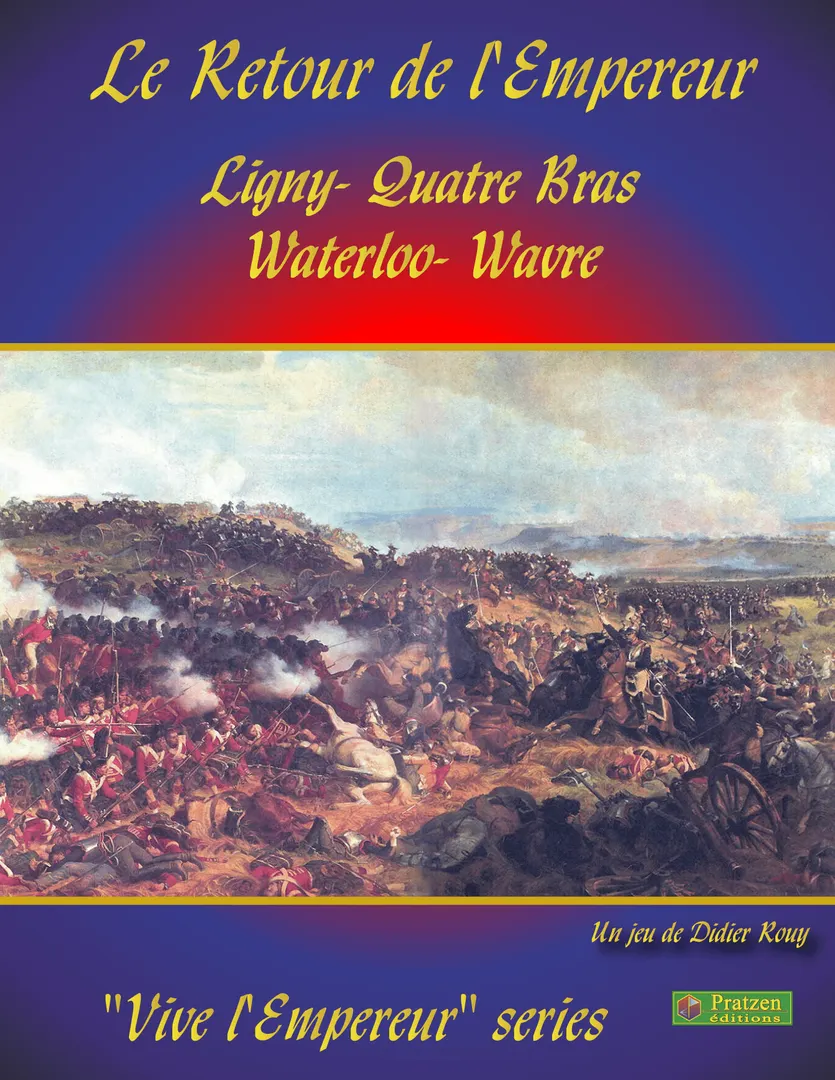
Le Retour de l'Empereur to gra planszowa wydana w 2011 roku dla 2–8 graczy i z rozgrywką trwającą 180–720 minut. Projekt gry: Didier Rouy. Główne mechaniki: Hexagon Grid, Line of Sight i Movement Points.
Po angielsku
Le Retour de l'Empereur (the Return of the Emperor) is a game on four battles of 1815: Quatre Bras, Ligny, Waterloo and Wavre, using the "Vive l'Empereur" game system. "Vive l’Empereur!" is a series of simulation games using a standard rules system and a set of exclusive rules specific to each battle. These particular rules include an historical commentary and the victory conditions for each scenario. The aim of this system is to refight at the regimental scale the numerous battles fought during the Napoleonic Era in Europe, between 1805 and 1815. It uses a map on which the players move counters representing the combat units involved in these battles. The present game simulates battles of the campaign of 1815 in Belgium that belongs to the legend. After he returns from Elba, Napoléon reconstructed an army and landed a preventive strike on the two closest armies, the Prussian army under the old and faithful Blücher, and the Anglo-Allied army under the Duke of Wellington. At first spread over a vast area, these two armies eventually assembled and fought four legendary battles at Quatre Bras and Ligny on the 16th of June, and then two days later at Wavre and of course Waterloo, called Mont St Jean by the French, and La Belle Alliance by the Prussians. This campaign is an impressive collection of missed opportunities on both sides. Now it is your turn to do at least as well, or better... Components: six 22" x 34" maps (scale 250m/hex) 600 counters, including 300 combat units 2 rules booklets: the Standard Rules Version 3 and the special rules 10 charts and tables, including army losses more than 30 scenarios and what-ifs, including a 3-day campaing game
Według katalogu Le Retour de l'Empereur obsługuje od 2 do 8 graczy. Ten zakres odpowiada liczbie graczy podanej przez wydawcę, więc grę można przygotować dla dowolnej grupy w jego granicach. Przygotowanie, niektóre zasady i punktacja mogą jednak różnić się w zależności od liczby graczy; dokładną konfigurację sprawdź w instrukcji swojego wydania.
Podany czas rozgrywki w Le Retour de l'Empereur wynosi 180–720 minut. To szacunek wydawcy dla pełnej partii. Rzeczywisty czas zależy od grupy, liczby graczy i znajomości zasad: pierwsze partie zwykle trwają dłużej, a doświadczone grupy kończą szybciej. Przygotowanie gry i tłumaczenie zasad nie są wliczone w ten szacunek.
Le Retour de l'Empereur ma ocenę złożoności 3,3 na 5 według graczy BoardGameGeek, co czyni ją grą średnio złożoną. Ocena pokazuje, ile znajomości zasad, planowania i podejmowania decyzji wymaga typowa rozgrywka. Cięższe gry wymagają dłuższego pierwszego tłumaczenia, dlatego przed wieczorem z grami warto skorzystać z przewodnika przygotowania.
Le Retour de l'Empereur należy do tych kategorii: Wargame i Napoleonic. Główne mechaniki to Hexagon Grid, Line of Sight i Movement Points. Kategorie opisują temat i świat gry, a mechaniki to, co gracze faktycznie robią w swojej turze. Każda mechanika prowadzi do strony katalogu z podobnymi grami, co pomaga znaleźć coś porównywalnego na kolejny wieczór.
Autorzy wymienieni przy Le Retour de l'Empereur to: Didier Rouy. Te informacje pochodzą z opublikowanych danych gry i wskazują osoby odpowiedzialne za jej projekt, a nie ilustratorów czy wydawców. Strony autorów w MeepleRules zbierają inne tytuły tych samych twórców, co pomaga, gdy gra ci się podoba i szukasz podobnych.
W katalogu Le Retour de l'Empereur figuruje jako gra podstawowa. Można w nią grać samodzielnie, korzystając z elementów z pudełka, bez żadnego innego tytułu. Dodatki, jeśli istnieją, dokładają nową zawartość lub zasady i są wymienione w katalogu osobno, z odnośnikiem do tej gry podstawowej.