

- Pozycja w BGG
- BGG #608
- Ocena BGG
- 7,0
Hanabi
- 2–5 graczy
- 25 min
- Złożoność 1,7/5
- 2010
1960
Pomoc w zasadach gry Lie Detector
Zrozumiałe wyjaśnienia tur, efektów kart i spornych sytuacji z odnośnikami do oficjalnych źródeł i zapisaną historią pytań.
Dla 2 graczy
Co chcesz wiedzieć?
Odpowiedzi pochodzą z oficjalnej instrukcji, ze stroną do sprawdzenia.
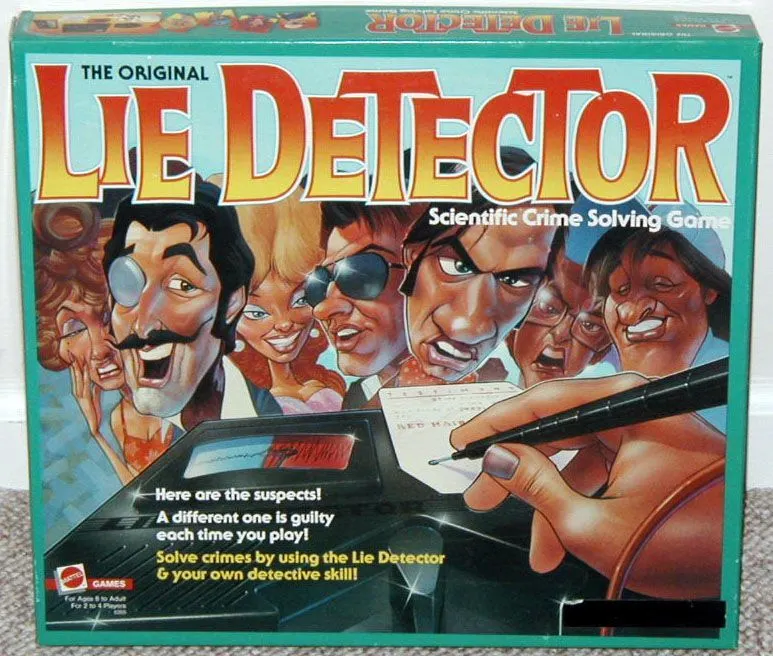
Lie Detector to gra planszowa wydana w 1960 roku dla 2–4 graczy, z rozgrywką trwającą 60 minut i dla osób od 8 lat. Główne mechaniki: Memory.





Po angielsku
Lie Detector includes a small plastic non-electronic 'Lie Detector Machine', a plastic peg board for keeping score, and numerous 'Arrest', 'Summons', 'Secret Information', and 'Suspect' cards. Of the 24 suspects, one of them has committed a crime. The players have a number of turns to find the guilty party by interrogating suspects with the Lie Detector machine. To play Lie Detector, the Suspect cards are divided among the game players. One of the six square 'Guilty' cards is inserted into the back of the Lie Detector machine so that no one knows which suspect is the criminal; each 'Guilty' card has four suspects on it, with the guilty suspect being determined by the orientation in which the card is inserted. On their turn, each player questions a suspect by taking the suspect's card, placing it over the front of the Lie Detector and inserting the Lie Detector's wand through a hole in the card and into the Lie Detector itself. If the testimony is false, a bell rings and a needle on the machine points to "False". If it is true, no bell rings and the needle points to "True". (e.g. - The Racketeer says "the Suspect has a 'Big Jaw'... if it comes up 'True' you know that one of the six suspects with a big jaw committed the crime) Also included in the game are special 'Secret Information' cards. These cards have testimony that is known only to the player who own the cards. By process of elimination, the suspects are narrowed down, until a player feels confident that he can make a successful accusation and 'make an arrest'. He checks the guilty card in the machine. If he is right, he gets 5 points plus bonus points for the number of face-up suspects still showing on the table. Additional rounds are played until one player's score is 25 points of more. Mattel, Inc. re-issued this game as Spy Detector with different artwork, and it did not sell nearly as well.
Według katalogu Lie Detector obsługuje od 2 do 4 graczy. Ten zakres odpowiada liczbie graczy podanej przez wydawcę, więc grę można przygotować dla dowolnej grupy w jego granicach. Przygotowanie, niektóre zasady i punktacja mogą jednak różnić się w zależności od liczby graczy; dokładną konfigurację sprawdź w instrukcji swojego wydania.
Podany czas rozgrywki w Lie Detector wynosi 60 minut. To szacunek wydawcy dla pełnej partii. Rzeczywisty czas zależy od grupy, liczby graczy i znajomości zasad: pierwsze partie zwykle trwają dłużej, a doświadczone grupy kończą szybciej. Przygotowanie gry i tłumaczenie zasad nie są wliczone w ten szacunek.
Katalog podaje dla Lie Detector wiek od 8 lat. To zalecenie wydawcy, które uwzględnia wymagania dotyczące czytania, złożoność zasad i drobne elementy, a nie tylko tematykę. Młodsi gracze często mogą dołączyć z pomocą dorosłego; sprawdź zalecenie wiekowe swojego wydania i weź pod uwagę doświadczenie grupy z grami planszowymi.
Lie Detector ma ocenę złożoności 1,3 na 5 według graczy BoardGameGeek, co czyni ją grą lekką. Ocena pokazuje, ile znajomości zasad, planowania i podejmowania decyzji wymaga typowa rozgrywka. Cięższe gry wymagają dłuższego pierwszego tłumaczenia, dlatego przed wieczorem z grami warto skorzystać z przewodnika przygotowania.
Lie Detector należy do tych kategorii: Deduction i Memory. Główne mechaniki to Memory. Kategorie opisują temat i świat gry, a mechaniki to, co gracze faktycznie robią w swojej turze. Każda mechanika prowadzi do strony katalogu z podobnymi grami, co pomaga znaleźć coś porównywalnego na kolejny wieczór.
W katalogu Lie Detector figuruje jako gra podstawowa. Można w nią grać samodzielnie, korzystając z elementów z pudełka, bez żadnego innego tytułu. Dodatki, jeśli istnieją, dokładają nową zawartość lub zasady i są wymienione w katalogu osobno, z odnośnikiem do tej gry podstawowej.