- Pozycja w BGG
- BGG #2180
- Ocena BGG
- 7,2
Mangrovia
2014
Pomoc w zasadach gry Mangrovia
Zrozumiałe wyjaśnienia tur, efektów kart i spornych sytuacji z odnośnikami do oficjalnych źródeł i zapisaną historią pytań.
- 2–5 graczy
- 75 min
- 10+
- Złożoność 2,4/5

Dla 2 graczy
Asystent zasad gry Mangrovia
Co chcesz wiedzieć?
Odpowiedzi pochodzą z oficjalnej instrukcji, ze stroną do sprawdzenia.
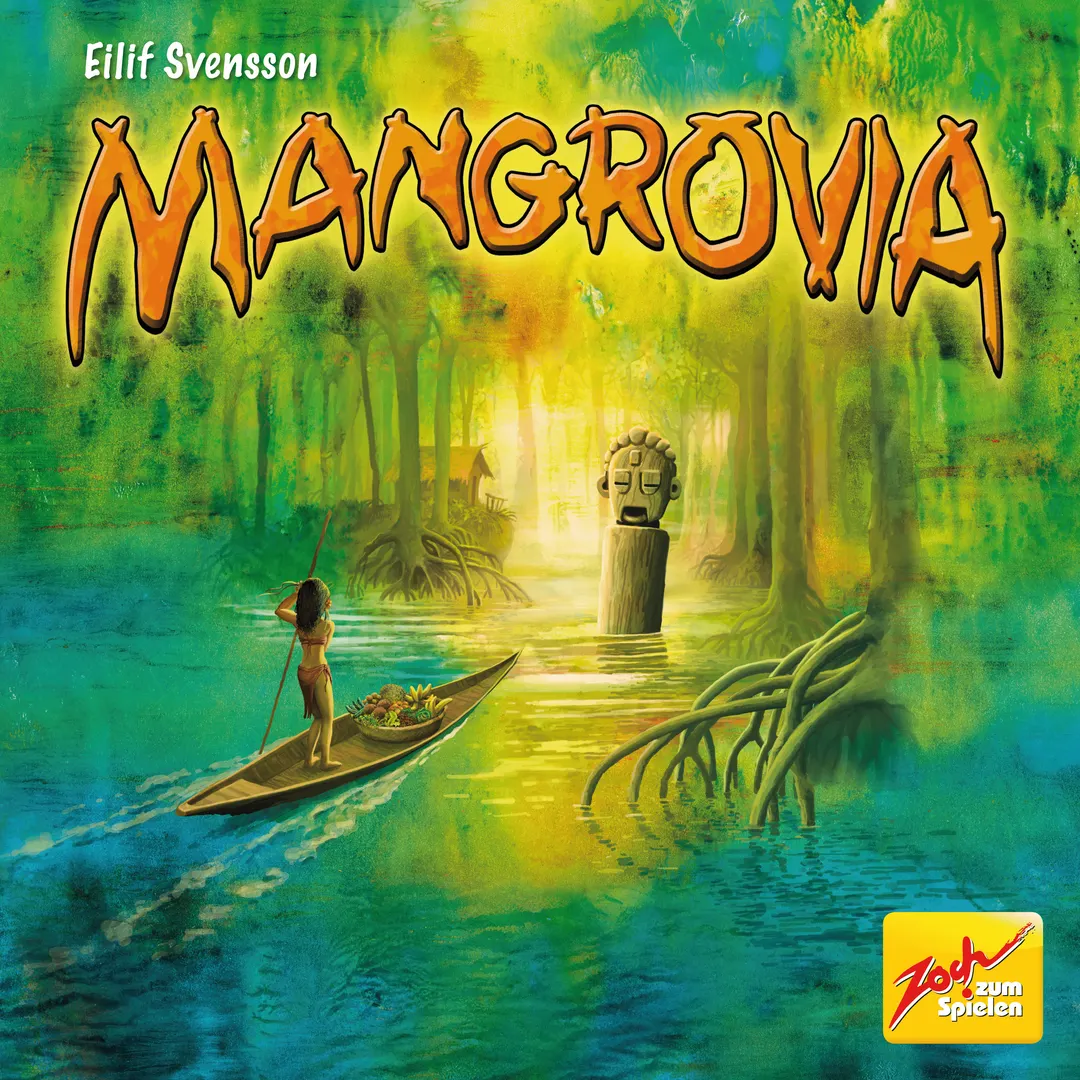
Mangrovia to gra planszowa wydana w 2014 roku dla 2–5 graczy, z rozgrywką trwającą 75 minut i dla osób od 10 lat. Projekt gry: Eilif Svensson. Główne mechaniki: Hand Management, Area Majority / Influence i Variable Phase Order.
O grze
Po angielsku
In Mangrovia, a light "gamer's game"/family game with a Caribbean mangrove setting, a clever role selection mechanism allows the players to choose two different bonuses/actions as well as the turn order in which they want these actions to be carried out — all by placing just one marker. Victory is achievable through a number of viable options, which guarantees high re-playability. The game is a fight over acquiring the best locations for your huts in this appealing and unspoiled landscape. If you manage to do so, you will become the rightful successor of the old chief and win the game. You gain Chief points by having the most huts (and the secondmost huts) along each of the eight divine paths monitored by the statues of Gods. Additional Chief points are earned by controlling sacred locations, by collecting amulets, and simply by building huts at lucrative spaces. Building a hut requires that the space's landscape is "active" and that you can pay the exact price (not overpay) for the space. Therefore, the game feels tight even from the very start. The game gets tighter and tighter towards the end of the game as you have fewer choices of spaces, and as the actions you choose become more and more crucial. In order to succeed in this game, you should carefully choose and time the best possible combination of actions, called "ritual sites". A boat goes from ritual site to ritual site, first on the west side, then on the east side (in opposite order), triggering each action. If, for instance, you choose a ritual site high up, you will have an early choice of cards, but a late choice of space to build your huts or to collect amulets (and vice versa). A fourth action type is to select "active landscapes" and become starting player, which makes it possible to control the next round. After all players have performed two actions, the round ends. The game is usually played over 10-14 rounds and ends when one player builds his last hut. Collecting amulets may be key in this game. Instead of keeping them as Chief points, you may use them to build huts on designated spaces which require payment in amulets instead of cards — and still to the exact price. Building huts on such spaces may be exactly what you need to get the majority along one or two divine paths. In order to gain enough amulets — and amulets of the appropriate values — you should position some of your huts on amulet spaces. The more huts you build on such spaces, the more amulets you can draw. The probability of getting the amulets you need will therefore increase. The game board is built as a matrix system, with some spaces being part of two divine paths while other spaces belong to just one. The spaces that are part of two divine paths are obviously most tempting, but can you afford to build your huts there?
Autorzy
Wydawcy
- Zoch Verlag
Pytania i odpowiedzi
Według katalogu Mangrovia obsługuje od 2 do 5 graczy. Ten zakres odpowiada liczbie graczy podanej przez wydawcę, więc grę można przygotować dla dowolnej grupy w jego granicach. Przygotowanie, niektóre zasady i punktacja mogą jednak różnić się w zależności od liczby graczy; dokładną konfigurację sprawdź w instrukcji swojego wydania.
Podany czas rozgrywki w Mangrovia wynosi 75 minut. To szacunek wydawcy dla pełnej partii. Rzeczywisty czas zależy od grupy, liczby graczy i znajomości zasad: pierwsze partie zwykle trwają dłużej, a doświadczone grupy kończą szybciej. Przygotowanie gry i tłumaczenie zasad nie są wliczone w ten szacunek.
Katalog podaje dla Mangrovia wiek od 10 lat. To zalecenie wydawcy, które uwzględnia wymagania dotyczące czytania, złożoność zasad i drobne elementy, a nie tylko tematykę. Młodsi gracze często mogą dołączyć z pomocą dorosłego; sprawdź zalecenie wiekowe swojego wydania i weź pod uwagę doświadczenie grupy z grami planszowymi.
Mangrovia ma ocenę złożoności 2,4 na 5 według graczy BoardGameGeek, co czyni ją grą raczej lekką. Ocena pokazuje, ile znajomości zasad, planowania i podejmowania decyzji wymaga typowa rozgrywka. Cięższe gry wymagają dłuższego pierwszego tłumaczenia, dlatego przed wieczorem z grami warto skorzystać z przewodnika przygotowania.
Główne mechaniki gry Mangrovia to Hand Management, Area Majority / Influence i Variable Phase Order. Mechaniki opisują, co gracze robią w swojej turze, na przykład rzucają kośćmi, dobierają karty lub rozmieszczają robotników. Każda mechanika prowadzi do strony katalogu z podobnymi grami, jeśli spodobała ci się gra Mangrovia.
Autorzy wymienieni przy Mangrovia to: Eilif Svensson. Te informacje pochodzą z opublikowanych danych gry i wskazują osoby odpowiedzialne za jej projekt, a nie ilustratorów czy wydawców. Strony autorów w MeepleRules zbierają inne tytuły tych samych twórców, co pomaga, gdy gra ci się podoba i szukasz podobnych.
W katalogu Mangrovia figuruje jako gra podstawowa. Można w nią grać samodzielnie, korzystając z elementów z pudełka, bez żadnego innego tytułu. Dodatki, jeśli istnieją, dokładają nową zawartość lub zasady i są wymienione w katalogu osobno, z odnośnikiem do tej gry podstawowej.