- Ocena BGG
- 9,0
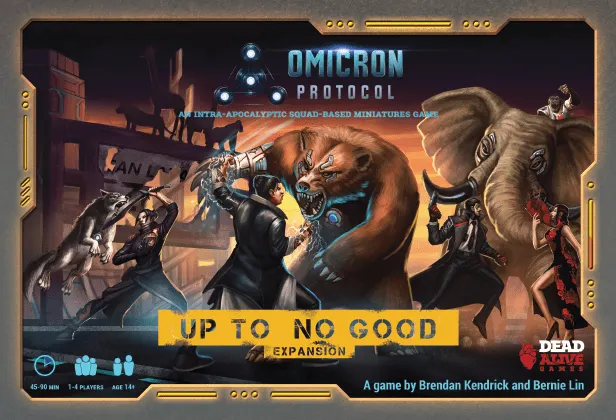
Omicron Protocol: Up to No Good
- 1–4 graczy
- 45–90 min
- 2022
2022
Pomoc w zasadach gry Omicron Protocol
Zrozumiałe wyjaśnienia tur, efektów kart i spornych sytuacji z odnośnikami do oficjalnych źródeł i zapisaną historią pytań.
Dla 1 gracza
Co chcesz wiedzieć?
Odpowiedzi pochodzą z oficjalnej instrukcji, ze stroną do sprawdzenia.
Omicron Protocol to gra planszowa wydana w 2022 roku dla 1–4 graczy, z rozgrywką trwającą 45–90 minut i dla osób od 10 lat. Projekt gry: Bernie Lin i Brendan Kendrick. Główne mechaniki: Area Movement, Dice Rolling i Modular Board.




Po angielsku
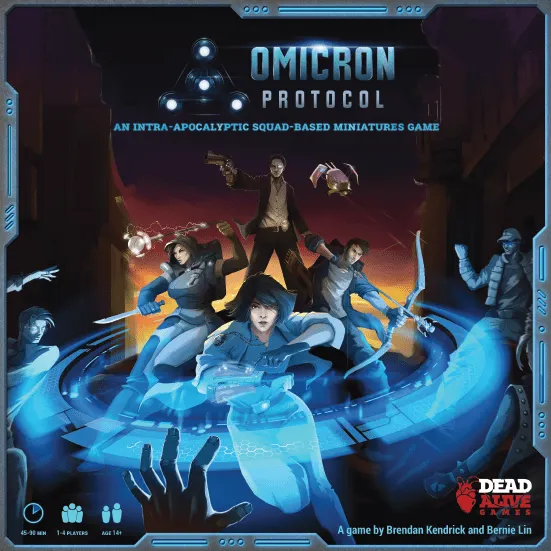
In the year 2050, the utopian city of San Lazaro is locked down and crippled by a mysterious computer virus, turning once-ordinary people into maddeningly violent and unpredictable “CyMS”, Cyber-Memetic Sociopaths. Omicron Protocol is an “intra-apocalyptic”, cyberpunk-themed miniatures skirmish board game for 1-4 players, where you control a squad of unique characters, and take turns controlling a 3rd party enemy to harass your opponent. Or play solo/cooperatively as a team to fight enemies, complete objectives, and survive! Every character is represented by a detailed 32mm-scale miniature, possessing their own rich history and personality, as well as powerful cybernetic abilities! Play the competitive or solo/cooperative modes through various narrative scenarios to survive the crisis! With innovative game mechanics like the Action Store and Luck Tokens, every game is thrilling and exciting. Enjoy a deeply tactical game in under an hour and introduce your gaming friends to skirmish games with Omicron Protocol! In the game, you play with a squad of 1-4 characters, either competitively against another player/team, solo, or cooperatively with friends. Each round consists of spending a shared pool of action points on your characters, activating them one-by-one, and using movement and tactics to survive the onslaught of the Cyber-Memetic Sociopaths (CyMS). All games are based on scenarios derived from the lore of the world (120K+ word collection of stories), and the game can be linked together into a light campaign in both competitive and cooperative modes. In competitive scenarios, the team that scores the most victory points wins. In solo/cooperative scenarios, the players win if they reach the VP goal within a specified number of rounds. Background: Everything can change in a month. The cutting edge West Coast city of San Lazaro had been the epicenter of a cybernetics tech revolution in 2044, ushering all of humanity into the future...but in the year 2050, a mysterious viral menace the likes of which the world had never seen toppled the utopian city in a sea of infection and death. The disease could not be stopped; it evolved to surpass any countermeasure, mutated to answer any cure. In mere days San Lazaro was overwhelmed by the infected. Martial law descended on the city immediately. Barricades and armed soldiers divided its streets into isolated sectors. Efforts to contain the outbreak were as useless as the attempts to control the surging numbers of mysteriously insane and violent residents, a second catastrophe on the heels of the first.. Dubbed ‘Cyber-Memetic Sociopaths’ by the media, with their actions being blamed on an over-immersion in virtual reality, these ‘CyMS’ were spreading across the city in a wave of mindless, indiscriminate violence. With the infection spreading and the murderous CyMS rampaging, the government abandoned San Lazaro and its people after a mere two weeks. All that remains of the city now is a twisted hellscape. The few survivors have banded together in hopes of escaping, while gangs once suppressed by the government have seized control. The CyMS have grown into a constant threat on the streets, sowing fear and terror in their path. In this waking nightmare, your only chance of salvation is to join a faction powerful enough to dominate the foes that stand in your way.
Według katalogu Omicron Protocol obsługuje od 1 do 4 graczy. Ten zakres odpowiada liczbie graczy podanej przez wydawcę, więc grę można przygotować dla dowolnej grupy w jego granicach. Przygotowanie, niektóre zasady i punktacja mogą jednak różnić się w zależności od liczby graczy; dokładną konfigurację sprawdź w instrukcji swojego wydania.
Podany czas rozgrywki w Omicron Protocol wynosi 45–90 minut. To szacunek wydawcy dla pełnej partii. Rzeczywisty czas zależy od grupy, liczby graczy i znajomości zasad: pierwsze partie zwykle trwają dłużej, a doświadczone grupy kończą szybciej. Przygotowanie gry i tłumaczenie zasad nie są wliczone w ten szacunek.
Katalog podaje dla Omicron Protocol wiek od 10 lat. To zalecenie wydawcy, które uwzględnia wymagania dotyczące czytania, złożoność zasad i drobne elementy, a nie tylko tematykę. Młodsi gracze często mogą dołączyć z pomocą dorosłego; sprawdź zalecenie wiekowe swojego wydania i weź pod uwagę doświadczenie grupy z grami planszowymi.
Omicron Protocol ma ocenę złożoności 3,3 na 5 według graczy BoardGameGeek, co czyni ją grą średnio złożoną. Ocena pokazuje, ile znajomości zasad, planowania i podejmowania decyzji wymaga typowa rozgrywka. Cięższe gry wymagają dłuższego pierwszego tłumaczenia, dlatego przed wieczorem z grami warto skorzystać z przewodnika przygotowania.
Omicron Protocol należy do tych kategorii: Wargame, Dice i Zombies. Główne mechaniki to Area Movement, Dice Rolling i Modular Board. Kategorie opisują temat i świat gry, a mechaniki to, co gracze faktycznie robią w swojej turze. Każda mechanika prowadzi do strony katalogu z podobnymi grami, co pomaga znaleźć coś porównywalnego na kolejny wieczór.
Autorzy wymienieni przy Omicron Protocol to: Bernie Lin i Brendan Kendrick. Te informacje pochodzą z opublikowanych danych gry i wskazują osoby odpowiedzialne za jej projekt, a nie ilustratorów czy wydawców. Strony autorów w MeepleRules zbierają inne tytuły tych samych twórców, co pomaga, gdy gra ci się podoba i szukasz podobnych.
W katalogu Omicron Protocol figuruje jako gra podstawowa. Można w nią grać samodzielnie, korzystając z elementów z pudełka, bez żadnego innego tytułu. Dodatki, jeśli istnieją, dokładają nową zawartość lub zasady i są wymienione w katalogu osobno, z odnośnikiem do tej gry podstawowej.