
- Pozycja w BGG
- BGG #6376
- Ocena BGG
- 8,1
Halo: Flashpoint
- 2 graczy
- 30–90 min
- Złożoność 2,9/5
- 2024
2017
Pomoc w zasadach gry Paco Ŝako
Zrozumiałe wyjaśnienia tur, efektów kart i spornych sytuacji z odnośnikami do oficjalnych źródeł i zapisaną historią pytań.
Dla 2 graczy
Co chcesz wiedzieć?
Odpowiedzi pochodzą z oficjalnej instrukcji, ze stroną do sprawdzenia.
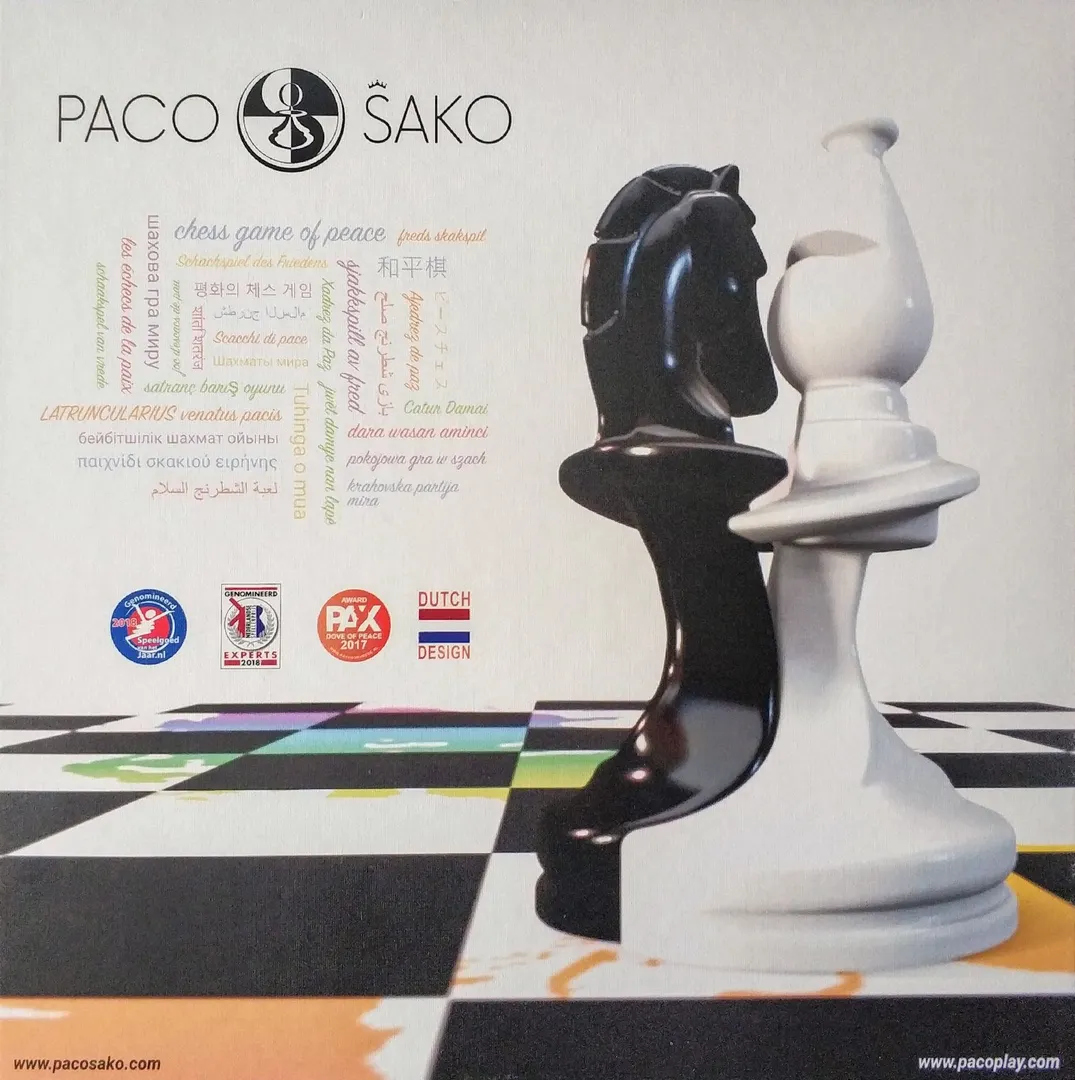
Paco Ŝako to gra planszowa wydana w 2017 roku dla 2 graczy, z rozgrywką trwającą 15–60 minut i dla osób od 4 lat. Projekt gry: Felix Albers. Główne mechaniki: Area Majority / Influence, Square Grid i Moving Multiple Units.



Po angielsku
Paco Ŝako (Esperanto words for "peace chess": pronounce "PAH-tso SHAH-ko" = /'pat͡so 'ʃako/ IPA) is a form of chess created to be an expression of peace, friendship and collaboration. The aim is to find, through strategic gameplay, a way to "embrace" the other player's king. The game represents a constructive conversation or development in which the two sides merge their knowledge, ideas, and strength. During the game, both players try to bring forward good or ever better ideas than the other player by moving their chess pieces around. For both players, the aim is to stand strong for your knowledge, ideas and strength, but you will be open to receive input from the other player when it is their turn. Making the last move and bringing one of your pieces into a union with the other player's King will make you win the game. Paco Ŝako is played on the same board and with the same chess pieces as traditional/classic chess, though the Paco Ŝako chess pieces have a different functionality. Black and white pieces can be merged into a union and can stay together on one square. Because there are no pieces taken, all pieces stay on the board during the game. Once unions are created, both players can still move them; you can take over a union and release your piece out of a union by replacing it with another piece and eventually there is the chain reaction, which really brings out the Paco Ŝako gameplay. Taking over unions and releasing pieces mean you may move several pieces in one turn. The game is very much focused on patterns and creativity, not on piece advantage. The nice thing about this is that both players stay in the game until the last move is made. There can be created an advantage in position and games can be fast because of the dynamics and physical patterns in which several pieces can be moved in one go. When the game develops into an endgame with a lot of unions, there will be a high energy on the board with lots of possibilities, chains and creative options, and often both players will get closer to making the final move. Sometimes it is about having momentum and holding it.
Według katalogu Paco Ŝako obsługuje 2 graczy. To liczba graczy podana przez wydawcę, więc gra jest zaprojektowana dokładnie dla takiej liczby uczestników. Warianty dla grup innej wielkości, jeśli w ogóle istnieją, opisano w instrukcji twojego wydania; sprawdź ją uważnie, zanim przygotujesz inną konfigurację stołu.
Podany czas rozgrywki w Paco Ŝako wynosi 15–60 minut. To szacunek wydawcy dla pełnej partii. Rzeczywisty czas zależy od grupy, liczby graczy i znajomości zasad: pierwsze partie zwykle trwają dłużej, a doświadczone grupy kończą szybciej. Przygotowanie gry i tłumaczenie zasad nie są wliczone w ten szacunek.
Katalog podaje dla Paco Ŝako wiek od 4 lat. To zalecenie wydawcy, które uwzględnia wymagania dotyczące czytania, złożoność zasad i drobne elementy, a nie tylko tematykę. Młodsi gracze często mogą dołączyć z pomocą dorosłego; sprawdź zalecenie wiekowe swojego wydania i weź pod uwagę doświadczenie grupy z grami planszowymi.
Paco Ŝako ma ocenę złożoności 2,9 na 5 według graczy BoardGameGeek, co czyni ją grą raczej lekką. Ocena pokazuje, ile znajomości zasad, planowania i podejmowania decyzji wymaga typowa rozgrywka. Cięższe gry wymagają dłuższego pierwszego tłumaczenia, dlatego przed wieczorem z grami warto skorzystać z przewodnika przygotowania.
Paco Ŝako należy do tych kategorii: Abstract Strategy. Główne mechaniki to Area Majority / Influence, Square Grid i Moving Multiple Units. Kategorie opisują temat i świat gry, a mechaniki to, co gracze faktycznie robią w swojej turze. Każda mechanika prowadzi do strony katalogu z podobnymi grami, co pomaga znaleźć coś porównywalnego na kolejny wieczór.
Autorzy wymienieni przy Paco Ŝako to: Felix Albers. Te informacje pochodzą z opublikowanych danych gry i wskazują osoby odpowiedzialne za jej projekt, a nie ilustratorów czy wydawców. Strony autorów w MeepleRules zbierają inne tytuły tych samych twórców, co pomaga, gdy gra ci się podoba i szukasz podobnych.
W katalogu Paco Ŝako figuruje jako gra podstawowa. Można w nią grać samodzielnie, korzystając z elementów z pudełka, bez żadnego innego tytułu. Dodatki, jeśli istnieją, dokładają nową zawartość lub zasady i są wymienione w katalogu osobno, z odnośnikiem do tej gry podstawowej.