

- Pozycja w BGG
- BGG #843
- Ocena BGG
- 7,0
Escape: The Curse of the Temple
- 1–5 graczy
- 10 min
- Złożoność 1,5/5
- 2012
2008
Pomoc w zasadach gry Paleo
Zrozumiałe wyjaśnienia tur, efektów kart i spornych sytuacji z odnośnikami do oficjalnych źródeł i zapisaną historią pytań.
Dla 2 graczy
Co chcesz wiedzieć?
Odpowiedzi pochodzą z oficjalnej instrukcji, ze stroną do sprawdzenia.
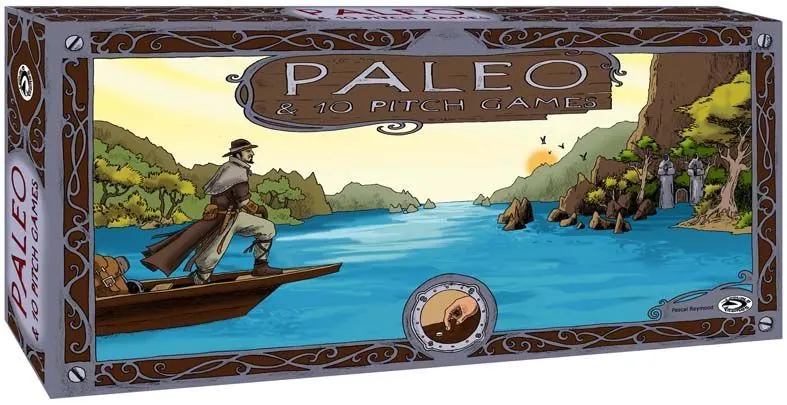
Paleo to gra planszowa wydana w 2008 roku dla 2–4 graczy i z rozgrywką trwającą 30 minut. Projekt gry: Pascal Reymond.








Po angielsku
A strategic game of adventure and dexterity The fabulous city of Paleo was swallowed up by the oceans 5,000 years ago and fell into oblivion. A parchment manuscript has just been discovered, revealing the location of its gates. The city’s immense riches described in the manuscript have inspired much desire and greed. As the head of a team of explorers and mercenaries, you have set up camp in the Paleo Archipelago. But other teams have also arrived at the scene. Protected by your mercenaries, your explorers are ready to launch a search for the keys that will give access to the city. It is up to you to take advantage of the archipelago’s many reefs in order to stay ahead of your competitors. --- In the basic two-player version of Paleo, players set up the 65 x 65 cm board with four central reefs, two sanctuaries for each player in the corners of the board, and five supplemental reefs placed according to various rules. Each player controls a team of five explorers and three mercenaries; you move these pieces by flicking them with your finger as in Crokinole. If your mercenary hits an opponent’s piece, that piece is removed from the board; remove all of the opponent’s pieces, and you win the round and score one point. The explorers are used to enter the opponent’s sanctuaries and recover two keys that then allow the player to enter the gate of Paleo in the center of the board. (Any of your pieces that enters a sanctuary can be exchanged for another piece already captured by the opponent.) This victory is worth two points, and a complete game requires a player to earn four points to win. Rules are included to accommodate three or four players, in addition to rules for ten other games for 2-4 players such as hockey, a kayak race, and Capture the King.
Według katalogu Paleo obsługuje od 2 do 4 graczy. Ten zakres odpowiada liczbie graczy podanej przez wydawcę, więc grę można przygotować dla dowolnej grupy w jego granicach. Przygotowanie, niektóre zasady i punktacja mogą jednak różnić się w zależności od liczby graczy; dokładną konfigurację sprawdź w instrukcji swojego wydania.
Podany czas rozgrywki w Paleo wynosi 30 minut. To szacunek wydawcy dla pełnej partii. Rzeczywisty czas zależy od grupy, liczby graczy i znajomości zasad: pierwsze partie zwykle trwają dłużej, a doświadczone grupy kończą szybciej. Przygotowanie gry i tłumaczenie zasad nie są wliczone w ten szacunek.
Paleo ma ocenę złożoności 1,0 na 5 według graczy BoardGameGeek, co czyni ją grą lekką. Ocena pokazuje, ile znajomości zasad, planowania i podejmowania decyzji wymaga typowa rozgrywka. Cięższe gry wymagają dłuższego pierwszego tłumaczenia, dlatego przed wieczorem z grami warto skorzystać z przewodnika przygotowania.
Paleo należy do tych kategorii: Action / Dexterity i Adventure. Kategorie opisują temat, świat i styl gry, a nie jej zasady. Przefiltruj katalog według tej samej kategorii, aby znaleźć podobne gry, jeśli spodobała ci się gra Paleo i szukasz czegoś porównywalnego na kolejny wieczór z grami.
Autorzy wymienieni przy Paleo to: Pascal Reymond. Te informacje pochodzą z opublikowanych danych gry i wskazują osoby odpowiedzialne za jej projekt, a nie ilustratorów czy wydawców. Strony autorów w MeepleRules zbierają inne tytuły tych samych twórców, co pomaga, gdy gra ci się podoba i szukasz podobnych.
W katalogu Paleo figuruje jako gra podstawowa. Można w nią grać samodzielnie, korzystając z elementów z pudełka, bez żadnego innego tytułu. Dodatki, jeśli istnieją, dokładają nową zawartość lub zasady i są wymienione w katalogu osobno, z odnośnikiem do tej gry podstawowej.