
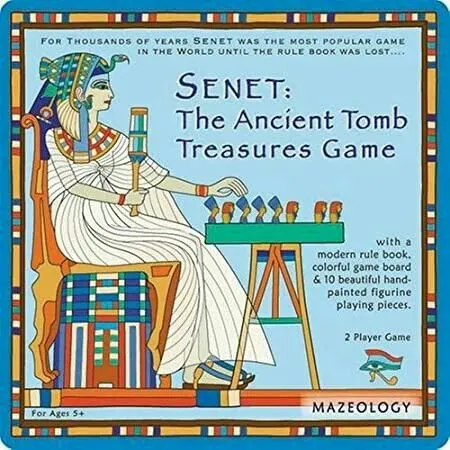
- Pozycja w BGG
- BGG #11 849
- Ocena BGG
- 5,8
Senet
- 2 graczy
- 30 min
- Złożoność 1,4/5
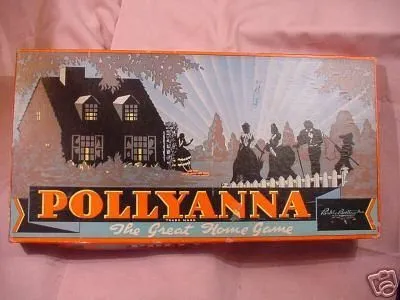
1915
Pomoc w zasadach gry Pollyanna
Zrozumiałe wyjaśnienia tur, efektów kart i spornych sytuacji z odnośnikami do oficjalnych źródeł i zapisaną historią pytań.
Dla 2 graczy
Co chcesz wiedzieć?
Odpowiedzi pochodzą z oficjalnej instrukcji, ze stroną do sprawdzenia.
Pollyanna to gra planszowa wydana w 1915 roku dla 2–4 graczy i z rozgrywką trwającą 30 minut. Główne mechaniki: Race, Roll / Spin and Move i Dice Rolling.



Po angielsku
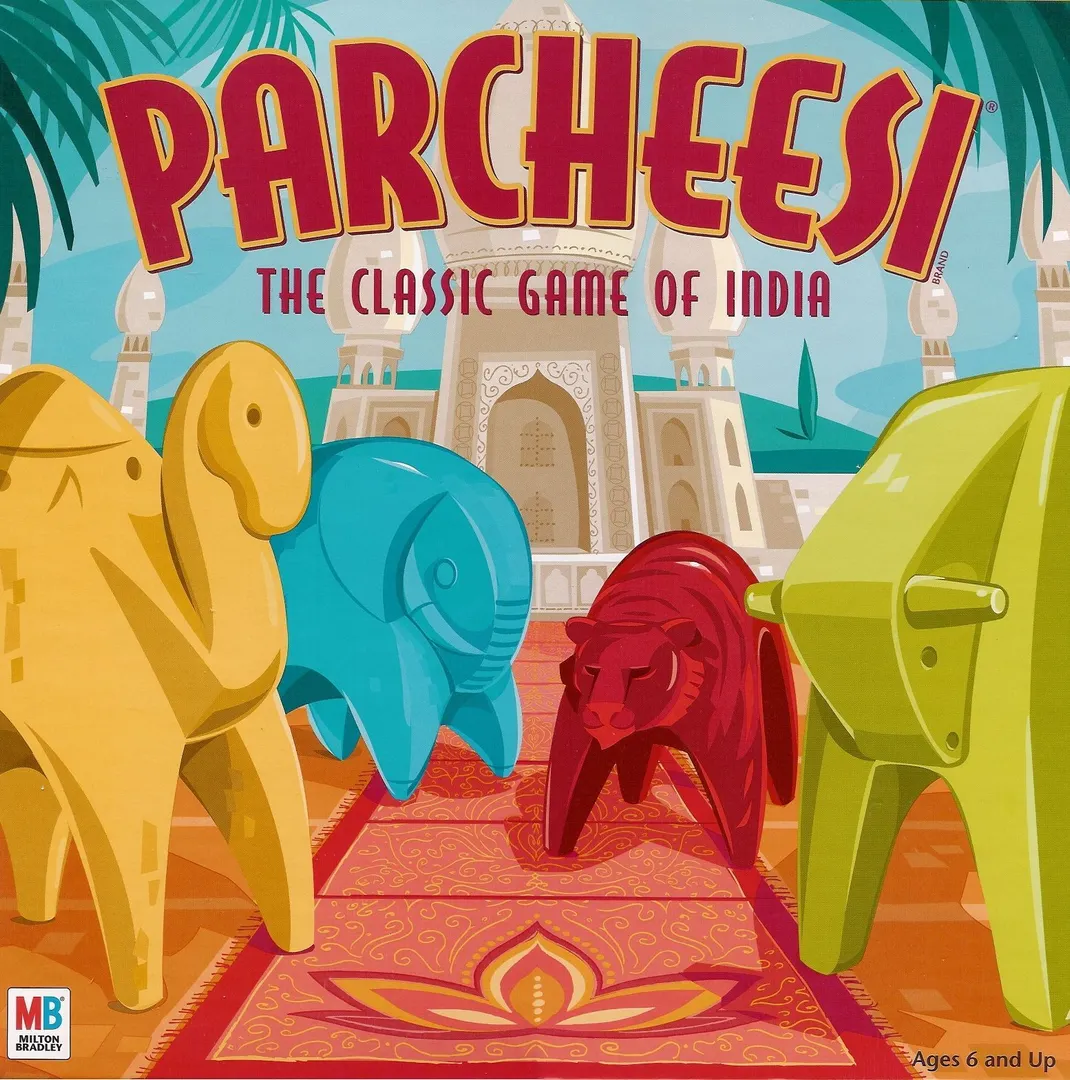
Pollyanna is a race/pursuit game published by Parker Brothers between 1915 and 1967. During those years, several editions appeared with differing artwork and game pieces. Some of these editions are entitled Dixie or Dixie-Pollyanna and some are subtitled "The Great Home Game," "The Glad Game," or "Parker Brothers Track Pursuit Game." In 1917 it was completely rethemed as The Popular Game of Broadway, with artwork of New York scenes featuring famous buildings of the time. Pollyanna itself gets its name from the title of the 1913 children's novel by Eleanor H. Porter. Each piece color in the game is associated with one of the characters in the novel. In the original 1915 edition blue was Aunt Polly; green was Nancy; red was Jimmy; and yellow was John Pendleton. These color associations changed in future editions. The game is widely recognized as a variant of Parcheesi, which is itself derived from Pachisi, a classic game of India. The object of Pollyanna, as in all games of the Pachisi family, is to be the first player to move his or her four men from the start space around the board to the home space. During the course of the game, players may also land on single opposing pieces and send them back to start. Two or three opposing pieces on the same space can neither be captured nor passed. Pollyanna differs from Parcheesi in several important ways. The track is laid out as a square and is 62 spaces long between start and home (in Parcheesi it is laid out as a cross and is 72 spaces long); furthermore Pollyanna employs four turnouts—short semi-circular paths off the main path (known as the broadway). Only single pieces may occupy a turnout space, but pieces there may not be passed and are invulnerable to capture. Turnouts are the most important difference between Pollyanna and Parcheesi. They make the two games play quite differently. The bonus move for capturing an opponent's piece is only 10 spaces, and there is no bonus for a piece reaching home (in Parcheesi these pay a 20-space and 10-space bonus respectively). Doubles are handled differently. In Pollyanna each double earns the right to another roll, provided that the player was able to use both dice. (In Parcheesi, on the third consecutive roll of doubles a player loses his/her turn and must return one of his pieces to start.) In addition, only the obverse faces of dice are counted in doubles. (In Parcheesi, both the obverse faces and reverse faces of the dice are counted.) Up to three pieces of the same color may occupy a space on the broadway. This effectively means that a player can pass his or her own blockade, by first landing exactly on the blockade and joining it, and then moving on. This is not possible in Parcheesi. Pieces are started on a roll of six (on either of the two dice or as the sum of the two dice). In Parcheesi, the roll required is a five. This means that starting a piece in Pollyanna is somewhat easier than in Parcheesi. There are safe spaces for each color; there are no general safe spaces. If a pawn is on a safe space of its own color no other player's pawn may land there, but it may pass through.
Według katalogu Pollyanna obsługuje od 2 do 4 graczy. Ten zakres odpowiada liczbie graczy podanej przez wydawcę, więc grę można przygotować dla dowolnej grupy w jego granicach. Przygotowanie, niektóre zasady i punktacja mogą jednak różnić się w zależności od liczby graczy; dokładną konfigurację sprawdź w instrukcji swojego wydania.
Podany czas rozgrywki w Pollyanna wynosi 30 minut. To szacunek wydawcy dla pełnej partii. Rzeczywisty czas zależy od grupy, liczby graczy i znajomości zasad: pierwsze partie zwykle trwają dłużej, a doświadczone grupy kończą szybciej. Przygotowanie gry i tłumaczenie zasad nie są wliczone w ten szacunek.
Pollyanna ma ocenę złożoności 1,0 na 5 według graczy BoardGameGeek, co czyni ją grą lekką. Ocena pokazuje, ile znajomości zasad, planowania i podejmowania decyzji wymaga typowa rozgrywka. Cięższe gry wymagają dłuższego pierwszego tłumaczenia, dlatego przed wieczorem z grami warto skorzystać z przewodnika przygotowania.
Pollyanna należy do tych kategorii: Abstract Strategy, Racing i Novel-based. Główne mechaniki to Race, Roll / Spin and Move i Dice Rolling. Kategorie opisują temat i świat gry, a mechaniki to, co gracze faktycznie robią w swojej turze. Każda mechanika prowadzi do strony katalogu z podobnymi grami, co pomaga znaleźć coś porównywalnego na kolejny wieczór.
W katalogu Pollyanna figuruje jako gra podstawowa. Można w nią grać samodzielnie, korzystając z elementów z pudełka, bez żadnego innego tytułu. Dodatki, jeśli istnieją, dokładają nową zawartość lub zasady i są wymienione w katalogu osobno, z odnośnikiem do tej gry podstawowej.