- Pozycja w BGG
- BGG #2408
- Ocena BGG
- 8,3
Riichi Mahjong
1920
Pomoc w zasadach gry Riichi Mahjong
Zrozumiałe wyjaśnienia tur, efektów kart i spornych sytuacji z odnośnikami do oficjalnych źródeł i zapisaną historią pytań.
- 3–4 graczy
- 60–120 min
- 8+
- Złożoność 3,6/5

Dla 3 graczy
Asystent zasad gry Riichi Mahjong
Co chcesz wiedzieć?
Odpowiedzi pochodzą z oficjalnej instrukcji, ze stroną do sprawdzenia.
Riichi Mahjong to gra planszowa wydana w 1920 roku dla 3–4 graczy, z rozgrywką trwającą 60–120 minut i dla osób od 8 lat. Główne mechaniki: Hand Management, Set Collection i Betting and Bluffing.
O grze
Po angielsku
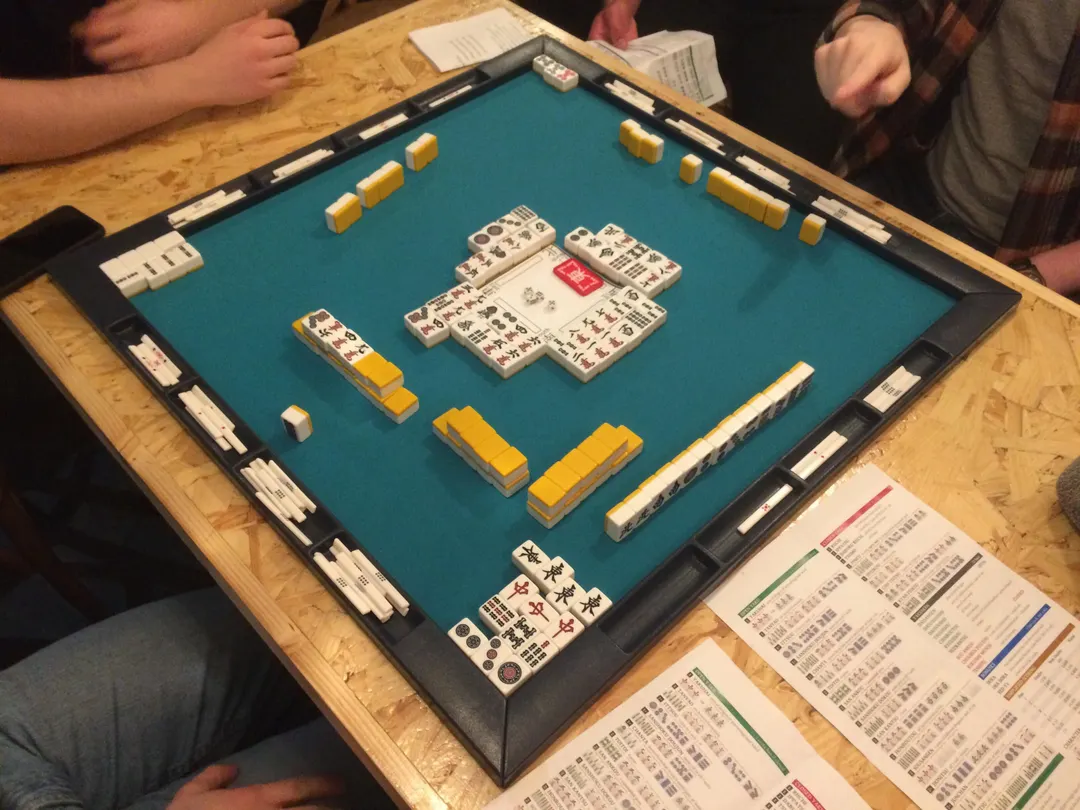
Japanese Mahjong, especially called Riichi Mahjong (リーチ・マージャン), is a very specific remake from Japan of the traditional Chinese Mahjong. It is as close and yet far from Chinese Mahjong as Shôgi (Japanese Chess) can be the same and yet different from original Chess. Mahjong was brought to Japan in 1904, but the Riichi form that is used in modern times probably originated from the 1920s. Today, the worldwide famous Mahjong Association officially recognized the complete rules of Riichi Mahjong for Tournaments. The main differences are : 1) The 1-Yaku minimum: In order to win a hand, it can only be validated when your hand has at least one of the Yaku (specific hand combinations) in it. 2) Dora: A specific bonus tiles are indicated by the flipped tile from the dead wall and providing other possible Han bonus. 3) Riichi: When a player is Tenpai (one tile away from having a Mahjong hand, valid or not), he can bet a 1000 points chip to add one Yaku to his hand (thus validating a possible invalid hand). Winning with a Riichi hand allows access to the hidden ura-dora, which is an added dora indicator located underneath the revealed dora tile. 4) Abortive draws: Specific conditions, which ends a hand without winning prior to the drawing of all tiles, aside from the dead wall. 5) Scoring system: Much more complex than in Chinese Mahjong, it is based on hand combinations (Yaku) providing multipliers (Han) that combine with some other circumstantial points like the type of tiles in the hand (Fu) for any 4 han or less. The combination of Han and Fu correspond to a chart (and even an equation) to finally produce the hand's scoring points (Ten). Some other minor elements in the Riichi Mahjong differ from the original Mahjong but are not important enough to be fully mentioned, like the Red 5 tiles (a non-official variant sometimes used which gives bonus like the Dora) or the validation of some Yaku (when the hand must be kept hidden or not, depending on the Japanese region where the game is played).
Kategorie
Wydawcy
- (Public Domain)
Pytania i odpowiedzi
Według katalogu Riichi Mahjong obsługuje od 3 do 4 graczy. Ten zakres odpowiada liczbie graczy podanej przez wydawcę, więc grę można przygotować dla dowolnej grupy w jego granicach. Przygotowanie, niektóre zasady i punktacja mogą jednak różnić się w zależności od liczby graczy; dokładną konfigurację sprawdź w instrukcji swojego wydania.
Podany czas rozgrywki w Riichi Mahjong wynosi 60–120 minut. To szacunek wydawcy dla pełnej partii. Rzeczywisty czas zależy od grupy, liczby graczy i znajomości zasad: pierwsze partie zwykle trwają dłużej, a doświadczone grupy kończą szybciej. Przygotowanie gry i tłumaczenie zasad nie są wliczone w ten szacunek.
Katalog podaje dla Riichi Mahjong wiek od 8 lat. To zalecenie wydawcy, które uwzględnia wymagania dotyczące czytania, złożoność zasad i drobne elementy, a nie tylko tematykę. Młodsi gracze często mogą dołączyć z pomocą dorosłego; sprawdź zalecenie wiekowe swojego wydania i weź pod uwagę doświadczenie grupy z grami planszowymi.
Riichi Mahjong ma ocenę złożoności 3,6 na 5 według graczy BoardGameGeek, co czyni ją grą średnio złożoną. Ocena pokazuje, ile znajomości zasad, planowania i podejmowania decyzji wymaga typowa rozgrywka. Cięższe gry wymagają dłuższego pierwszego tłumaczenia, dlatego przed wieczorem z grami warto skorzystać z przewodnika przygotowania.
Riichi Mahjong należy do tych kategorii: Abstract Strategy. Główne mechaniki to Hand Management, Set Collection i Betting and Bluffing. Kategorie opisują temat i świat gry, a mechaniki to, co gracze faktycznie robią w swojej turze. Każda mechanika prowadzi do strony katalogu z podobnymi grami, co pomaga znaleźć coś porównywalnego na kolejny wieczór.
W katalogu Riichi Mahjong figuruje jako gra podstawowa. Można w nią grać samodzielnie, korzystając z elementów z pudełka, bez żadnego innego tytułu. Dodatki, jeśli istnieją, dokładają nową zawartość lub zasady i są wymienione w katalogu osobno, z odnośnikiem do tej gry podstawowej.