
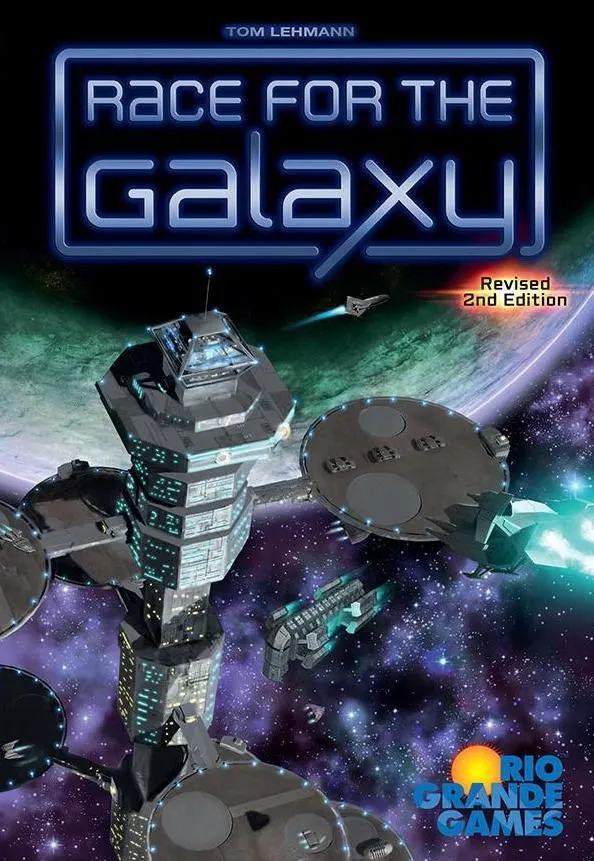
- Pozycja w BGG
- BGG #95
- Ocena BGG
- 7,7
Race for the Galaxy: Narodziny Imperiów
- 2–4 graczy
- 30–60 min
- Złożoność 3,0/5
- 2007

Pomoc w zasadach gry Roll for the Galaxy: Rivalry
Zrozumiałe wyjaśnienia tur, efektów kart i spornych sytuacji z odnośnikami do oficjalnych źródeł i zapisaną historią pytań.
Co chcesz wiedzieć?
Odpowiedzi pochodzą z oficjalnej instrukcji, ze stroną do sprawdzenia.
Roll for the Galaxy: Rivalry to dodatek do gry Roll for the Galaxy wydany w 2019 roku dla 2–5 graczy, z rozgrywką trwającą 30–60 minut i dla osób od 14 lat. Projekt gry: Thomas Lehmann i Wei-Hwa Huang. Główne mechaniki: Variable Player Powers, Dice Rolling i Simultaneous Action Selection.



Po angielsku
Roll for the Galaxy: Rivalry, the second expansion for Roll for the Galaxy, consists of three expansions in one box. First, it adds expansion content to the base game: 62 more game dice, a new die type, start factions, home worlds, and more than double the number of game tiles for the bag as in Ambition, the first expansion for Roll. This material is compatible with Ambition, but that expansion is not required to play Rivalry. If you are familiar with the dice from Ambition, then you can add this content and start playing immediately. (If not, you'll need to read about the new dice.) Rivalry also contains two optional game modules — the Deal Game and the Orb Game — which can be played separately or combined. These modules can also be combined with the goals in Ambition, although the publisher suggests not combining them all at once for new players! • The Deal Game has a new deal phase in which players assign $ dice to a new deal board in order to swap assets they don't want for those they do — and pretty much everything is fair game in terms of possible trades. Not using all your credit track? Why not trade in the top part of it to get a useful die? Or, if you're running a large economy and need a credit track that goes to 11 (or even 16), why not trade away a couple of white dice to get a larger track? Have a bunch of extra tiles clogging up your construction zones from previous Explores? Why not trade them in for new dice? Or, a chance to draw from the bag until you find a 6 cost development? Or a pair of VP chips? Or a talent counter? Or some credits? Or, another Leader die? Or, a chance to draw a world of a desired color from the bag? Or, to turn some Citizenry dice directly into Developers or Settlers? Or... Seven deal dice are rolled each turn before players assign their workers to determine what asset types can be potentially gained or traded in that round. After you swap assets, your deal will start to mature over several rounds. If you (or someone else) calls "Deal" again before your deal expires, then you might want to send another dealer in to reverse your trade, trading back for what you originally spent and making some credits and talent counters along the way. Of course, while your deal is maturing, some other player might swoop in and reverse it before you wanted to, taking their cut and converting your attempted temporary loan into a permanent exchange. These things happen... • The Orb Game gives one yellow "Alien Orb" die to each player, and the faces of these dice can be popped out and upgraded to various "lines" of faces that allow you to customize what you can do in the game. (Think of the lines as being akin to a tech tree.) You can assign dice to become researchers in the Research phase, and for each assigned researcher, when someone calls Research, you get two "dots" of upgrades to your dice. The first dot gets you a 1-dot face in any line; extra dots get you better faces in that line. (If you want to switch lines for a given face after entering a line, pay 1 dot more.) These upgraded dice affect your play. For example, if you roll the 2-dot beige -1 develop face, you receive a -1 die discount on all developments you build that turn. Orb dice are rolled in front of player screens at the start of a round. If, for example, you roll a face that grants virtual workers, then everyone knows that you will benefit if Explore occurs and can plan accordingly as they assign their dice and decide which phase to call. To allow improved Orb dice more opportunities to affect play, the Orb game ends at 15+ tiles or when the initial VP chip pool is exhausted, which is increased to 15 VPs per player. At game end, each 2-dot and 4-dot face on your Orb die is worth 1 and 2 VPs, respectively. • Replacement player screens including a summary of the optional games (in different colored type faces) and all three added dice types are also included.
Według katalogu Roll for the Galaxy: Rivalry obsługuje od 2 do 5 graczy. Ten zakres odpowiada liczbie graczy podanej przez wydawcę, więc grę można przygotować dla dowolnej grupy w jego granicach. Przygotowanie, niektóre zasady i punktacja mogą jednak różnić się w zależności od liczby graczy; dokładną konfigurację sprawdź w instrukcji swojego wydania.
Podany czas rozgrywki w Roll for the Galaxy: Rivalry wynosi 30–60 minut. To szacunek wydawcy dla pełnej partii. Rzeczywisty czas zależy od grupy, liczby graczy i znajomości zasad: pierwsze partie zwykle trwają dłużej, a doświadczone grupy kończą szybciej. Przygotowanie gry i tłumaczenie zasad nie są wliczone w ten szacunek.
Katalog podaje dla Roll for the Galaxy: Rivalry wiek od 14 lat. To zalecenie wydawcy, które uwzględnia wymagania dotyczące czytania, złożoność zasad i drobne elementy, a nie tylko tematykę. Młodsi gracze często mogą dołączyć z pomocą dorosłego; sprawdź zalecenie wiekowe swojego wydania i weź pod uwagę doświadczenie grupy z grami planszowymi.
Roll for the Galaxy: Rivalry ma ocenę złożoności 3,4 na 5 według graczy BoardGameGeek, co czyni ją grą średnio złożoną. Ocena pokazuje, ile znajomości zasad, planowania i podejmowania decyzji wymaga typowa rozgrywka. Cięższe gry wymagają dłuższego pierwszego tłumaczenia, dlatego przed wieczorem z grami warto skorzystać z przewodnika przygotowania.
Roll for the Galaxy: Rivalry należy do tych kategorii: Economic, Dice i Science Fiction. Główne mechaniki to Variable Player Powers, Dice Rolling i Simultaneous Action Selection. Kategorie opisują temat i świat gry, a mechaniki to, co gracze faktycznie robią w swojej turze. Każda mechanika prowadzi do strony katalogu z podobnymi grami, co pomaga znaleźć coś porównywalnego na kolejny wieczór.
Autorzy wymienieni przy Roll for the Galaxy: Rivalry to: Thomas Lehmann i Wei-Hwa Huang. Te informacje pochodzą z opublikowanych danych gry i wskazują osoby odpowiedzialne za jej projekt, a nie ilustratorów czy wydawców. Strony autorów w MeepleRules zbierają inne tytuły tych samych twórców, co pomaga, gdy gra ci się podoba i szukasz podobnych.
W katalogu Roll for the Galaxy: Rivalry figuruje jako dodatek do Roll for the Galaxy. Dodatki dokładają nową zawartość, zasady lub scenariusze do gry podstawowej i zwykle nie nadają się do samodzielnej gry, więc do korzystania z niego potrzebujesz gry Roll for the Galaxy. Sprawdź, czy twoje wydanie gry Roll for the Galaxy jest zgodne, bo niektóre dodatki zmieniano między wydaniami.


