
- Pozycja w BGG
- BGG #4883
- Ocena BGG
- 7,1
Neotopia
- 2–4 graczy
- 30–60 min
- Złożoność 2,0/5
- 2023
2020
Pomoc w zasadach gry Rossio
Zrozumiałe wyjaśnienia tur, efektów kart i spornych sytuacji z odnośnikami do oficjalnych źródeł i zapisaną historią pytań.
Dla 1 gracza
Co chcesz wiedzieć?
Odpowiedzi pochodzą z oficjalnej instrukcji, ze stroną do sprawdzenia.
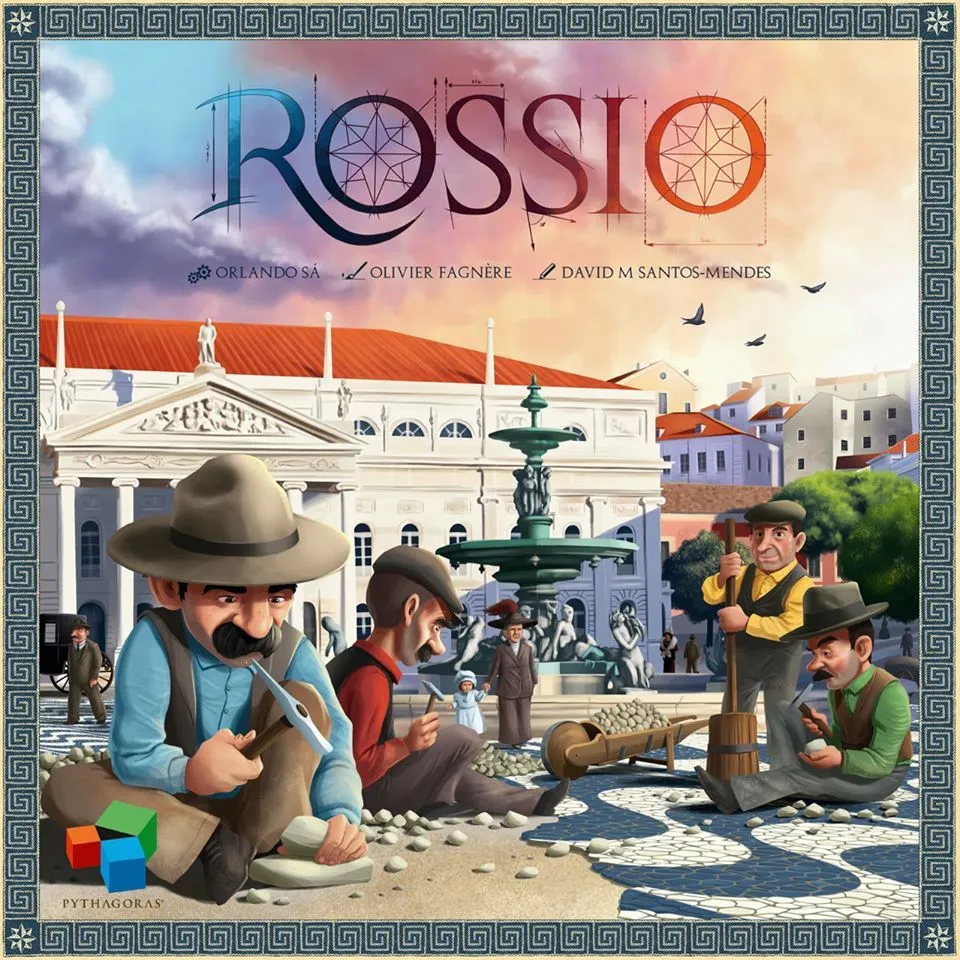
Rossio to gra planszowa wydana w 2020 roku dla 1–4 graczy, z rozgrywką trwającą 30–45 minut i dla osób od 8 lat. Projekt gry: Orlando Sá. Główne mechaniki: Hand Management, Area Majority / Influence i Tile Placement.




Po angielsku
The Portuguese King has called the finest stonemasons of the country to pave one of the most important squares with calçada tiles (worldwide famous black and white tiles that pave several squares in Portugal). But the task is enormous and players will have to count with the aid of helper cards who will help them score points and/or collect money. In Rossio, players start the game by drawing five cards and keeping three of them on their hands. On a player's turn, players will first recruit a card from their hands, placing it on the rightmost space under their player board, sliding to the left all cards previously recruited, discarding the card that slides off their boards (under each player board there are only 3 card slots). If the newly recruited card is played face-up, players must pay its cost in coins. If the card is played face-down, no money needs to be spent. Then, ALL cards under a player board will activate: face-up cards will give the player Points for each time the pattern depicted on the card is found on the square. Face-down cards will provide the player 1 coin each. Then, players must build the leftmost calçada tile of their player boards. Players can never voluntarily change the order of the tiles on their board. At any moment players can, however, spend 1 coin to swap 2 pieces on their board that are orthogonally adjacent. The tile must be built in the square orthogonally adjacent to at least 2 elements: 1 tile and 1 wall, or 2 tiles. And must be built on the leftmost available space of the line it is being built. If the players manage to build orthogonally adjacent to a similar tile, they can as bonus build the next leftmost tile, and so on, until they decide to stop or until they can't build more. Players collect then 1 coin for each coin depicted on the spaces that were left free on their player boards after tiles were built. Finally, players end their turn by drawing 1 card into their hand from the 4 cards available on the market. However, the amount of cards players can choose from depends on the number of tiles that they have built. So, if players build only 1 tile, they must take the 1st card. If they build 3 tiles, for example, they can choose between the 1st, 2nd or 3rd cards. Players end their turns by refilling the empty spaces of their player boards with tiles from the facedown stacks. As the square is being cooperatively built, certain patterns appear more often than others and the scoring of face-up cards becomes exponential. Also, when players complete a column, they collect a bonus, that can be either 1 coin or drawing more cards. Money is very tight in this game, so gaining an extra coin can be crucial to recruiting a card from your hand face-up. The game ends when the square is finished and the player with most points wins the game. Rossio is all about timing: Recruit a card face-up late in the game, and then it will score fewer times than expected. Recruit it too early, and it will score you a few points since there are few tiles built on the square. To many cards recruited face down will give that extra amount of money, but, they won't score any points. Build several tiles and you're probably helping your opponents. Build fewer tiles and you probably won't have money next turn to recruit a face-up card. Rossio is a game with very simple rules, but with high interaction between players and interesting decisions every single turn. —description from the designer
Według katalogu Rossio obsługuje od 1 do 4 graczy. Ten zakres odpowiada liczbie graczy podanej przez wydawcę, więc grę można przygotować dla dowolnej grupy w jego granicach. Przygotowanie, niektóre zasady i punktacja mogą jednak różnić się w zależności od liczby graczy; dokładną konfigurację sprawdź w instrukcji swojego wydania.
Podany czas rozgrywki w Rossio wynosi 30–45 minut. To szacunek wydawcy dla pełnej partii. Rzeczywisty czas zależy od grupy, liczby graczy i znajomości zasad: pierwsze partie zwykle trwają dłużej, a doświadczone grupy kończą szybciej. Przygotowanie gry i tłumaczenie zasad nie są wliczone w ten szacunek.
Katalog podaje dla Rossio wiek od 8 lat. To zalecenie wydawcy, które uwzględnia wymagania dotyczące czytania, złożoność zasad i drobne elementy, a nie tylko tematykę. Młodsi gracze często mogą dołączyć z pomocą dorosłego; sprawdź zalecenie wiekowe swojego wydania i weź pod uwagę doświadczenie grupy z grami planszowymi.
Rossio ma ocenę złożoności 1,9 na 5 według graczy BoardGameGeek, co czyni ją grą lekką. Ocena pokazuje, ile znajomości zasad, planowania i podejmowania decyzji wymaga typowa rozgrywka. Cięższe gry wymagają dłuższego pierwszego tłumaczenia, dlatego przed wieczorem z grami warto skorzystać z przewodnika przygotowania.
Rossio należy do tych kategorii: Card Game. Główne mechaniki to Hand Management, Area Majority / Influence i Tile Placement. Kategorie opisują temat i świat gry, a mechaniki to, co gracze faktycznie robią w swojej turze. Każda mechanika prowadzi do strony katalogu z podobnymi grami, co pomaga znaleźć coś porównywalnego na kolejny wieczór.
Autorzy wymienieni przy Rossio to: Orlando Sá. Te informacje pochodzą z opublikowanych danych gry i wskazują osoby odpowiedzialne za jej projekt, a nie ilustratorów czy wydawców. Strony autorów w MeepleRules zbierają inne tytuły tych samych twórców, co pomaga, gdy gra ci się podoba i szukasz podobnych.
W katalogu Rossio figuruje jako gra podstawowa. Można w nią grać samodzielnie, korzystając z elementów z pudełka, bez żadnego innego tytułu. Dodatki, jeśli istnieją, dokładają nową zawartość lub zasady i są wymienione w katalogu osobno, z odnośnikiem do tej gry podstawowej.