
- Pozycja w BGG
- BGG #9089
- Ocena BGG
- 6,5
Space Station
- 2–6 graczy
- 60 min
- Złożoność 2,2/5
- 2011
2021
Pomoc w zasadach gry Star Scrappers: Orbital
Zrozumiałe wyjaśnienia tur, efektów kart i spornych sytuacji z odnośnikami do oficjalnych źródeł i zapisaną historią pytań.
Dla 1 gracza
Co chcesz wiedzieć?
Odpowiedzi pochodzą z oficjalnej instrukcji, ze stroną do sprawdzenia.
Star Scrappers: Orbital to gra planszowa wydana w 2021 roku dla 1–5 graczy, z rozgrywką trwającą 30–90 minut i dla osób od 10 lat. Projekt gry: Jacob Fryxelius. Główne mechaniki: Hand Management, Pattern Building i Worker Placement.



Po angielsku
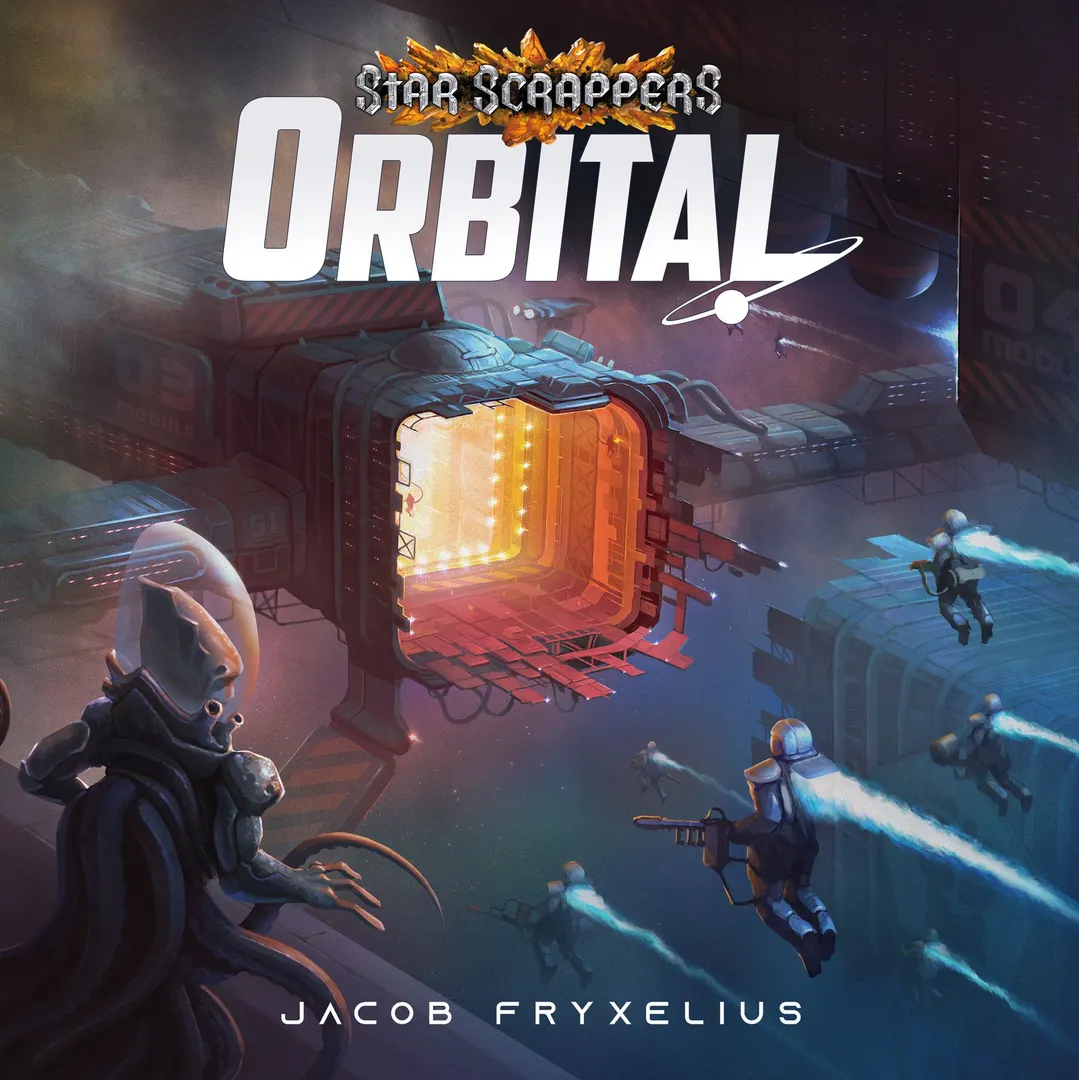
Star Scrappers: Orbital by Jacob Fryxelius, the designer of Terraforming Mars, is based on his Space Station card game, which has been mechanically streamlined, updated and re-themed to fit the Star Scrappers universe - a space western setting created and developed by Hexy Studio. You start your space station (Orbital) with a core module tile on the table, then over five years (rounds) you expand it by paying and placing new module cards. Each year you start with a five card hand, crew tokens and new money, with the amount of crew and money determined by the structure of your orbital. You use money primarily to pay for new modules, and the crew gives you special effects on many of your modules. During the year, the players take turns doing actions such as building, using module actions, playing event cards, repairing or passing. When everyone passes, the year ends and victory points are awarded: there are six kinds (colors) of modules and for each kind, the player(s) with the most modules of that kind is awarded a victory point. At the end of the fifth year, the player with most victory point wins. Background story: Welcome to the Star Scrappers universe! Have a seat and get comfortable in the commander chair on a Space Station - one of many that are being constructed in the asteroid belt called the Sybil Cloud. Deposits of Hexis - the most desired mineral in the entire Galaxy - have been discovered there, attracting numerous daredevils willing to extract the precious crystals. Miners have to live somewhere, so you and your corporation are here to provide them with accommodation and, naturally, to get rich! Terrons: Terrons, the space station builders, are descendants of the humans who came to this galaxy a long time ago. Over a thousand years, united in the Interstellar Terron Federation, they have colonized many corners of the universe. The democratic system of the Terron society has encouraged the creation of many independent structures, such as corporations, commercial consortiums and mercenary guilds. By making contact with different alien species, they have caused their civilization to flourish and their influence to spread. At the base of their success lies ambition. Ambition that knows no bounds. This trait of character drives Terrons ever forward, to conquer new territories, to discover the unknown, to push the frontier of the Federation another step further. Their military forces are well-known across the Central Sector, as they strike fear in the hearts of alien beings inhabiting the Galaxy. They became famous during the two Hy’Dran Wars, proving unshaken and well-trained. Even now, in times of peace, the Terron fleet remains ready to defend their territories. And their businesses. Other inhabitants of the Galaxy: In the distant future, countless alien species explore the Galaxy in search of fortune and fame. The last interstellar war with the Hy’Dran Empire ended over fifty years ago and since then peace treaties have been in power. Newly discovered cosmic nations, like the cybernetic Biosses and the expansive Weedlocks, are beginning to influence the fate of the Galaxy, while the inhabitants of ancient planets, such as the mechanical Metanels and the mysterious Minegglers, are once again striving to achieve their goals.
Według katalogu Star Scrappers: Orbital obsługuje od 1 do 5 graczy. Ten zakres odpowiada liczbie graczy podanej przez wydawcę, więc grę można przygotować dla dowolnej grupy w jego granicach. Przygotowanie, niektóre zasady i punktacja mogą jednak różnić się w zależności od liczby graczy; dokładną konfigurację sprawdź w instrukcji swojego wydania.
Podany czas rozgrywki w Star Scrappers: Orbital wynosi 30–90 minut. To szacunek wydawcy dla pełnej partii. Rzeczywisty czas zależy od grupy, liczby graczy i znajomości zasad: pierwsze partie zwykle trwają dłużej, a doświadczone grupy kończą szybciej. Przygotowanie gry i tłumaczenie zasad nie są wliczone w ten szacunek.
Katalog podaje dla Star Scrappers: Orbital wiek od 10 lat. To zalecenie wydawcy, które uwzględnia wymagania dotyczące czytania, złożoność zasad i drobne elementy, a nie tylko tematykę. Młodsi gracze często mogą dołączyć z pomocą dorosłego; sprawdź zalecenie wiekowe swojego wydania i weź pod uwagę doświadczenie grupy z grami planszowymi.
Star Scrappers: Orbital ma ocenę złożoności 2,2 na 5 według graczy BoardGameGeek, co czyni ją grą raczej lekką. Ocena pokazuje, ile znajomości zasad, planowania i podejmowania decyzji wymaga typowa rozgrywka. Cięższe gry wymagają dłuższego pierwszego tłumaczenia, dlatego przed wieczorem z grami warto skorzystać z przewodnika przygotowania.
Star Scrappers: Orbital należy do tych kategorii: Card Game, Science Fiction i Space Exploration. Główne mechaniki to Hand Management, Pattern Building i Worker Placement. Kategorie opisują temat i świat gry, a mechaniki to, co gracze faktycznie robią w swojej turze. Każda mechanika prowadzi do strony katalogu z podobnymi grami, co pomaga znaleźć coś porównywalnego na kolejny wieczór.
Autorzy wymienieni przy Star Scrappers: Orbital to: Jacob Fryxelius. Te informacje pochodzą z opublikowanych danych gry i wskazują osoby odpowiedzialne za jej projekt, a nie ilustratorów czy wydawców. Strony autorów w MeepleRules zbierają inne tytuły tych samych twórców, co pomaga, gdy gra ci się podoba i szukasz podobnych.
W katalogu Star Scrappers: Orbital figuruje jako gra podstawowa. Można w nią grać samodzielnie, korzystając z elementów z pudełka, bez żadnego innego tytułu. Dodatki, jeśli istnieją, dokładają nową zawartość lub zasady i są wymienione w katalogu osobno, z odnośnikiem do tej gry podstawowej.