

- Pozycja w BGG
- BGG #638
- Ocena BGG
- 7,7
Space Empires 4X
- 1–4 graczy
- 60–240 min
- Złożoność 3,4/5
- 2011
2020
Pomoc w zasadach gry Stellar Horizons
Zrozumiałe wyjaśnienia tur, efektów kart i spornych sytuacji z odnośnikami do oficjalnych źródeł i zapisaną historią pytań.
Dla 1 gracza
Co chcesz wiedzieć?
Odpowiedzi pochodzą z oficjalnej instrukcji, ze stroną do sprawdzenia.
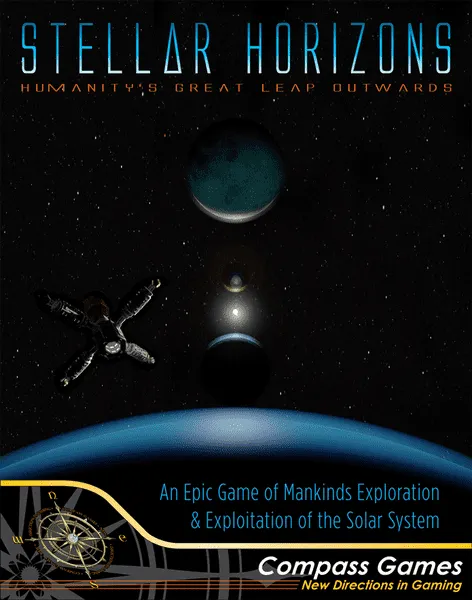
Stellar Horizons to gra planszowa wydana w 2020 roku dla 1–7 graczy, z rozgrywką trwającą 120–240 minut i dla osób od 14 lat. Projekt gry: Andrew Rader. Główne mechaniki: Income, Dice Rolling i Simulation.



Po angielsku
Stellar Horizons is a "build your own space program" game in which you lead one of seven Earth factions to explore and develop our solar system. Designed by a real-life space engineer with a PhD in long-duration spaceflight from MIT, Stellar Horizons is intended to be a plausible representation of the first steps of humanity towards the stars between 2030 and 2169, with each turn representing a year of time. You control your faction's space program, outposts, and fleets spanning across the solar system, although you also have some influence over your faction's politics back home on Earth as space development becomes more important. Movement is based on real physics. You move from orbit to orbit, or conduct long range transfers to move between planetary systems like Earth, Mars, or Jupiter. As you send out robotic explorers and crewed vehicles to explore the solar system, they bring back valuable data to further your scientific research. Technologies are intended to represent plausible extrapolations of existing development during the next 150 years: there are no transporters or warp drive, but you will be able to develop rockets powered by fusion and even anti-matter. In the engineering and biology domains, you'll eventually be able to construct space elevators and put your crews into safe hibernation for long journeys. You'll have access to a wide variety of robot explorers and crewed ships. These range from tiny probes intended to merely take photographs as you fly past Jupiter, to giant destroyers, cruisers, and battleships which ply the space lanes with peaceful or hostile intentions. New ship types become available as you gain access to better technology over the course of the game. You'll be given a budget to spend on Earth and can also build bases to harvest minerals, organics, and fuel to expands your economy. You can also forge diplomatic relationships with players and non-player factions alike, and trade resources at their bases to earn extra cash. Each of the seven factions has different strengths, weaknesses, abilities, and available ships based on their unique geopolitical situation. Military conflict is certainly possible but not always encouraged. Stellar Horizons features more diplomatic, technological, and economic competition than outright combat, although neglecting warships entirely leaves you vulnerable to pirates, trade embargoes, and sneak attacks by rogue players and factions. Stellar Horizons includes short co-operative and competitive scenarios lasting an hour or more, and campaigns lasting a day up to about a full weekend for experienced players. Up to seven players can play at a time and the game is most fun with at least two, but there are also one-player scenarios, and the campaigns are highly suited for solo play. There are three ways to win the campaign: be the first to develop an Interstellar Colonizer, terraform a world, or achieve dominance in space over your rivals.
Według katalogu Stellar Horizons obsługuje od 1 do 7 graczy. Ten zakres odpowiada liczbie graczy podanej przez wydawcę, więc grę można przygotować dla dowolnej grupy w jego granicach. Przygotowanie, niektóre zasady i punktacja mogą jednak różnić się w zależności od liczby graczy; dokładną konfigurację sprawdź w instrukcji swojego wydania.
Podany czas rozgrywki w Stellar Horizons wynosi 120–240 minut. To szacunek wydawcy dla pełnej partii. Rzeczywisty czas zależy od grupy, liczby graczy i znajomości zasad: pierwsze partie zwykle trwają dłużej, a doświadczone grupy kończą szybciej. Przygotowanie gry i tłumaczenie zasad nie są wliczone w ten szacunek.
Katalog podaje dla Stellar Horizons wiek od 14 lat. To zalecenie wydawcy, które uwzględnia wymagania dotyczące czytania, złożoność zasad i drobne elementy, a nie tylko tematykę. Młodsi gracze często mogą dołączyć z pomocą dorosłego; sprawdź zalecenie wiekowe swojego wydania i weź pod uwagę doświadczenie grupy z grami planszowymi.
Stellar Horizons ma ocenę złożoności 3,9 na 5 według graczy BoardGameGeek, co czyni ją grą ciężką. Ocena pokazuje, ile znajomości zasad, planowania i podejmowania decyzji wymaga typowa rozgrywka. Cięższe gry wymagają dłuższego pierwszego tłumaczenia, dlatego przed wieczorem z grami warto skorzystać z przewodnika przygotowania.
Stellar Horizons należy do tych kategorii: Economic, Wargame i Exploration. Główne mechaniki to Income, Dice Rolling i Simulation. Kategorie opisują temat i świat gry, a mechaniki to, co gracze faktycznie robią w swojej turze. Każda mechanika prowadzi do strony katalogu z podobnymi grami, co pomaga znaleźć coś porównywalnego na kolejny wieczór.
Autorzy wymienieni przy Stellar Horizons to: Andrew Rader. Te informacje pochodzą z opublikowanych danych gry i wskazują osoby odpowiedzialne za jej projekt, a nie ilustratorów czy wydawców. Strony autorów w MeepleRules zbierają inne tytuły tych samych twórców, co pomaga, gdy gra ci się podoba i szukasz podobnych.
W katalogu Stellar Horizons figuruje jako gra podstawowa. Można w nią grać samodzielnie, korzystając z elementów z pudełka, bez żadnego innego tytułu. Dodatki, jeśli istnieją, dokładają nową zawartość lub zasady i są wymienione w katalogu osobno, z odnośnikiem do tej gry podstawowej.