- Pozycja w BGG
- BGG #3385
- Ocena BGG
- 7,5
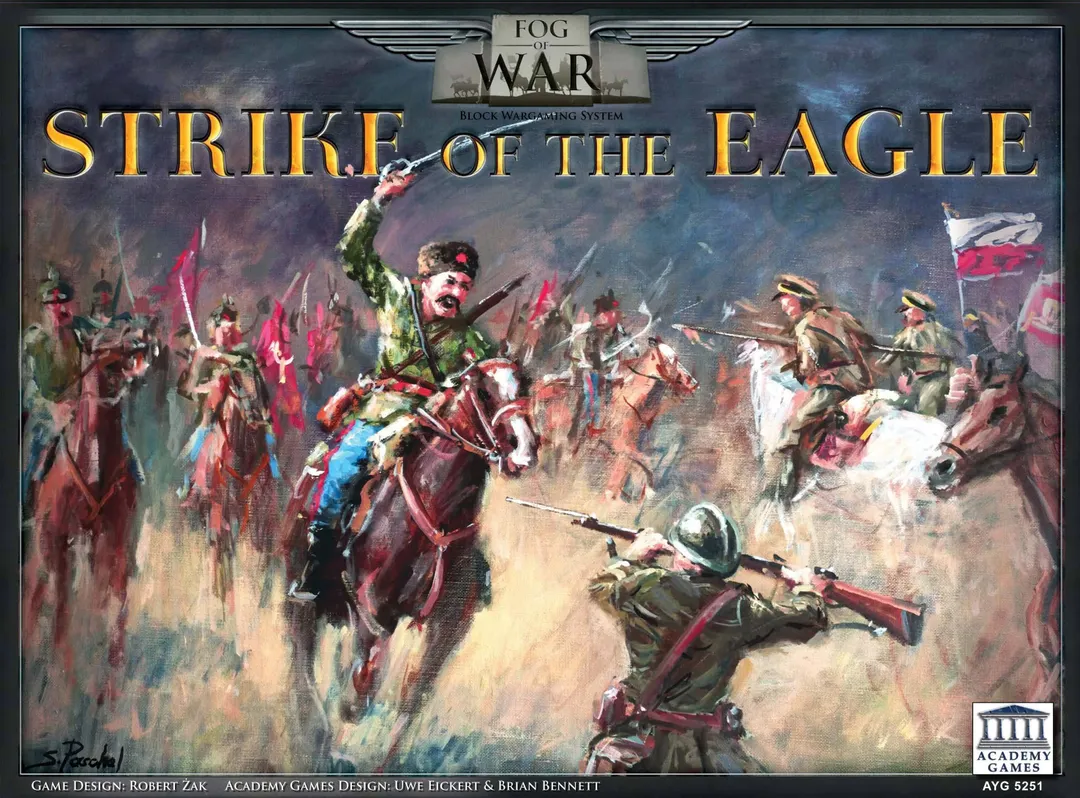
Strike of the Eagle
2011
Pomoc w zasadach gry Strike of the Eagle
Zrozumiałe wyjaśnienia tur, efektów kart i spornych sytuacji z odnośnikami do oficjalnych źródeł i zapisaną historią pytań.
- 2–4 graczy
- 60–240 min
- 13+
- Złożoność 3,1/5

Dla 2 graczy
Asystent zasad gry Strike of the Eagle
Co chcesz wiedzieć?
Odpowiedzi pochodzą z oficjalnej instrukcji, ze stroną do sprawdzenia.
Strike of the Eagle to gra planszowa wydana w 2011 roku dla 2–4 graczy, z rozgrywką trwającą 60–240 minut i dla osób od 13 lat. Projekt gry: Uwe Eickert, Robert Żak i Brian Bennett. Główne mechaniki: Area Movement, Area Majority / Influence i Simulation.
O grze
Po angielsku
WWI has ended, but the battle for democracy has just begun. Communist movements have sprung up throughout Europe. Trotsky, Lenin and Stalin plan to blast through Poland in order to support the red revolutions in Germany, France and England. Only the armies of Poland stand in the way of the Bolshevik tide. Strike of the Eagle models the battles and historical events of the Polish-Soviet War of 1919-1920. To simulate the tension of the era from the fog of war, players alternate placing secret orders on their armies in order to bluff, mislead and misdirect their opponents. These concealed orders make it difficult to deduce an opponent's plans and are used to hide a player's true intentions and objectives. Players then reveal and resolve the issued orders. They can then disrupt their opponent's moves, cut off supply and much more. Once orders are resolved the next turn begins. Units are represented by wooden blocks. Battles are fought with no dice, but with a simple and quick combat system. Action cards are pivotal to the game in that they allow players to either modify how many orders they may issue, add army reinforcements or modify a battle's resolution.[...] Strike of the Eagle includes several scenarios for 2-4 players. Some are short games that can be played in an hour, up to the full campaign that can last several hours. The map portrays a portion of Eastern Europe in 1920. It is divided into areas that are named after local cities to simplify scenario setups. Along the outer edge of the map is a grid to help find areas during game setup. Each area name is followed by its grid location. The map is divided into two fronts; the northern and the southern. The front line is designated by a yellow line that runs from east to west. In 4 player scenarios, each allied player commands blocks on one front only. If a block of one player crosses the line between fronts, it moves to the control of his ally at the beginning of the next Operation Phase. The Fog of War series is a card driven game where Divisions and Brigades are represented as blocks. These blocks stand upright during the game to prevent opponents from knowing their strength or unit type and can only be revealed during combat or through Recon Area orders given during each Operation Phase. Strike of the Eagle is divided into a number of Rounds, each Round being subdivided into a number of identical phases. The Round Phase Track marks the game's progression. Each round is divided into the Replenish Cards Phase, five identical Operation Phases, and a Reinforcement Phase. Each side has a pool of order counters to draw from. These order counters represent the various types of orders each unit or group may be given. These orders, which range from Forced Marches to Reconnaissance actions, allow the player to strategically manouver his Divisions and Brigades. Orders are placed face down, leading to guesswork and strategic anticipation on the part of your opponent! The sequence of placing and executing orders is determined by the player(s) with the higher initiative. Each front has its own initiative track. Initiative is gained and lost as the game progresses. Whether to place first or second is an important strategic element of the game! Strike of the Eagle is a card driven game. Each card is broken up into a number of different parts and each card can be played for either its event as listed in the body of the card, to increase the number of orders available in a phase (uppermost left), for the combat value on the card (uppermost right), or for reinforcements (lowermost left). Supply is important in Stike of the Eagle. If units are out of supply they will fight less well, take much greater losses, and lose the advantage of any Garrison which might be located at their city. (from Academy Games website)
Mechaniki
Wydawcy
- Academy Games, Inc.
Pytania i odpowiedzi
Według katalogu Strike of the Eagle obsługuje od 2 do 4 graczy. Ten zakres odpowiada liczbie graczy podanej przez wydawcę, więc grę można przygotować dla dowolnej grupy w jego granicach. Przygotowanie, niektóre zasady i punktacja mogą jednak różnić się w zależności od liczby graczy; dokładną konfigurację sprawdź w instrukcji swojego wydania.
Podany czas rozgrywki w Strike of the Eagle wynosi 60–240 minut. To szacunek wydawcy dla pełnej partii. Rzeczywisty czas zależy od grupy, liczby graczy i znajomości zasad: pierwsze partie zwykle trwają dłużej, a doświadczone grupy kończą szybciej. Przygotowanie gry i tłumaczenie zasad nie są wliczone w ten szacunek.
Katalog podaje dla Strike of the Eagle wiek od 13 lat. To zalecenie wydawcy, które uwzględnia wymagania dotyczące czytania, złożoność zasad i drobne elementy, a nie tylko tematykę. Młodsi gracze często mogą dołączyć z pomocą dorosłego; sprawdź zalecenie wiekowe swojego wydania i weź pod uwagę doświadczenie grupy z grami planszowymi.
Strike of the Eagle ma ocenę złożoności 3,1 na 5 według graczy BoardGameGeek, co czyni ją grą średnio złożoną. Ocena pokazuje, ile znajomości zasad, planowania i podejmowania decyzji wymaga typowa rozgrywka. Cięższe gry wymagają dłuższego pierwszego tłumaczenia, dlatego przed wieczorem z grami warto skorzystać z przewodnika przygotowania.
Strike of the Eagle należy do tych kategorii: Wargame, Bluffing i Civil War. Główne mechaniki to Area Movement, Area Majority / Influence i Simulation. Kategorie opisują temat i świat gry, a mechaniki to, co gracze faktycznie robią w swojej turze. Każda mechanika prowadzi do strony katalogu z podobnymi grami, co pomaga znaleźć coś porównywalnego na kolejny wieczór.
Autorzy wymienieni przy Strike of the Eagle to: Uwe Eickert, Robert Żak i Brian Bennett. Te informacje pochodzą z opublikowanych danych gry i wskazują osoby odpowiedzialne za jej projekt, a nie ilustratorów czy wydawców. Strony autorów w MeepleRules zbierają inne tytuły tych samych twórców, co pomaga, gdy gra ci się podoba i szukasz podobnych.
W katalogu Strike of the Eagle figuruje jako gra podstawowa. Można w nią grać samodzielnie, korzystając z elementów z pudełka, bez żadnego innego tytułu. Dodatki, jeśli istnieją, dokładają nową zawartość lub zasady i są wymienione w katalogu osobno, z odnośnikiem do tej gry podstawowej.