
- Pozycja w BGG
- BGG #338
- Ocena BGG
- 7,3
Hive
- 2 graczy
- 20 min
- Złożoność 2,3/5
- 2001
2012
Pomoc w zasadach gry Sugar Gliders
Zrozumiałe wyjaśnienia tur, efektów kart i spornych sytuacji z odnośnikami do oficjalnych źródeł i zapisaną historią pytań.
Dla 2 graczy
Co chcesz wiedzieć?
Odpowiedzi pochodzą z oficjalnej instrukcji, ze stroną do sprawdzenia.
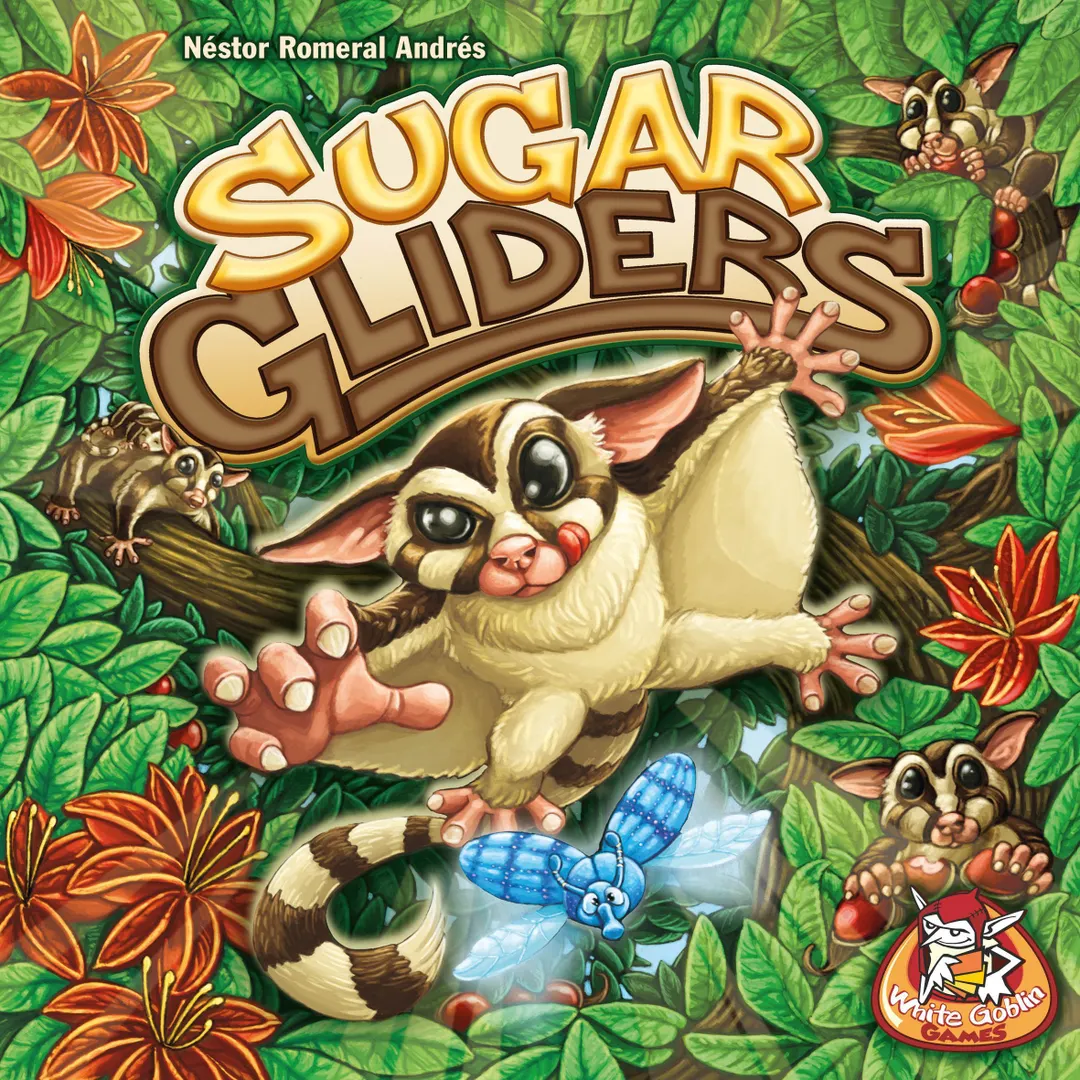
Sugar Gliders to gra planszowa wydana w 2012 roku dla 2–4 graczy, z rozgrywką trwającą 30 minut i dla osób od 8 lat. Projekt gry: Néstor Romeral Andrés. Główne mechaniki: Grid Movement.


Po angielsku
Sugar Gliders is a board game for two to four players. Each game lasts around 20 minutes. Each player has a sugar glider, that has to collect as many fruits as possible by jumping from branch to branch. The sugar glider is a small marsupial that loves nectarous foods. As its name suggests, it’s capable of gliding through the air, much like a flying squirrel. COMPONENTS - A board depicting a tree with 61 cells. - 4 sugar gliders in different colours. - 60 food tiles in 5 types: 1 fruit, 2 fruits, 3 fruits, 4 fruits, 1 big fruit (5 points). - A carrying case. GAME PREPARATION Each player chooses a player color and takes the corresponding sugar glider. Leaving the center space empty, randomly distribute the 60 tiles face-up to the 60 other spaces on the tree, 1 per space. White starts by choosing any space with a white fruit (value 1 tile), and placing his sugar glider on it. The tile in that space will be his ‘jumping tile’. In turn, the other players do the same. The game can start now. White plays first. GAME RULES The game is played in turns, counterclockwise. On your turn, you must either make your sugar glider jump or go into a brief state of torpor: JUMP Move your sugar glider in a straight line a number of spaces equal to your ‘jumping tile’ (this means one space in the first turn). If you have no ‘jumping tile’ underneath your sugar glider, you must use one from your reserve. Notice that purple fruits count as 5 movement points. Then you take the ‘jumping tile’ that you just used, and put it beside yourself face-up. This is your ‘reserve’. If you had no ‘jumping tile’ underneath your sugar glider and had to use a tile from your reserve, discard this tile to the game case; it cannot be used again for the rest of the game. The tile on which your sugar glider has landed (if any) is your new ‘jumping tile’. Exceptions: - The sugar gliders cannot jump outside the tree. - A sugar glider sitting in the center space can jump to any space on the board by spending any tile from his reserve (no need to match the length of the jump). - A sugar glider cannot move through another sugar glider. Example: Anna wishes to make her sugar glider jump, but there is no ‘jumping tile’ underneath her sugar glider. She uses a ‘2’ from her reserve, moves the sugar glider 2 spaces in a straight line, and discards the tile she’s used to the case. TORPOR You don’t move your sugar glider. Take the ‘jumping tile’ from underneath your sugar glider (if there is one), and add it to your reserve. GAME END The game ends when all the sugar gliders are consecutively in a state of torpor, or when the tree runs out of tiles, whichever happens first. Each player sums the values of the tiles in his reserve (purple tiles count as 5 points). Highest score wins. In case of a tie, play again. VARIANT FOR 2 PLAYERS For shorter 2-player games, discard all the purple fruit tiles and 3 tiles of each other value. Then play on the inner board.
Według katalogu Sugar Gliders obsługuje od 2 do 4 graczy. Ten zakres odpowiada liczbie graczy podanej przez wydawcę, więc grę można przygotować dla dowolnej grupy w jego granicach. Przygotowanie, niektóre zasady i punktacja mogą jednak różnić się w zależności od liczby graczy; dokładną konfigurację sprawdź w instrukcji swojego wydania.
Podany czas rozgrywki w Sugar Gliders wynosi 30 minut. To szacunek wydawcy dla pełnej partii. Rzeczywisty czas zależy od grupy, liczby graczy i znajomości zasad: pierwsze partie zwykle trwają dłużej, a doświadczone grupy kończą szybciej. Przygotowanie gry i tłumaczenie zasad nie są wliczone w ten szacunek.
Katalog podaje dla Sugar Gliders wiek od 8 lat. To zalecenie wydawcy, które uwzględnia wymagania dotyczące czytania, złożoność zasad i drobne elementy, a nie tylko tematykę. Młodsi gracze często mogą dołączyć z pomocą dorosłego; sprawdź zalecenie wiekowe swojego wydania i weź pod uwagę doświadczenie grupy z grami planszowymi.
Sugar Gliders ma ocenę złożoności 1,9 na 5 według graczy BoardGameGeek, co czyni ją grą lekką. Ocena pokazuje, ile znajomości zasad, planowania i podejmowania decyzji wymaga typowa rozgrywka. Cięższe gry wymagają dłuższego pierwszego tłumaczenia, dlatego przed wieczorem z grami warto skorzystać z przewodnika przygotowania.
Sugar Gliders należy do tych kategorii: Animals i Abstract Strategy. Główne mechaniki to Grid Movement. Kategorie opisują temat i świat gry, a mechaniki to, co gracze faktycznie robią w swojej turze. Każda mechanika prowadzi do strony katalogu z podobnymi grami, co pomaga znaleźć coś porównywalnego na kolejny wieczór.
Autorzy wymienieni przy Sugar Gliders to: Néstor Romeral Andrés. Te informacje pochodzą z opublikowanych danych gry i wskazują osoby odpowiedzialne za jej projekt, a nie ilustratorów czy wydawców. Strony autorów w MeepleRules zbierają inne tytuły tych samych twórców, co pomaga, gdy gra ci się podoba i szukasz podobnych.
W katalogu Sugar Gliders figuruje jako gra podstawowa. Można w nią grać samodzielnie, korzystając z elementów z pudełka, bez żadnego innego tytułu. Dodatki, jeśli istnieją, dokładają nową zawartość lub zasady i są wymienione w katalogu osobno, z odnośnikiem do tej gry podstawowej.