

- Pozycja w BGG
- BGG #5023
- Ocena BGG
- 7,1
The Field of the Cloth of Gold
- 2 graczy
- 20 min
- Złożoność 1,6/5
- 2020
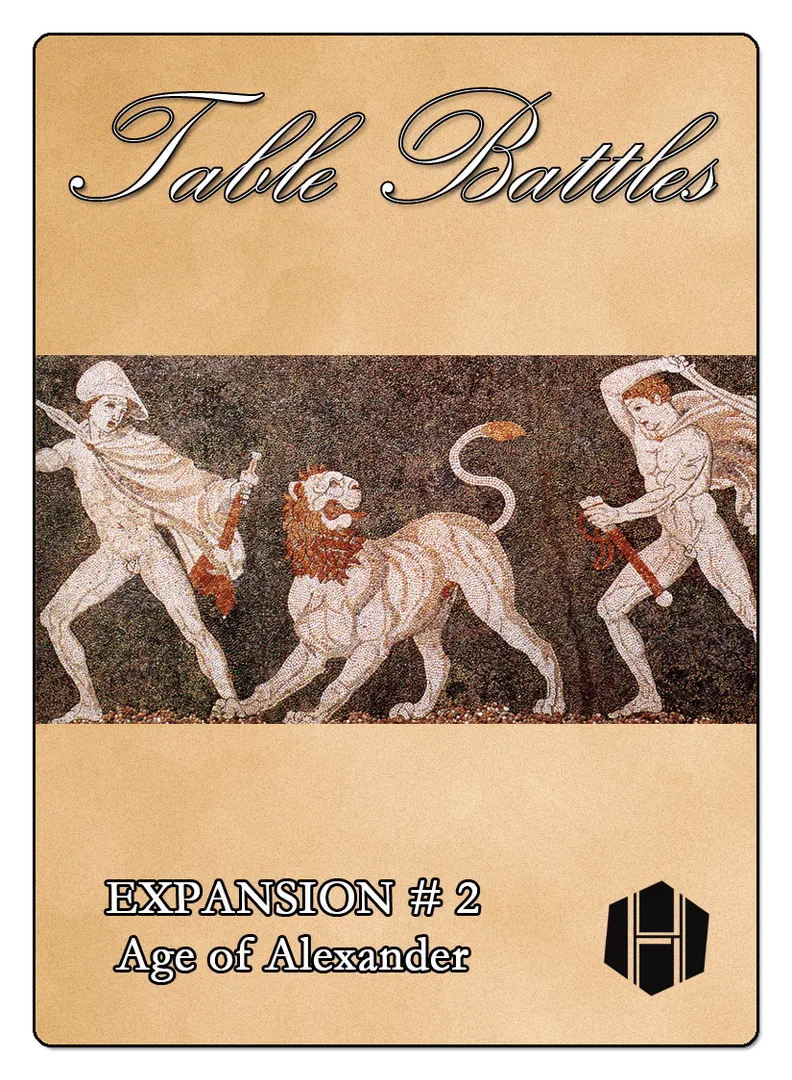
Pomoc w zasadach gry Table Battles: Age of Alexander
Zrozumiałe wyjaśnienia tur, efektów kart i spornych sytuacji z odnośnikami do oficjalnych źródeł i zapisaną historią pytań.
Co chcesz wiedzieć?
Odpowiedzi pochodzą z oficjalnej instrukcji, ze stroną do sprawdzenia.
Table Battles: Age of Alexander to dodatek do gry Table Battles wydany w 2018 roku dla 2 graczy i z rozgrywką trwającą 15–20 minut. Projekt gry: Amabel Holland. Główne mechaniki: Dice Rolling i Worker Placement.



Po angielsku
By any measure, Alexander III of Macedon was an exemplary military commander. If we believe his propagandists, he was always vastly outnumbered, yet he and his elite army were never defeated, always winning a decisive victory. "It is a sobering thought," says Table Battles designer Tom Russell, "that by the time he was my age, Alexander had conquered the Persian empire, made his incursion into India, founded city after glorious city, and had been dead for four years." Table Battles: The Age of Alexander recreates that famous Macedonian's major battles, as well as two battles of the Diadochi. In almost all of these battles, the Macedonian Player has no room for error - the routing of a single Formation is often enough to lose the game. The opposing side has more leeway and more sticks, but generally comes up short in the quality department. Careful, nuanced play from both sides is require to stay competitive and to win the day. Most of these are larger engagements, with lots of cards and reactions for each side. The seven battles in this set are: Chaeronea (2 August 338 BCE) Granicus (May 334 BCE) Issus (5 November 333 BCE) Gaugamela (1 October 331BCE) The Hydaspes (May 326BCE) Gabiene (316BCE) Ipsus (301BCE)
Według katalogu Table Battles: Age of Alexander obsługuje 2 graczy. To liczba graczy podana przez wydawcę, więc gra jest zaprojektowana dokładnie dla takiej liczby uczestników. Warianty dla grup innej wielkości, jeśli w ogóle istnieją, opisano w instrukcji twojego wydania; sprawdź ją uważnie, zanim przygotujesz inną konfigurację stołu.
Podany czas rozgrywki w Table Battles: Age of Alexander wynosi 15–20 minut. To szacunek wydawcy dla pełnej partii. Rzeczywisty czas zależy od grupy, liczby graczy i znajomości zasad: pierwsze partie zwykle trwają dłużej, a doświadczone grupy kończą szybciej. Przygotowanie gry i tłumaczenie zasad nie są wliczone w ten szacunek.
Table Battles: Age of Alexander ma ocenę złożoności 3,0 na 5 według graczy BoardGameGeek, co czyni ją grą średnio złożoną. Ocena pokazuje, ile znajomości zasad, planowania i podejmowania decyzji wymaga typowa rozgrywka. Cięższe gry wymagają dłuższego pierwszego tłumaczenia, dlatego przed wieczorem z grami warto skorzystać z przewodnika przygotowania.
Table Battles: Age of Alexander należy do tych kategorii: Wargame, Dice i Ancient. Główne mechaniki to Dice Rolling i Worker Placement. Kategorie opisują temat i świat gry, a mechaniki to, co gracze faktycznie robią w swojej turze. Każda mechanika prowadzi do strony katalogu z podobnymi grami, co pomaga znaleźć coś porównywalnego na kolejny wieczór.
Autorzy wymienieni przy Table Battles: Age of Alexander to: Amabel Holland. Te informacje pochodzą z opublikowanych danych gry i wskazują osoby odpowiedzialne za jej projekt, a nie ilustratorów czy wydawców. Strony autorów w MeepleRules zbierają inne tytuły tych samych twórców, co pomaga, gdy gra ci się podoba i szukasz podobnych.
W katalogu Table Battles: Age of Alexander figuruje jako dodatek do Table Battles. Dodatki dokładają nową zawartość, zasady lub scenariusze do gry podstawowej i zwykle nie nadają się do samodzielnej gry, więc do korzystania z niego potrzebujesz gry Table Battles. Sprawdź, czy twoje wydanie gry Table Battles jest zgodne, bo niektóre dodatki zmieniano między wydaniami.