
- Pozycja w BGG
- BGG #8831
- Ocena BGG
- 8,8
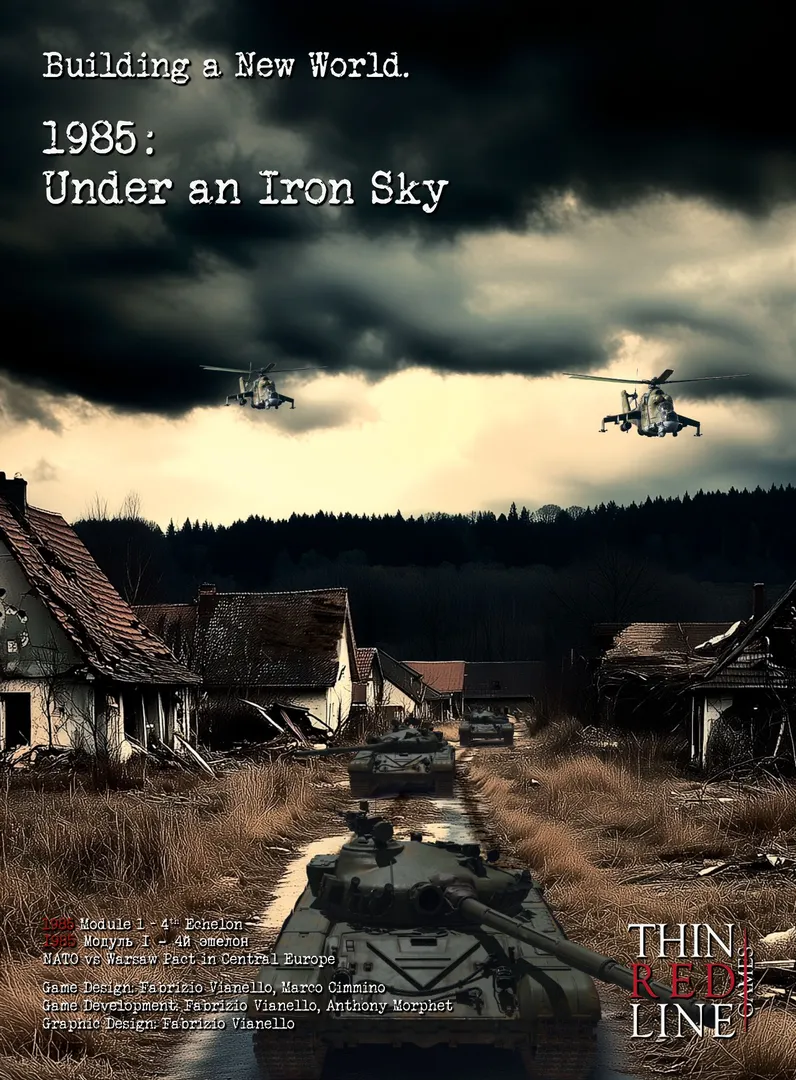
1985: Under an Iron Sky
- 2–6 graczy
- 120–8640 min
- Złożoność 4,2/5
- 2018
2024
Pomoc w zasadach gry The Fate of All
Zrozumiałe wyjaśnienia tur, efektów kart i spornych sytuacji z odnośnikami do oficjalnych źródeł i zapisaną historią pytań.
Dla 2 graczy
Co chcesz wiedzieć?
Odpowiedzi pochodzą z oficjalnej instrukcji, ze stroną do sprawdzenia.
The Fate of All to gra planszowa wydana w 2024 roku dla 2 graczy, z rozgrywką trwającą 240–1200 minut i dla osób od 14 lat. Projekt gry: Fabrizio Vianello. Główne mechaniki: Dice Rolling, Secret Unit Deployment i Hexagon Grid.







Po angielsku
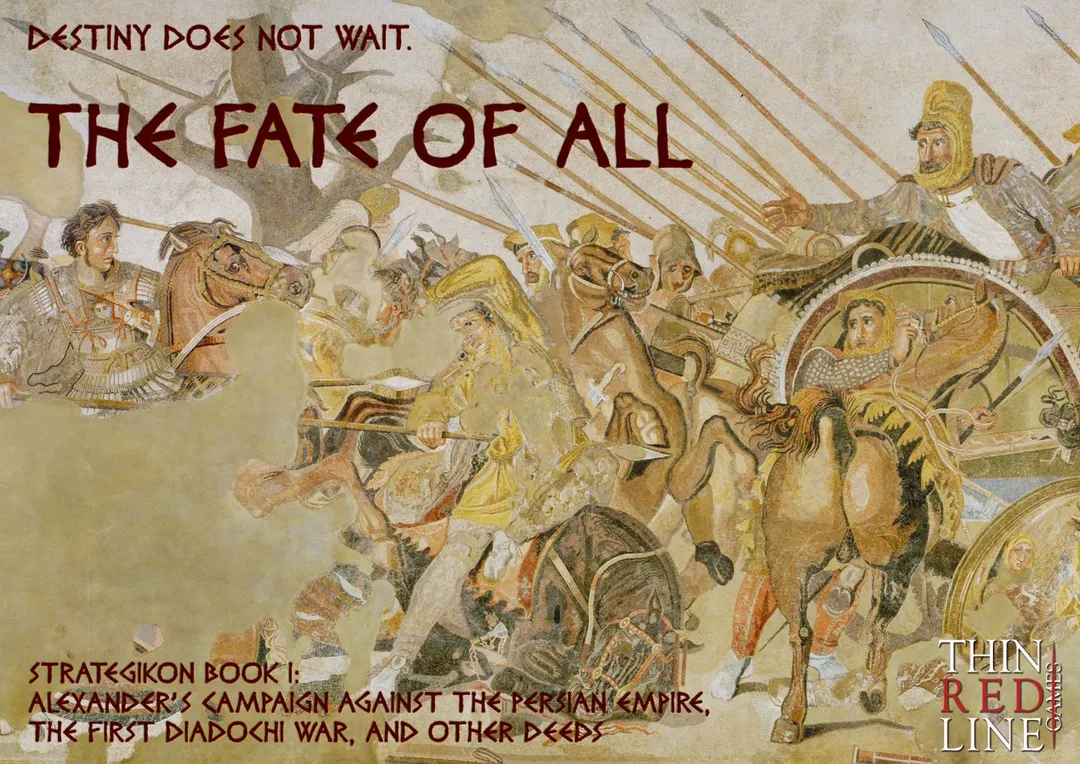
Loosely inspired on SPI’s “The Conquerors”, The Fate of All is an operational / tactical simulation covering the first four years of the campaign led by Alexander the Great against the Achaemenid Empire ruled by Darius III, and other related conflicts. The final goal is to give a realistic representation of ancient warfare, without strange salads of godly interventions, auguries and Homeric duels. In the end, players will find that the problems faced were similar to those encountered during the Napoleonic era or the American Civil War. Counters are 5/8″, each one representing a formation, from a Macedonian Phalanx Taxis (approx. 1500 soldiers) to a Cavalry Ile (200 – 300 mounted soldiers). Commanders and naval forces are also represented and will be key elements for the final victory. Rules are centred on the problems of army organisation, supply and morale: Commanders are essentials, armies must be organised in a balanced way or they will move slowly, cavalry must be used for foraging, raid and reconnaissance, morale must be kept under control using sound military achievements or donations. Political aspects are also a key element: Actions like Plundering and Sacking will have a negative impact on the local support by the ruling class and population, and both sides will have to use money or threats to gain it back. Last but not least, treason, revolts and dubious allies will be a problem too. The four maps cover Greece, part of the Balkans, Anatolia, Egypt and the Middle East up to Babylon. The scale is 30 km per hex with monthly turns. The maps are designed using the latest archaeological studies and findings, but despite centuries of research several things are still only vaguely known: Some examples are the extension and path of the Persian Royal Roads, the location of several important cities and the exact route of Alexander’s Army. In these cases, the “most accepted theory” rule has been used. Battles can be fought using Strategic Combat, still realistic but quicker, or to their full extent using the Tactical Rules and Map – probably the best choice for a decisive battle. All the classical sources and several modern military-focused studies have been used during development. In particular, The Anabasis of Alexander by Arrian was chosen as the main and most reliable classical source for two reasons: Arrian based most of his writing on the now lost Ptolemy’s account of the campaign, and he was himself a military commander, thus having a better understanding of the problems and key facts of a military campaign. Game Highlights 30 km per hex, one month per turn Units representing various formations, from Phalanx to Chariots Order of battle and commanders based on primary sources and the most recent historical research Realistic supply problems with realistic and possibly violent solutions Cavalry Reconnaissance, Foraging and Raiding Reaction Movement, not so easy retreats and catastrophic routs Attrition and Army Morale, your first problems in the morning Naval Warfare Satrapies, Taxation and Bribes Revolts, Treachery and worse Five different scenarios: The Anger of Achilles - The four decisive years of Alexander’s campaign, 334 BCE Ten Thousand, Again - Parmenion’s preparatory expedition in Anatolia, 336 BCE Arise, Hellas! - The Greek revolt following Alexander’s death, 323 BCE It All Comes to This - The final clash between Alexander and Darius, 331 BCE The Shattered Bonds - The first Diadochi war, 320 BCE Winner of the 2024 Charles Roberts Award in the Ancient category. —description from the publisher
Według katalogu The Fate of All obsługuje 2 graczy. To liczba graczy podana przez wydawcę, więc gra jest zaprojektowana dokładnie dla takiej liczby uczestników. Warianty dla grup innej wielkości, jeśli w ogóle istnieją, opisano w instrukcji twojego wydania; sprawdź ją uważnie, zanim przygotujesz inną konfigurację stołu.
Podany czas rozgrywki w The Fate of All wynosi 240–1200 minut. To szacunek wydawcy dla pełnej partii. Rzeczywisty czas zależy od grupy, liczby graczy i znajomości zasad: pierwsze partie zwykle trwają dłużej, a doświadczone grupy kończą szybciej. Przygotowanie gry i tłumaczenie zasad nie są wliczone w ten szacunek.
Katalog podaje dla The Fate of All wiek od 14 lat. To zalecenie wydawcy, które uwzględnia wymagania dotyczące czytania, złożoność zasad i drobne elementy, a nie tylko tematykę. Młodsi gracze często mogą dołączyć z pomocą dorosłego; sprawdź zalecenie wiekowe swojego wydania i weź pod uwagę doświadczenie grupy z grami planszowymi.
The Fate of All ma ocenę złożoności 3,0 na 5 według graczy BoardGameGeek, co czyni ją grą średnio złożoną. Ocena pokazuje, ile znajomości zasad, planowania i podejmowania decyzji wymaga typowa rozgrywka. Cięższe gry wymagają dłuższego pierwszego tłumaczenia, dlatego przed wieczorem z grami warto skorzystać z przewodnika przygotowania.
The Fate of All należy do tych kategorii: Wargame, Nautical i Ancient. Główne mechaniki to Dice Rolling, Secret Unit Deployment i Hexagon Grid. Kategorie opisują temat i świat gry, a mechaniki to, co gracze faktycznie robią w swojej turze. Każda mechanika prowadzi do strony katalogu z podobnymi grami, co pomaga znaleźć coś porównywalnego na kolejny wieczór.
Autorzy wymienieni przy The Fate of All to: Fabrizio Vianello. Te informacje pochodzą z opublikowanych danych gry i wskazują osoby odpowiedzialne za jej projekt, a nie ilustratorów czy wydawców. Strony autorów w MeepleRules zbierają inne tytuły tych samych twórców, co pomaga, gdy gra ci się podoba i szukasz podobnych.
W katalogu The Fate of All figuruje jako gra podstawowa. Można w nią grać samodzielnie, korzystając z elementów z pudełka, bez żadnego innego tytułu. Dodatki, jeśli istnieją, dokładają nową zawartość lub zasady i są wymienione w katalogu osobno, z odnośnikiem do tej gry podstawowej.