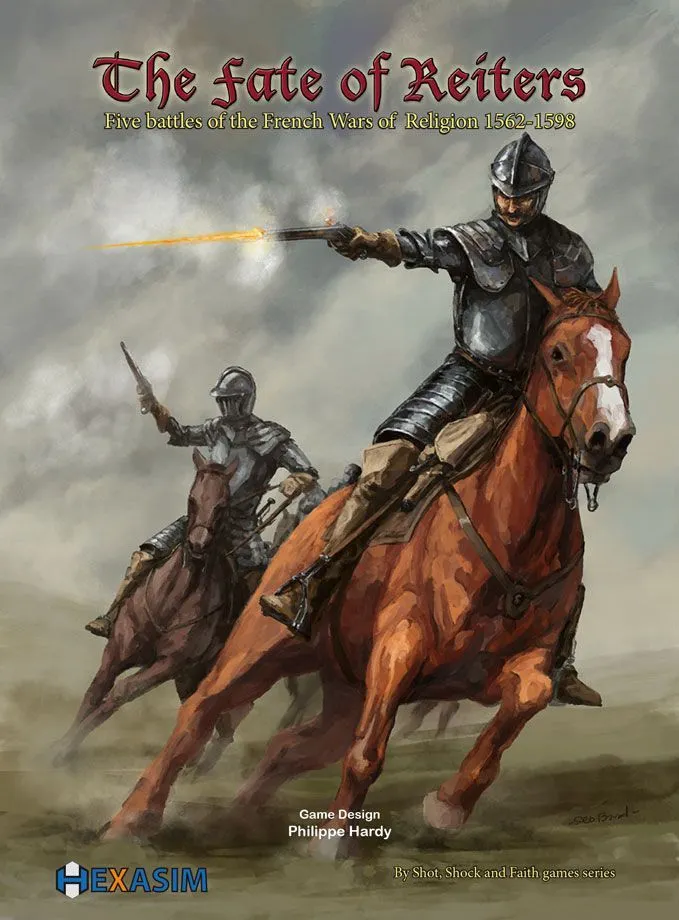
- Pozycja w BGG
- BGG #16 672
- Ocena BGG
- 7,3
The Fate of Reiters: Five Battles of the French Wars of Religion 1562-1598
2019
Pomoc w zasadach gry The Fate of Reiters: Five Battles of the French Wars of Religion 1562-1598
Zrozumiałe wyjaśnienia tur, efektów kart i spornych sytuacji z odnośnikami do oficjalnych źródeł i zapisaną historią pytań.
- 2 graczy
- 30–120 min
- 15+
- Złożoność 2,6/5

Dla 2 graczy
Asystent zasad gry The Fate of Reiters: Five Battles of the French Wars of Religion 1562-1598
Co chcesz wiedzieć?
Odpowiedzi pochodzą z oficjalnej instrukcji, ze stroną do sprawdzenia.
The Fate of Reiters: Five Battles of the French Wars of Religion 1562-1598 to gra planszowa wydana w 2019 roku dla 2 graczy, z rozgrywką trwającą 30–120 minut i dla osób od 15 lat. Projekt gry: Philippe Hardy. Główne mechaniki: Area Movement, Dice Rolling i Simulation.
O grze
Po angielsku
The Fate of Reiters: Five Battles of the French Wars of Religion 1562-1598 is a new game of the series Par le Feu, le Fer et la Foi (in English: "By Shot, Shock and Faith") and allows the simulation of the Religious Wars that occurred in France from 1562 to 1598. This civil war opposes, in a first conflict phase, Protestants - otherwise known as Huguenots - to Catholics, then Royalists to Holy League members after the accession of Henry IV to the throne in 1589. The art of war during this period of the Renaissance is rapidly changing. The great feudal landlords, steeped in morals, fight alongside mercenaries motivated by sole cupidity. The diversity of the weapons that are used offers great tactical possibilities, based on impact and fire. Gendarmes, cuirassiers, reiters, harquebusiers, lansquenets and Swiss mercenaries confront each other in a merciless fight. The Fate of Reiters is a Grand-Tactical board-wargame which, for the first time, allows the simulation of five battles of that era: COGNAT : January 6th, 1568 DORMANS : October 10th, 1575 AUNEAU : November 24th, 1587 VIMORY : October 26th, 1587 METRIEUX (aka VIRE-CULS) December 10th, 1587 This is a classic wargame « I go, You go » ststem, of average complexity, including, during the active player's phase, a sequence of reaction from the passive player, such as fire, counter-charge or tactical backstep. The maps are with areas from 300 to 500 meters by side. A color code allows to easily determine the costs of movements and the line of sight. The scale of the game is one unit for 100 to 500 soldiers or one or two guns. One game turn represent a duration of 20 to 30 minutes. A corps represents either a vanguard or a rearguard, or the main body called "battle". The combats allow to simulate charges « in wall », the merciless shocks between pikemen, the artillery fire and highlight, by a support system, the combination of iron -shock- and fire -shooting. The optional rules- caracoles, orders, lost children, looting- add even more realism to the era's battles. The rules and the five battles offered are based on a thorough bibliography and researches made into books written by contemporary authors, specifically François de la Noue for the Protestants and Blaise de Montluc for the Catholics, and also on precise topographical plans of each battlefield that is still accessible... Are you ready to put on the Henri de Guise, Duke of Lorraine and fight your enemies the famous German mercenaries ? The Fate of Reiters is the second opus of Par le Feu, le Fer et le Foi (By Shot, Shock and Faith). This new HEXASIM wargame offers you this option with an innovating and elegant game. —description from the publisher
Mechaniki
Autorzy
Wydawcy
- Hexasim
Pytania i odpowiedzi
Według katalogu The Fate of Reiters: Five Battles of the French Wars of Religion 1562-1598 obsługuje 2 graczy. To liczba graczy podana przez wydawcę, więc gra jest zaprojektowana dokładnie dla takiej liczby uczestników. Warianty dla grup innej wielkości, jeśli w ogóle istnieją, opisano w instrukcji twojego wydania; sprawdź ją uważnie, zanim przygotujesz inną konfigurację stołu.
Podany czas rozgrywki w The Fate of Reiters: Five Battles of the French Wars of Religion 1562-1598 wynosi 30–120 minut. To szacunek wydawcy dla pełnej partii. Rzeczywisty czas zależy od grupy, liczby graczy i znajomości zasad: pierwsze partie zwykle trwają dłużej, a doświadczone grupy kończą szybciej. Przygotowanie gry i tłumaczenie zasad nie są wliczone w ten szacunek.
Katalog podaje dla The Fate of Reiters: Five Battles of the French Wars of Religion 1562-1598 wiek od 15 lat. To zalecenie wydawcy, które uwzględnia wymagania dotyczące czytania, złożoność zasad i drobne elementy, a nie tylko tematykę. Młodsi gracze często mogą dołączyć z pomocą dorosłego; sprawdź zalecenie wiekowe swojego wydania i weź pod uwagę doświadczenie grupy z grami planszowymi.
The Fate of Reiters: Five Battles of the French Wars of Religion 1562-1598 ma ocenę złożoności 2,6 na 5 według graczy BoardGameGeek, co czyni ją grą raczej lekką. Ocena pokazuje, ile znajomości zasad, planowania i podejmowania decyzji wymaga typowa rozgrywka. Cięższe gry wymagają dłuższego pierwszego tłumaczenia, dlatego przed wieczorem z grami warto skorzystać z przewodnika przygotowania.
The Fate of Reiters: Five Battles of the French Wars of Religion 1562-1598 należy do tych kategorii: Wargame, Renaissance i Civil War. Główne mechaniki to Area Movement, Dice Rolling i Simulation. Kategorie opisują temat i świat gry, a mechaniki to, co gracze faktycznie robią w swojej turze. Każda mechanika prowadzi do strony katalogu z podobnymi grami, co pomaga znaleźć coś porównywalnego na kolejny wieczór.
Autorzy wymienieni przy The Fate of Reiters: Five Battles of the French Wars of Religion 1562-1598 to: Philippe Hardy. Te informacje pochodzą z opublikowanych danych gry i wskazują osoby odpowiedzialne za jej projekt, a nie ilustratorów czy wydawców. Strony autorów w MeepleRules zbierają inne tytuły tych samych twórców, co pomaga, gdy gra ci się podoba i szukasz podobnych.
W katalogu The Fate of Reiters: Five Battles of the French Wars of Religion 1562-1598 figuruje jako gra podstawowa. Można w nią grać samodzielnie, korzystając z elementów z pudełka, bez żadnego innego tytułu. Dodatki, jeśli istnieją, dokładają nową zawartość lub zasady i są wymienione w katalogu osobno, z odnośnikiem do tej gry podstawowej.