
- Pozycja w BGG
- BGG #16 006
- Ocena BGG
- 6,2
Grackles
- 2–4 graczy
- 20–30 min
- Złożoność 1,5/5
- 2018
2023
Pomoc w zasadach gry The Girl Who Made The Stars
Zrozumiałe wyjaśnienia tur, efektów kart i spornych sytuacji z odnośnikami do oficjalnych źródeł i zapisaną historią pytań.
Co chcesz wiedzieć?
Odpowiedzi pochodzą z oficjalnej instrukcji, ze stroną do sprawdzenia.
The Girl Who Made The Stars to gra planszowa wydana w 2023 roku dla 1–4 graczy, z rozgrywką trwającą 60 minut i dla osób od 14 lat. Projekt gry: John Shulters. Główne mechaniki: Set Collection, Tile Placement i End Game Bonuses.




Po angielsku
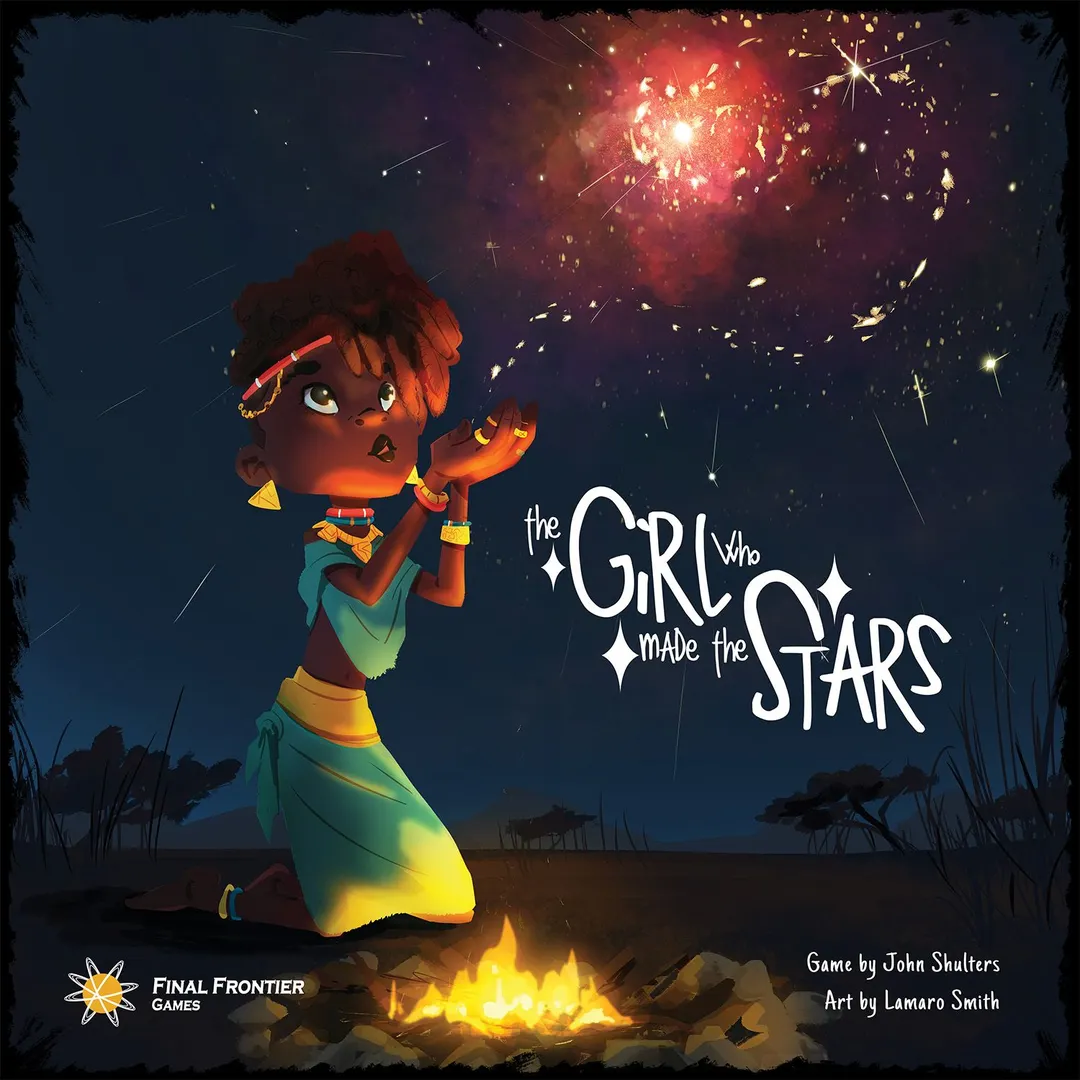
The girl reached into the wood ash and grabbed a palmful, and as she blew it from her palm, the ashes swirled and churned as they moved skyward, lighting up the once dark skies. The Girl who Made the Stars is a worker placement/tile-laying puzzle game for 1-4 players based on a San African myth about the creation of the milky way and the stars. In the time of the first people, the night sky was dark and featureless. The village elders prohibited venturing out into the dark starless night for fear of the dangers that lurked there. One night after her mother cooked dinner, a young girl, frustrated with these restrictions, took a bit of ash and roots and cast the red and white embers into the sky, forming the milky way and the other stars, in an attempt to illuminate the night so the villagers could safely collect resources necessary for their survival. As a village elder, gaze upon the new stars in the night sky and discern the forms of constellations to provide wisdom and illumination to the village. Draw constellations into the earth, with your depictions gaining light, stars, and stardust for the village. Then, as villagers guided by this newfound light, venture into the surrounding darkness to collect much needed resources, including fruit, fish, and small and large game. The resources you collect for the village will boost your reputation, and the player with the highest reputation at the end of the game is the winner. —description from the publisher ________________ Traducción de google____________ La joven metió la mano en las cenizas de la hoguera y tomó un puñado; al soplarlo desde su palma, las cenizas se arremolinaron y agitaron mientras ascendían hacia el cielo, iluminando la oscuridad que antes reinaba en el firmamento. "The Girl who Made the Stars" es un juego de rompecabezas, colocación de trabajadores y colocación de losetas para 1 a 4 jugadores, basado en un mito del pueblo San de África sobre la creación de la Vía Láctea y las estrellas. En la época de los primeros pobladores, el cielo nocturno era oscuro y carecía de rasgos distintivos. Los ancianos de la aldea prohibían aventurarse en la noche oscura y sin estrellas por temor a los peligros que acechaban en ella. Una noche, tras la cena preparada por su madre, una joven —frustrada por estas restricciones— tomó un poco de ceniza y raíces y lanzó las brasas rojas y blancas al cielo, dando forma a la Vía Láctea y a las demás estrellas; lo hizo en un intento por iluminar la noche y permitir así que los aldeanos recolectaran con seguridad los recursos necesarios para su supervivencia. En el papel de un anciano de la aldea, contempla las nuevas estrellas del firmamento e identifica las formas de las constelaciones para aportar sabiduría e iluminación a tu pueblo. Dibuja constelaciones en la tierra; tus representaciones generarán luz, estrellas y polvo estelar para la aldea. Luego, como aldeanos guiados por esta nueva luz, aventúrense en la oscuridad circundante para recolectar recursos vitales, como frutas, pescado y piezas de caza menor y mayor. Los recursos que reúnas para la aldea aumentarán tu reputación, y el jugador con mayor reputación al final de la partida será el ganador. —descripción de la editorial
Według katalogu The Girl Who Made The Stars obsługuje od 1 do 4 graczy. Ten zakres odpowiada liczbie graczy podanej przez wydawcę, więc grę można przygotować dla dowolnej grupy w jego granicach. Przygotowanie, niektóre zasady i punktacja mogą jednak różnić się w zależności od liczby graczy; dokładną konfigurację sprawdź w instrukcji swojego wydania.
Podany czas rozgrywki w The Girl Who Made The Stars wynosi 60 minut. To szacunek wydawcy dla pełnej partii. Rzeczywisty czas zależy od grupy, liczby graczy i znajomości zasad: pierwsze partie zwykle trwają dłużej, a doświadczone grupy kończą szybciej. Przygotowanie gry i tłumaczenie zasad nie są wliczone w ten szacunek.
Katalog podaje dla The Girl Who Made The Stars wiek od 14 lat. To zalecenie wydawcy, które uwzględnia wymagania dotyczące czytania, złożoność zasad i drobne elementy, a nie tylko tematykę. Młodsi gracze często mogą dołączyć z pomocą dorosłego; sprawdź zalecenie wiekowe swojego wydania i weź pod uwagę doświadczenie grupy z grami planszowymi.
The Girl Who Made The Stars ma ocenę złożoności 2,3 na 5 według graczy BoardGameGeek, co czyni ją grą raczej lekką. Ocena pokazuje, ile znajomości zasad, planowania i podejmowania decyzji wymaga typowa rozgrywka. Cięższe gry wymagają dłuższego pierwszego tłumaczenia, dlatego przed wieczorem z grami warto skorzystać z przewodnika przygotowania.
The Girl Who Made The Stars należy do tych kategorii: Abstract Strategy i Mythology. Główne mechaniki to Set Collection, Tile Placement i End Game Bonuses. Kategorie opisują temat i świat gry, a mechaniki to, co gracze faktycznie robią w swojej turze. Każda mechanika prowadzi do strony katalogu z podobnymi grami, co pomaga znaleźć coś porównywalnego na kolejny wieczór.
Autorzy wymienieni przy The Girl Who Made The Stars to: John Shulters. Te informacje pochodzą z opublikowanych danych gry i wskazują osoby odpowiedzialne za jej projekt, a nie ilustratorów czy wydawców. Strony autorów w MeepleRules zbierają inne tytuły tych samych twórców, co pomaga, gdy gra ci się podoba i szukasz podobnych.
W katalogu The Girl Who Made The Stars figuruje jako gra podstawowa. Można w nią grać samodzielnie, korzystając z elementów z pudełka, bez żadnego innego tytułu. Dodatki, jeśli istnieją, dokładają nową zawartość lub zasady i są wymienione w katalogu osobno, z odnośnikiem do tej gry podstawowej.