
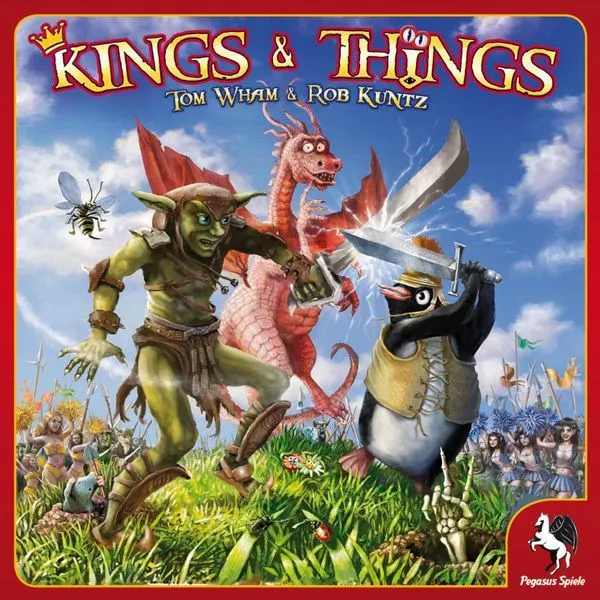
- Pozycja w BGG
- BGG #3886
- Ocena BGG
- 6,5
Kings & Things
- 2–4 graczy
- 60–180 min
- Złożoność 2,6/5
- 1986
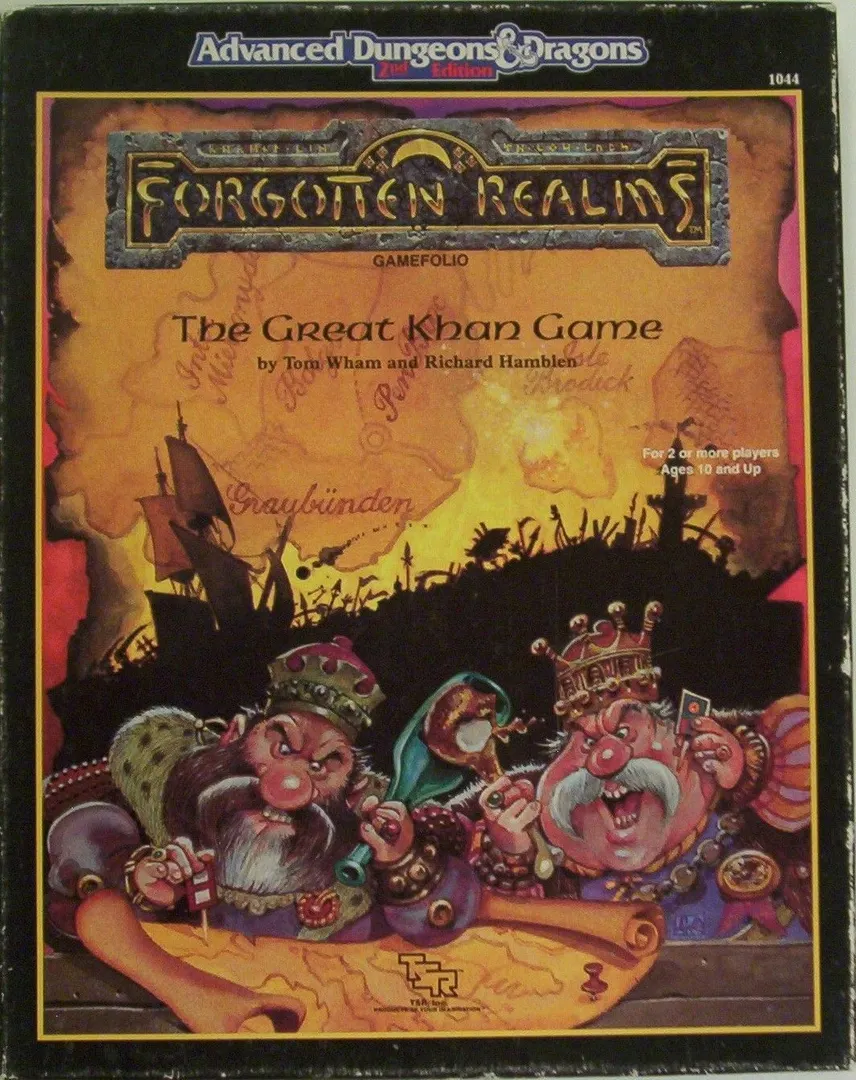
1989
Pomoc w zasadach gry The Great Khan Game
Zrozumiałe wyjaśnienia tur, efektów kart i spornych sytuacji z odnośnikami do oficjalnych źródeł i zapisaną historią pytań.
Dla 2 graczy
Co chcesz wiedzieć?
Odpowiedzi pochodzą z oficjalnej instrukcji, ze stroną do sprawdzenia.
The Great Khan Game to gra planszowa wydana w 1989 roku dla 2–6 graczy, z rozgrywką trwającą 90 minut i dla osób od 10 lat. Projekt gry: Tom Wham i Richard Hamblen. Główne mechaniki: Area Movement, Melding and Splaying i Campaign / Battle Card Driven.
Po angielsku
The Great Khan Game includes one 32-page rule book, one 11" x 17" full-color map of the Whamite Isles, 120 die-cut cardboard playing pieces, 162 playing cards, and one plastic storage bag. This is a card/strategy board game for 2 or more players. The game is set in the Whamite Islands. It is a very fun game, which usually lasts an hour or so depending on the number players and chance. The idea of the game is to make as much gold as possible by controlling countries within your own little empire from the dozen or so provinces available. The game uses a card system with a lot of clever design tricks added on to provide depth. The game play within your turn is easy to pick up, but requires much thought to get right. You are dealt six cards initially, which will usually give you weak control of a couple of countries. These can be added to each turn by drawing two free cards or taking the top card from the discard pile. Additionally, you can buy extra cards every turn. Having checked the cards for events and acted on those immediately, you can make 'melds,' war and political manoeuvres before compulsorily discarding one card. The heart of the game is the 'meld.' A meld is simply the act of laying one or more cards from your hand in front of you, thus activating their powers. By having the most powerful political meld on the table (determined by the total number of flags on the melded cards), you control that country until toppled by better politics or combat. Each country normally has a couple of leaders, often with low numbers, and a varying number of higher-numbered followers who might be loyal to any leader card or just one. Power can be stolen in two ways: political coups where you lay more flag cards than are currently melded (you take over those cards as well - those willing rally to your cause), or by the time-honoured invasion force. Combat is simple enough, but can prove a little fiddly at times. Once battle is joined, a d6 is rolled to see how many rounds the battle will last. Rolling a one when there are two large armies will virtually guarantee a non-result, whereas a six will give both sides a good chance of a win. Swords kill simply on a roll of five or six, castles get to 'fight' in defence, and defending ships must be beaten first. The game has an excellent basic structure. The key to the game is the balance of military, political power, and wealth. It really works well. But, as always, there are improvements to be made and rules that can be changed to improve or change the flavor of the game. But, the reason why the game works well is that there is an excellent structure underlying the few contested rules. It's worth adding that a lot of the fun comes from the irreverent humour on the cards--just in case you thought you were playing a serious strategy game. Names are satirical, silly, or obtuse references to real world people, places or events. For example, there's a castle named "Ratlarbig" (look at it closely), a character called the "Sorcerer's Apprentice" and a group of soldiers called "The Bloody Buggers". It's a hoot whether you're winning or losing.
Według katalogu The Great Khan Game obsługuje od 2 do 6 graczy. Ten zakres odpowiada liczbie graczy podanej przez wydawcę, więc grę można przygotować dla dowolnej grupy w jego granicach. Przygotowanie, niektóre zasady i punktacja mogą jednak różnić się w zależności od liczby graczy; dokładną konfigurację sprawdź w instrukcji swojego wydania.
Podany czas rozgrywki w The Great Khan Game wynosi 90 minut. To szacunek wydawcy dla pełnej partii. Rzeczywisty czas zależy od grupy, liczby graczy i znajomości zasad: pierwsze partie zwykle trwają dłużej, a doświadczone grupy kończą szybciej. Przygotowanie gry i tłumaczenie zasad nie są wliczone w ten szacunek.
Katalog podaje dla The Great Khan Game wiek od 10 lat. To zalecenie wydawcy, które uwzględnia wymagania dotyczące czytania, złożoność zasad i drobne elementy, a nie tylko tematykę. Młodsi gracze często mogą dołączyć z pomocą dorosłego; sprawdź zalecenie wiekowe swojego wydania i weź pod uwagę doświadczenie grupy z grami planszowymi.
The Great Khan Game ma ocenę złożoności 2,1 na 5 według graczy BoardGameGeek, co czyni ją grą raczej lekką. Ocena pokazuje, ile znajomości zasad, planowania i podejmowania decyzji wymaga typowa rozgrywka. Cięższe gry wymagają dłuższego pierwszego tłumaczenia, dlatego przed wieczorem z grami warto skorzystać z przewodnika przygotowania.
The Great Khan Game należy do tych kategorii: Card Game, Fantasy i Humor. Główne mechaniki to Area Movement, Melding and Splaying i Campaign / Battle Card Driven. Kategorie opisują temat i świat gry, a mechaniki to, co gracze faktycznie robią w swojej turze. Każda mechanika prowadzi do strony katalogu z podobnymi grami, co pomaga znaleźć coś porównywalnego na kolejny wieczór.
Autorzy wymienieni przy The Great Khan Game to: Tom Wham i Richard Hamblen. Te informacje pochodzą z opublikowanych danych gry i wskazują osoby odpowiedzialne za jej projekt, a nie ilustratorów czy wydawców. Strony autorów w MeepleRules zbierają inne tytuły tych samych twórców, co pomaga, gdy gra ci się podoba i szukasz podobnych.
W katalogu The Great Khan Game figuruje jako gra podstawowa. Można w nią grać samodzielnie, korzystając z elementów z pudełka, bez żadnego innego tytułu. Dodatki, jeśli istnieją, dokładają nową zawartość lub zasady i są wymienione w katalogu osobno, z odnośnikiem do tej gry podstawowej.