
- Ocena BGG
- 7,0
Won by the Sword: Update Kit
- 2 graczy
- 360 min
- Złożoność 2,5/5
- 2016
2014
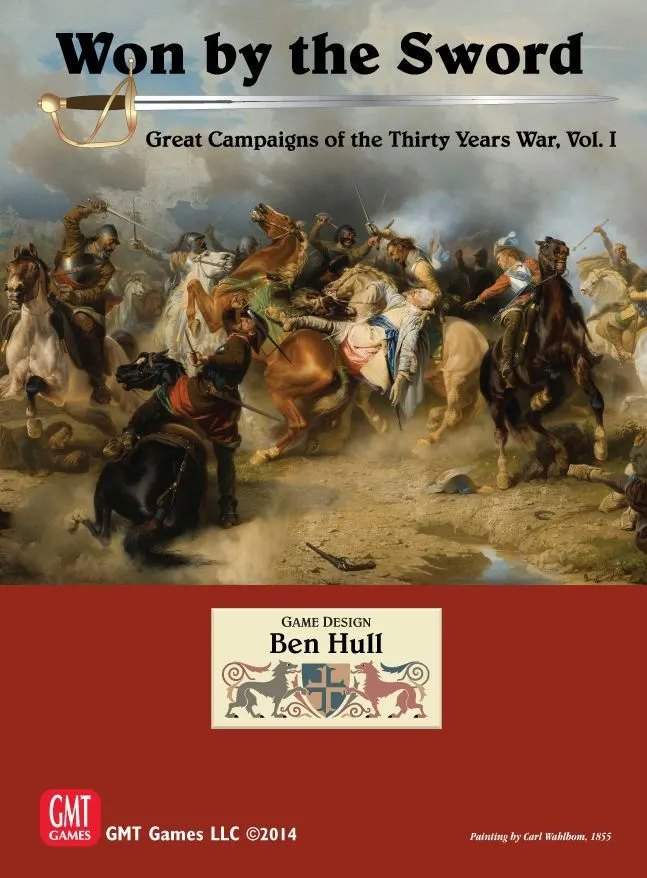
Pomoc w zasadach gry Won by the Sword: Great Campaigns of the Thirty Years War, Vol. 1
Zrozumiałe wyjaśnienia tur, efektów kart i spornych sytuacji z odnośnikami do oficjalnych źródeł i zapisaną historią pytań.
Dla 2 graczy
Co chcesz wiedzieć?
Odpowiedzi pochodzą z oficjalnej instrukcji, ze stroną do sprawdzenia.
Won by the Sword: Great Campaigns of the Thirty Years War, Vol. 1 to gra planszowa wydana w 2014 roku dla 2 graczy, z rozgrywką trwającą 360 minut i dla osób od 12 lat. Projekt gry: Ben Hull. Główne mechaniki: Dice Rolling, Point to Point Movement i Simulation.


Po angielsku
The war raged across Germany from 1618 to 1630 with the Habsburg, Holy Roman Emperor retaining the upperhand. Then the tide of war changed when King Gustav Adolf of Sweden, the "Lion of the North," revitalized the cause of the Protestant princes of Germany. Bankrolled by France, the Swedes pushed their advantage towards the Emperor's most valuable ally, Maximilian of Bavaria. Though Catholic, France sought to keep the power of the Habsburgs in check by financially supporting the Swedish King. From 1632 to 1648, Bavaria and the surrounding area became a crucial battlefront to knocking Bavaria out of the war. The Swedes enjoyed success until fate removed their King and their over-extended forces could not hold onto their gains. After the Swedes suffered a sharp defeat at Nördlingen in 1634, France was forced to play a more active role or lose all she had paid for. A series of seesaw campaigns ensued as the French Armée d'Allemagne secured crossings of the Rhine and pushed the war back into the heart of Bavaria. The area became the proving ground of the greatest generals of the age - Turenne, Condé, Mercy, de Werth. Neither side possessed a clear superiority of forces so it was a dangerous game of cat-and-mouse, march, counter-march, siege, and surprise attacks. After several years, a combined French-Swedish campaign finally broke the back of the Bavarians in 1646 and Maximilian made a separate peace. It did not last long; after a year he reluctantly rejoined the Imperial cause. Repeating the winning combination of 1646, the French-Swedish army ended Maximilian's enterprise at Zusmarshausen in 1648. Won by the Sword is the first game in Ben Hull's Great Campaigns of the Thirty Years War series. It is a two-player game of operational warfare in the 17th Century. Armies maneuver on a point to point map of Southern Germany based on the road network available at the time. Each game is centered around a major battle or full campaign season. A Turn is a month divided into a variable number of impulses. Each army has a hand of Campaign Cards that control the amount of activity it may perform, the supplies it must expend, and a special action. Each impulse features one card play per army. Forces are concealed off map so players are faced with limited knowledge of the enemy. The major activities are maneuver, foraging, besieging fortifications, and an occasional battle. Won by the Sword is a low-complexity game with emphasis on the players maneuvering their forces, but many decisions await. The low rules complexity allows each player, rather than being encumbered with rules, to focus on choices regarding how to manage his campaign.
Według katalogu Won by the Sword: Great Campaigns of the Thirty Years War, Vol. 1 obsługuje 2 graczy. To liczba graczy podana przez wydawcę, więc gra jest zaprojektowana dokładnie dla takiej liczby uczestników. Warianty dla grup innej wielkości, jeśli w ogóle istnieją, opisano w instrukcji twojego wydania; sprawdź ją uważnie, zanim przygotujesz inną konfigurację stołu.
Podany czas rozgrywki w Won by the Sword: Great Campaigns of the Thirty Years War, Vol. 1 wynosi 360 minut. To szacunek wydawcy dla pełnej partii. Rzeczywisty czas zależy od grupy, liczby graczy i znajomości zasad: pierwsze partie zwykle trwają dłużej, a doświadczone grupy kończą szybciej. Przygotowanie gry i tłumaczenie zasad nie są wliczone w ten szacunek.
Katalog podaje dla Won by the Sword: Great Campaigns of the Thirty Years War, Vol. 1 wiek od 12 lat. To zalecenie wydawcy, które uwzględnia wymagania dotyczące czytania, złożoność zasad i drobne elementy, a nie tylko tematykę. Młodsi gracze często mogą dołączyć z pomocą dorosłego; sprawdź zalecenie wiekowe swojego wydania i weź pod uwagę doświadczenie grupy z grami planszowymi.
Won by the Sword: Great Campaigns of the Thirty Years War, Vol. 1 ma ocenę złożoności 2,7 na 5 według graczy BoardGameGeek, co czyni ją grą raczej lekką. Ocena pokazuje, ile znajomości zasad, planowania i podejmowania decyzji wymaga typowa rozgrywka. Cięższe gry wymagają dłuższego pierwszego tłumaczenia, dlatego przed wieczorem z grami warto skorzystać z przewodnika przygotowania.
Won by the Sword: Great Campaigns of the Thirty Years War, Vol. 1 należy do tych kategorii: Wargame i Pike and Shot. Główne mechaniki to Dice Rolling, Point to Point Movement i Simulation. Kategorie opisują temat i świat gry, a mechaniki to, co gracze faktycznie robią w swojej turze. Każda mechanika prowadzi do strony katalogu z podobnymi grami, co pomaga znaleźć coś porównywalnego na kolejny wieczór.
Autorzy wymienieni przy Won by the Sword: Great Campaigns of the Thirty Years War, Vol. 1 to: Ben Hull. Te informacje pochodzą z opublikowanych danych gry i wskazują osoby odpowiedzialne za jej projekt, a nie ilustratorów czy wydawców. Strony autorów w MeepleRules zbierają inne tytuły tych samych twórców, co pomaga, gdy gra ci się podoba i szukasz podobnych.
W katalogu Won by the Sword: Great Campaigns of the Thirty Years War, Vol. 1 figuruje jako gra podstawowa. Można w nią grać samodzielnie, korzystając z elementów z pudełka, bez żadnego innego tytułu. Dodatki, jeśli istnieją, dokładają nową zawartość lub zasady i są wymienione w katalogu osobno, z odnośnikiem do tej gry podstawowej.