
- Pozycja w BGG
- BGG #1546
- Ocena BGG
- 8,0
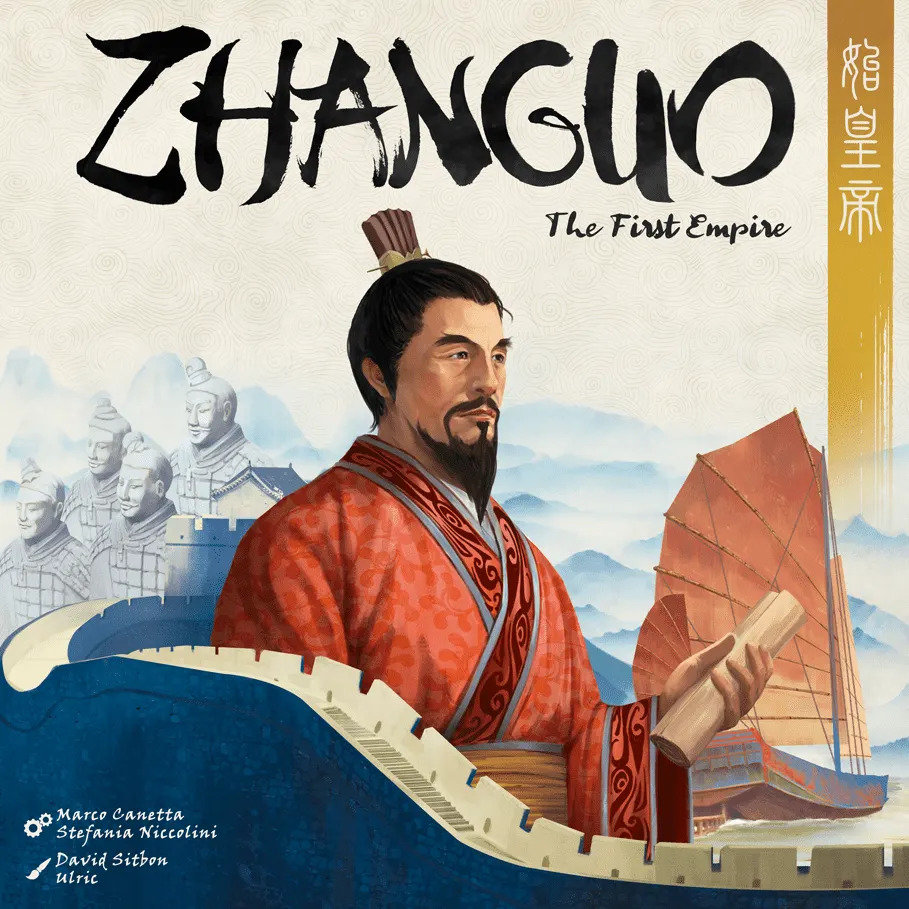
Zhanguo: The First Empire
- 1–4 graczy
- 60–120 min
- Złożoność 3,8/5
- 2023
2014
Pomoc w zasadach gry ZhanGuo
Zrozumiałe wyjaśnienia tur, efektów kart i spornych sytuacji z odnośnikami do oficjalnych źródeł i zapisaną historią pytań.
Dla 2 graczy
Co chcesz wiedzieć?
Odpowiedzi pochodzą z oficjalnej instrukcji, ze stroną do sprawdzenia.
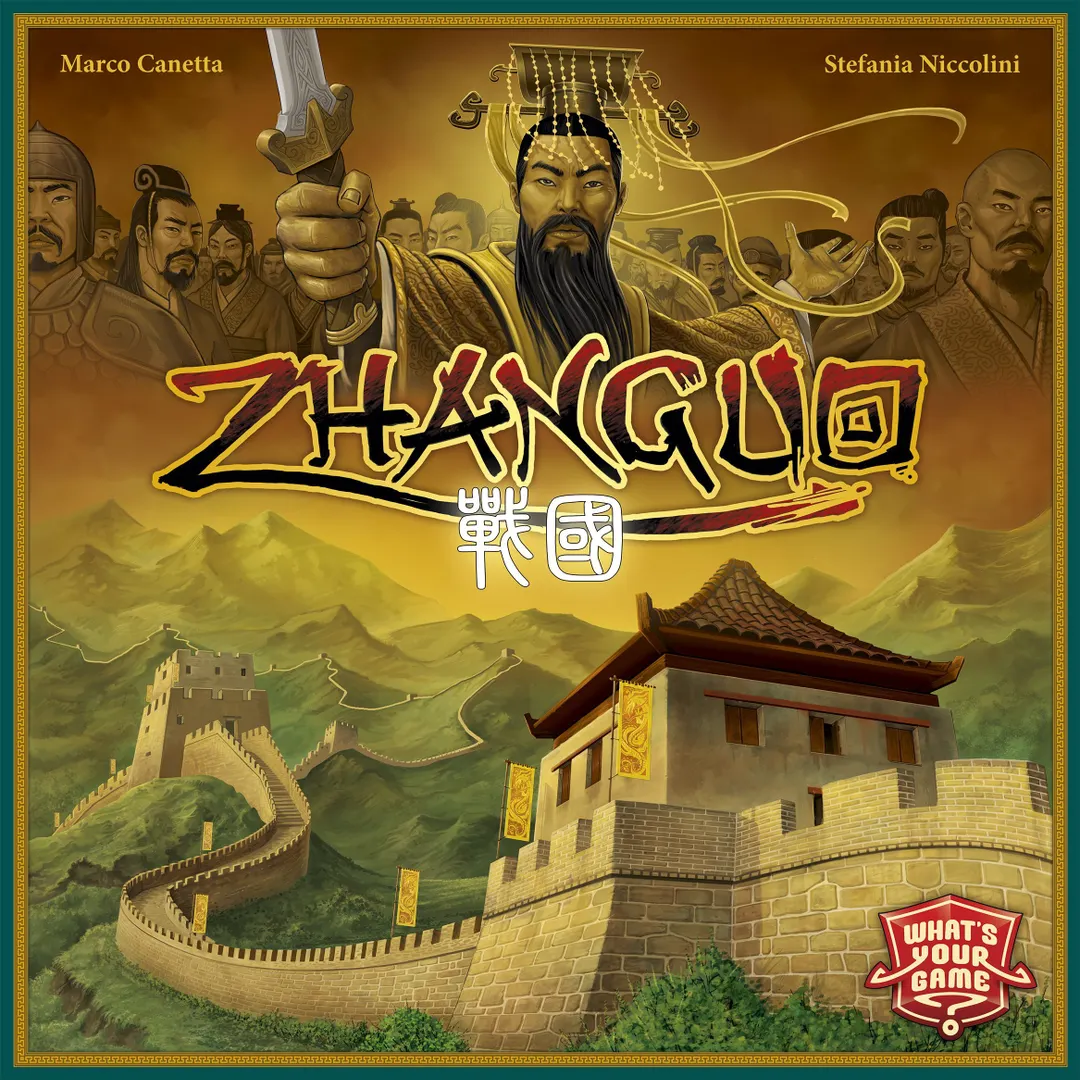
ZhanGuo to gra planszowa wydana w 2014 roku dla 2–4 graczy, z rozgrywką trwającą 60–120 minut i dla osób od 12 lat. Projekt gry: Marco Canetta i Stefania Niccolini. Główne mechaniki: Hand Management i Area Majority / Influence.



Po angielsku
Between 230 and 221 B.C., the ambitious and extremely young king of Qin, Ying Zheng, unified China, adding all the other so-called Warring States (ZhanGuo) to his empire. Through this, Ying Zheng became the first emperor in Chinese history, taking the title of Qin Shi Huang Di. Plenty of things had to change in order to make the Chinese empire whole, and Qin Shi Huang Di didn't waste any time. He divided the empire into prefectures, personally appointing central and local functionaries; afterward, he decreed that the same writing symbols had to be used throughout the entire nation. Furthermore, he unified the laws and the units of measure, particularly the currency, creating amazing conditions for the economic development and growth of the empire. Internal decisions were not the only things that shaped this new unified nation. From the North, the menace of the Hsiungnu barbarians kept shaking the empire, and Qin Shi Huang Di knew that the only way to stop that menace was to build one of the most ambitious buildings in human history: The Great Wall of China. Thousands of peasants left their fields to take part in the construction, not only of the Great Wall, but also of roads, channels, palaces, and majestic buildings. In ZhanGuo, you are the emperor's emissaries, and you have been assigned the challenging task of contributing to the process of unifying the empire, helping to build the wall, and all infrastructures needed. During the five rounds of the game, you must make the best of the few cards you get each round. You can play each card either on your own player board to increase your personal power in the empire, or on the game board to recruit manpower, construct buildings wanted by the emperor, call reinforcements from Qin, and move the armies from kingdom to kingdom. Each player has to choose the best time and best way to play his cards in order to earn the emperor’s favors. Careful, though, because trying to get too much power, or exploiting the workers for personal gain could increase dissatisfaction among the populace, and consequently increase the risk of uprisings in the newly added kingdoms. Whoever is able to make the greatest contribution to the emperor's cause, while at the same time keeping the citizens placid, will be the winner.
Według katalogu ZhanGuo obsługuje od 2 do 4 graczy. Ten zakres odpowiada liczbie graczy podanej przez wydawcę, więc grę można przygotować dla dowolnej grupy w jego granicach. Przygotowanie, niektóre zasady i punktacja mogą jednak różnić się w zależności od liczby graczy; dokładną konfigurację sprawdź w instrukcji swojego wydania.
Podany czas rozgrywki w ZhanGuo wynosi 60–120 minut. To szacunek wydawcy dla pełnej partii. Rzeczywisty czas zależy od grupy, liczby graczy i znajomości zasad: pierwsze partie zwykle trwają dłużej, a doświadczone grupy kończą szybciej. Przygotowanie gry i tłumaczenie zasad nie są wliczone w ten szacunek.
Katalog podaje dla ZhanGuo wiek od 12 lat. To zalecenie wydawcy, które uwzględnia wymagania dotyczące czytania, złożoność zasad i drobne elementy, a nie tylko tematykę. Młodsi gracze często mogą dołączyć z pomocą dorosłego; sprawdź zalecenie wiekowe swojego wydania i weź pod uwagę doświadczenie grupy z grami planszowymi.
ZhanGuo ma ocenę złożoności 3,8 na 5 według graczy BoardGameGeek, co czyni ją grą ciężką. Ocena pokazuje, ile znajomości zasad, planowania i podejmowania decyzji wymaga typowa rozgrywka. Cięższe gry wymagają dłuższego pierwszego tłumaczenia, dlatego przed wieczorem z grami warto skorzystać z przewodnika przygotowania.
ZhanGuo należy do tych kategorii: Ancient. Główne mechaniki to Hand Management i Area Majority / Influence. Kategorie opisują temat i świat gry, a mechaniki to, co gracze faktycznie robią w swojej turze. Każda mechanika prowadzi do strony katalogu z podobnymi grami, co pomaga znaleźć coś porównywalnego na kolejny wieczór.
Autorzy wymienieni przy ZhanGuo to: Marco Canetta i Stefania Niccolini. Te informacje pochodzą z opublikowanych danych gry i wskazują osoby odpowiedzialne za jej projekt, a nie ilustratorów czy wydawców. Strony autorów w MeepleRules zbierają inne tytuły tych samych twórców, co pomaga, gdy gra ci się podoba i szukasz podobnych.
W katalogu ZhanGuo figuruje jako gra podstawowa. Można w nią grać samodzielnie, korzystając z elementów z pudełka, bez żadnego innego tytułu. Dodatki, jeśli istnieją, dokładają nową zawartość lub zasady i są wymienione w katalogu osobno, z odnośnikiem do tej gry podstawowej.