

- Место в рейтинге BGG
- BGG #17 499
- Оценка BGG
- 6,5
Tri-Tactics
- 2 игрока
- 240 мин
- Сложность 2,5/5
- 1932
1919
Помощник по правилам Dover Patrol
Понятные объяснения ходов, эффектов карт и спорных ситуаций со ссылками на официальные источники и сохранённой историей вопросов.
Для 2 игроков
Что хотите уточнить?
Отвечаю по официальным правилам и показываю страницу для проверки.
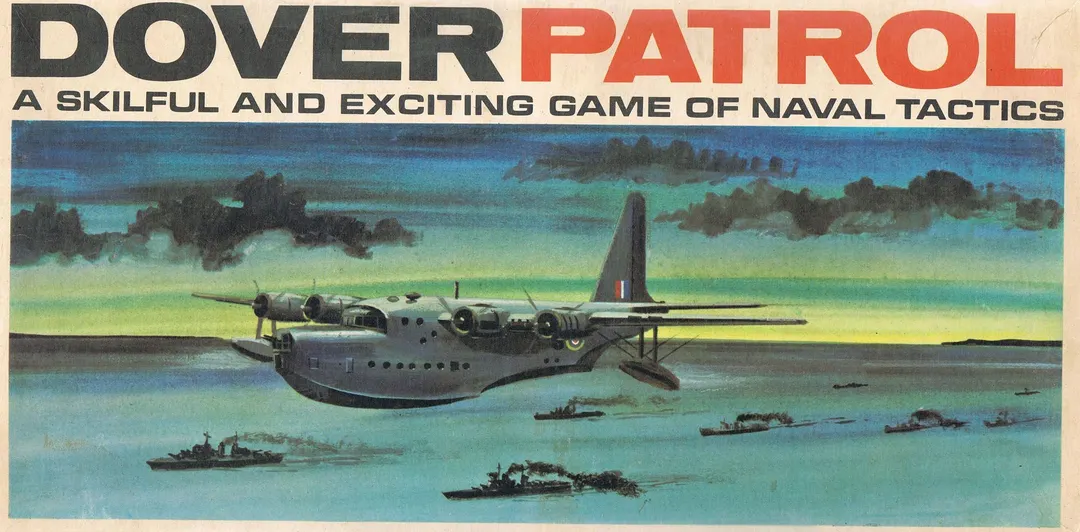
«Dover Patrol» — настольная игра 1919 года: для 2 игроков, 180 минут на партию и возраст от 12 лет. Авторы игры — Harry Gibson; основные механики — Square Grid, Memory и Grid Movement.



На английском
This game DOVER PATROL by Harry Gibson is a wonderful Naval themed and early version of a type of hidden tactics game of skill. It was sold alongside the similar L'Attaque and Aviation: The Aerial Tactics Game of Attack and Defence and a more complicated game called Tri-Tactics designed as an incorporation of all three, by Gibsons and marketed together at the time as Series: The Big Four (Gibsons). Note: L'Attaque was patented in 1909 in France by Mademoiselle Hermance Edan, the U.K. distribution rights for which were acquired in 1925 by Gibsons. Dover Patrol was launched in 1911, whereas the original H. P. Gibson & Sons company was registered in 1919. Prior to that, The International Card Company operated between 1903 and 1919, when Harry Percy Gibson purchased ICC to form his company. Whether Harry Gibson designed the game is therefore open to some doubt. The game play of Dover Patrol is very much like L'Attaque, which forms the basis of the near-identical game Stratego by Jumbo, published in 1946 after World War II when the patent would have expired. Gibsons themselves had to effectively ‘start again’ around that time having had their premises destroyed in the Blitz. The board, which supposedly represents an area of sea, is superimposed with a rectangular grid. A Base is shown on two of the opposite edges of the board. The area round each base is protected by a harbour wall. Each player has a fleet of forty playing pieces. These pieces are rectangles of cardboard which stand upon plastic supports. The two sides are distinguished by the colour on the back of each card, red and blue in this case. The fronts of the cards depict various ships, mines and a flying boat. Each piece has a printed value from 1 for a Patrol Vessel to 10 for the Flagship. These values represent the relative strength of each ship and also indicate the type of ship; battle cruisers, light cruisers, etc.. The ships are also named, H.M.S. Lion, H.M.S. Glasgow and so on. The object of the game is to capture the enemy Flag and transport it back to one's own base while still retaining possession of one's own Flag. To start the game, the players place their Flag on their Base and then set up their pieces, one per rectangle, on their own side of the board and with the backs of the cards facing the opponent. In turn the players move a piece one space orthogonally until two opposing pieces are back-to-back. The moving player may then call 'Attack', the two relevant pieces are then revealed and the one with the lower value is sunk and removed from the board. In addition to the fighting ships, the players have a number of auxiliary pieces. Mines will automatically blow up virtually all ships that are moved into an attacking position, regardless of whether the owner of the moving ship attacks or not. Once placed, mines may not be moved. Only the mine sweepers can destroy mines. The mine layers act as floating mines. They can be moved but may not attack, but have the same effect upon enemy shipping as a mine. Only the destroyers can sink them. Submarines have a marauding role and can sink all ships except mine layers and MTB's. The good old flying boat has a very important role as it is principally used to capture the enemy flag because it can fly over the harbour walls. Only MTB's and destroyers can shoot it down. When the opposing flag is captured, it is clipped to the top of the capturing piece and thus its whereabouts are known to all. The Flag can be transferred to any other piece standing orthogonally adjacent to the piece which is transporting it. It is a fairly straightforward game to play, though tactics can well be employed, particularly in the setting up phase. Similar to: L'Attaque Aviation: The Aerial Tactics Game of Attack and Defence Tri-Tactics Stratego
По данным каталога, «Dover Patrol» рассчитана на 2 игроков. Это число игроков, указанное издателем, то есть игра задумана ровно для такого количества участников. Варианты для другого состава, если они есть, описаны в правилах вашего издания; проверьте их, прежде чем готовить другую конфигурацию.
В каталоге для «Dover Patrol» указано время партии 180 минут — это оценка издателя для полной партии. Фактическая длительность зависит от состава, числа игроков и знакомства с правилами: первые партии обычно идут дольше, опытные компании заканчивают быстрее. Подготовка и объяснение правил в эту оценку не входят.
В каталоге для «Dover Patrol» указан возраст от 12 лет. Это рекомендация издателя: она учитывает необходимость чтения, сложность правил и мелкие компоненты, а не только тему. Младшие игроки часто могут участвовать с помощью взрослого; проверьте возрастную рекомендацию на своём издании и учтите опыт вашей компании в настольных играх.
Сложность «Dover Patrol» — 2,1 из 5 по оценкам игроков BoardGameGeek, это игра ниже средней сложности. Оценка отражает, сколько знания правил, планирования и решений требует типичная партия. Сложные игры дольше объяснять в первый раз, поэтому перед игровым вечером пригодится руководство по подготовке.
Категории игры «Dover Patrol»: Wargame, Nautical и World War II. Основные механики: Square Grid, Memory и Grid Movement. Категории описывают тему и сеттинг игры, а механики — то, что игроки на самом деле делают в свой ход. Каждая механика ведёт в раздел каталога с похожими играми, и так проще найти что-то подобное для следующей партии.
В каталоге авторами «Dover Patrol» указаны: Harry Gibson. Эти данные взяты из опубликованной информации об игре и называют людей, ответственных за её дизайн, а не иллюстраторов или издателей. Страницы авторов на MeepleRules собирают другие игры тех же авторов — это удобно, когда игра понравилась и хочется найти похожие.
В каталоге «Dover Patrol» отмечена как самостоятельная игра. В неё можно играть отдельно, используя компоненты из коробки, и никакая другая игра для этого не нужна. Дополнения, если они существуют, добавляют новый контент или правила и указаны в каталоге отдельно со ссылкой на эту базовую игру.