
- Місце в рейтингу BGG
- BGG #3 080
- Оцінка BGG
- 6,6
Megaland
- 2–5 гравців
- 20 хв
- Складність 1,8/5
- 2018
2013
Допомога з правилами City of the Living
Зрозумілі пояснення ходів, ефектів карт і спірних ситуацій із посиланнями на офіційні джерела та збереженою історією запитань.
Що ви хочете дізнатися?
Відповіді ґрунтуються на офіційній книзі правил із зазначенням сторінки для перевірки.
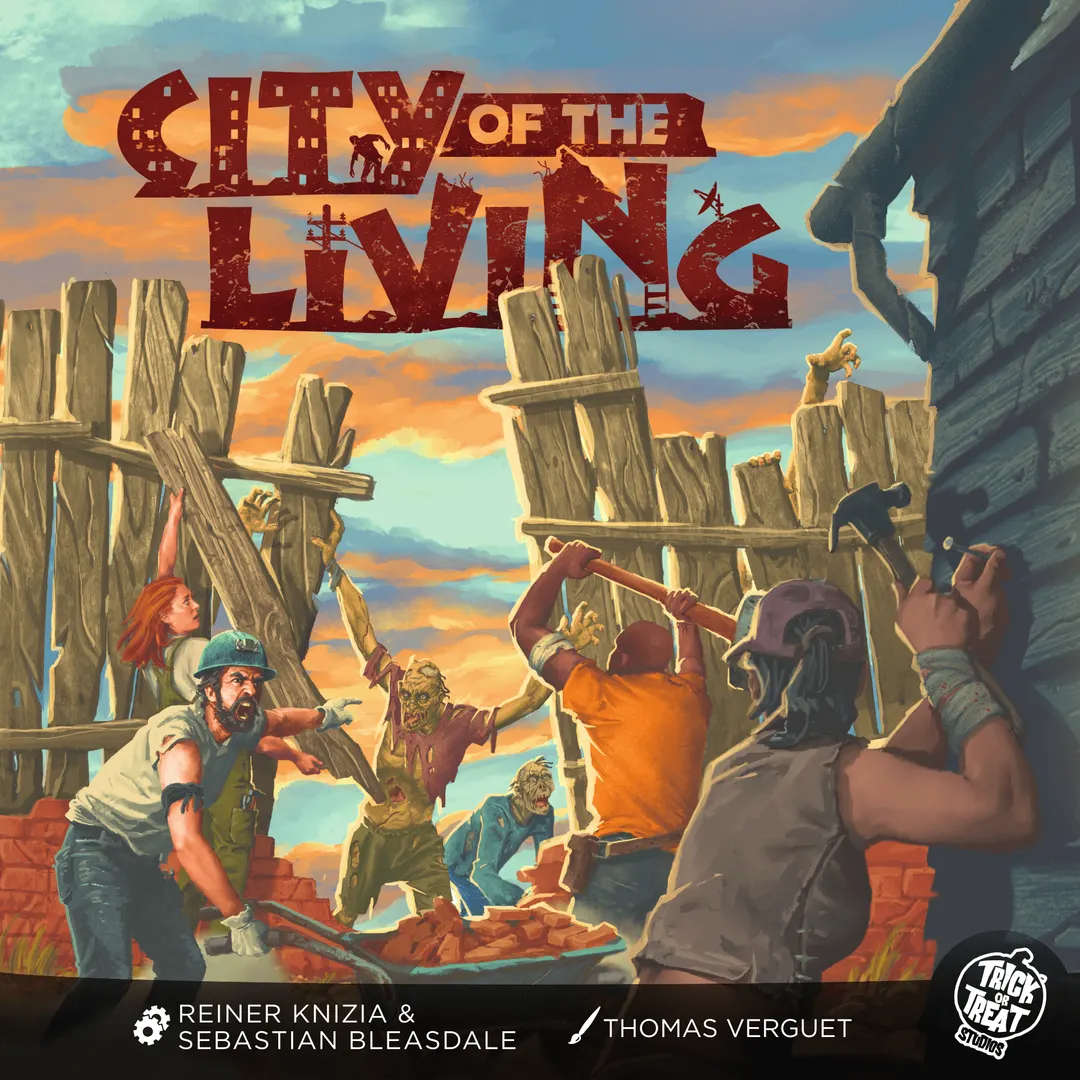
«City of the Living» — настільна гра, видана у 2013 році: для 2–4 гравців, 60 хвилин на партію і вік від 13 років. Автори гри — Reiner Knizia і Sebastian Bleasdale; основні механіки — Income, Track Movement і Tile Placement.






Англійською
The zombies have taken over in City of the Living, a new edition of the game first released as Prosperity. We must rebuild, but amongst the masses of dead, our cities of the living must do it better than they did in the past. Hold off the zombies and build up your territory to be declared the best leader! ••• Prosperity You're the leader of a great nation which is currently expanding. Over the course of the seven decades covered by the game, you will have to invest in infrastructures and industries, provide your country with energy and invest in advanced research in order to remain competitive — but prosperity has a price. You owe it to future generations to leave them a healthy world. Pollution lurks, but will you be able to limit it? Prosperity has players building up their countries on a grand but abstract scale, with them needing to balance concerns over energy and ecology with the constant need for capital and the long-term goal of prosperity points. The game starts with 24 tiles available, half on the energy side of the shared game board and half on the ecology side. Two tiles on each side are placed on levels 1-6, with the players each having two research markers – energy and ecology – that start at level 1. Each player has an individual game board with color-coded spaces for tiles, a pollution track, and tracks for energy and ecology. A stack of 36 tiles – with tiles arranged by decades: the six from 2030 on the bottom, then the five from 2020, and so on to the five from 1970 – is set up during the playing area. On a turn, a player draws the top tile from the stack, then everyone resolves the symbol highlighted on the tile: Energy – for a positive value, earn money; for a negative value, lose money or increase your pollution Ecology – remove or add discs to your pollution track Capital – earn money for each capital symbol on the tiles you own Research – advance one research marker one space for each research symbol on tiles you own Prosperity – score points for each prosperity symbol on tiles you own, but only if your pollution isn't maxed out Once everyone has done this, the active player takes two actions, repeating an action if desired. The possible actions are: Take money. Remove one pollution marker. Move forward one space on one research track. Buy a tile, with the amount owed being based on whether the tile is energy or ecology and the level of your corresponding research marker. If you buy a tile of the same level, the cost is €100; if the tile is of a higher level, you pay €100, plus €100 for each level; and if the tile is lower, you pay a flat €50. Players have limited space for tiles on their individual boards, especially since the tiles and spaces are color-coded, but players can cover existing tiles, if desired, losing any benefits (or penalties) in the process. Some parts of the individual board are off-limits to new infrastructure until you first provide transport; toll roads, highways and even train systems have drawbacks of their own, but ideally you'll be able to build your way past those trouble spots without causing too much pollution. When the final tile is drawn, that player finishes his turn, then everyone scores: twice for their energy and ecology levels, one for capital (with money being converted into prosperity points), once for research on both tracks (with points for those researching the most), and once for prosperity. Whoever tallies the most prosperity points wins!
За даними каталогу, City of the Living розрахована на 2–4 гравців. Цей діапазон указує видавець, тож гру можна підготувати для будь-якої кількості учасників у його межах. Підготовка, правила та підрахунок очок можуть відрізнятися залежно від кількості гравців, тому точні вказівки шукайте в правилах свого видання.
Зазначена тривалість партії в City of the Living — 60 хвилин. Це оцінка видавця для повної партії. Фактична тривалість залежить від компанії, кількості гравців і знання правил: перші партії зазвичай довші, а досвідчені гравці часто завершують швидше. Час на підготовку та пояснення правил у цю оцінку не входить.
У каталозі для City of the Living зазначено вік від 13 років. Це рекомендація видавця, яка враховує необхідність читати, складність правил і дрібні компоненти, а не лише тематику. Молодші гравці часто можуть долучитися за допомогою дорослого, тому перевірте вікову рекомендацію на своєму виданні та врахуйте досвід вашої компанії в настільних іграх.
Гравці BoardGameGeek оцінили складність City of the Living у 2,6 із 5, тож це гра помірно легкої складності. Оцінка відображає, скільки знань правил, планування та обмірковування рішень зазвичай потребує партія. Для складніших ігор закладайте більше часу на перше пояснення та скористайтеся посібником із підготовки перед ігровим вечором.
City of the Living належить до таких категорій: Economic і Environmental. Основні механіки: Income, Track Movement і Tile Placement. Категорії описують тематику та світ гри, а механіки — те, що гравці роблять під час своїх ходів. Кожна механіка веде до добірки схожих ігор у каталозі, щоб було легше знайти щось подібне.
Автори гри City of the Living: Reiner Knizia і Sebastian Bleasdale. Ці відомості взято з опублікованих даних про гру. Тут зазначено людей, які розробили гру, а не її ілюстраторів чи видавців. На сторінках авторів у MeepleRules зібрано інші їхні ігри — це допомагає знайти щось подібне до гри, яка вам сподобалася.
У каталозі City of the Living зазначена як базова гра. У неї можна грати самостійно, використовуючи компоненти з коробки, без інших ігор. Доповнення, якщо вони є, додають нові матеріали або правила. Їх наведено в каталозі окремо з посиланням на цю базову гру.

