- Місце в рейтингу BGG
- BGG #11 964
- Оцінка BGG
- 7,2
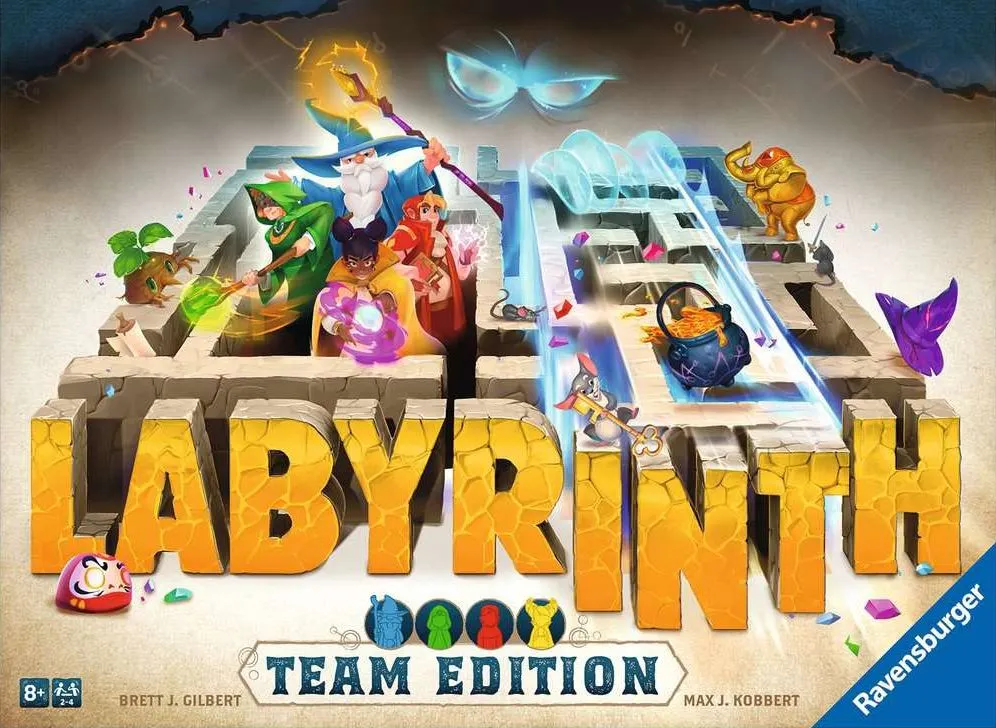
Labyrinth: Team Edition
- 2–4 гравці
- 30–40 хв
- Складність 1,6/5
- 2022
2021
Допомога з правилами P'achakuna
Зрозумілі пояснення ходів, ефектів карт і спірних ситуацій із посиланнями на офіційні джерела та збереженою історією запитань.
Для 2 гравців
Що ви хочете дізнатися?
Відповіді ґрунтуються на офіційній книзі правил із зазначенням сторінки для перевірки.
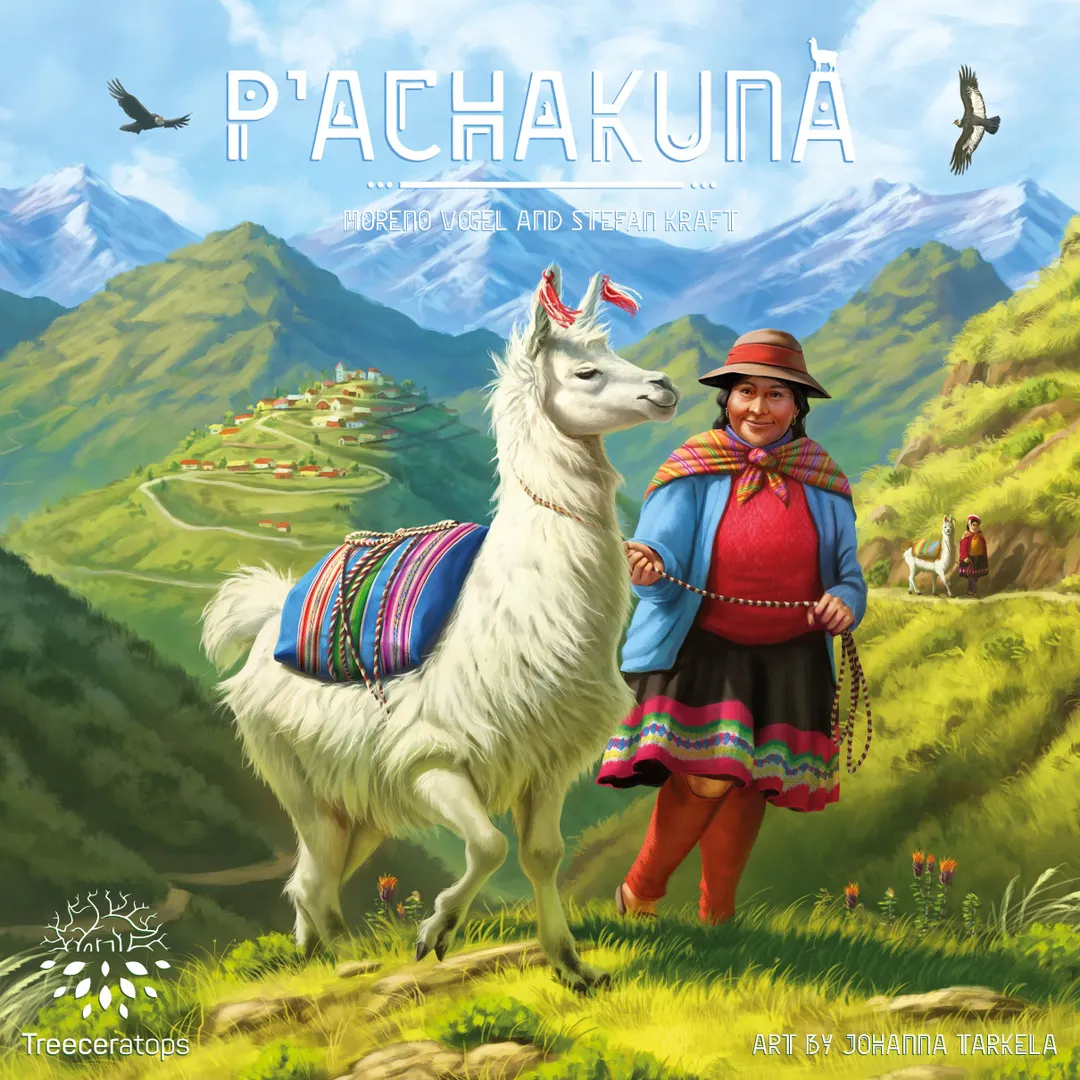
«P'achakuna» — настільна гра, видана у 2021 році: для 2 гравців, 30–60 хвилин на партію і вік від 8 років. Автори гри — Moreno Vogel і Stefan Kraft; основні механіки — Point to Point Movement, Tile Placement і Modular Board.




Англійською
P'achakuna takes you on a journey in the heart of the Andes together with your most loyal friend — your llama. The game includes both black and white llamas, with you controlling one color and your opponent the other. White llamas move only through the green valleys, while black llamas scale the barren mountains. Whatever the color, however, you want to visit mountain villages to deliver the dye that they desire, ideally collecting dye for yourself along the way. In P'achakuna, each player starts with one llama of their color in the center of the board in the white village, with a white dye loaded on its back. The board is composed of hexagonal tiles that are either half valley/half mountain, two-thirds valley/one-third mountain, or vice versa. The tiles are extremely thick so that you can grab the mountain section of the tile and pluck it from the board. Six villages sit on the perimeter of the game board, each corresponding to one of the primary or secondary colors. Each village has a random demand tile in it that shows two colors, one in high demand and one in low demand; neither of these colors can match the color of the village. On a turn, you may first rotate one unoccupied tile; by paying two dye resources from your personal supply, you can rotate a second tile. You then must move each of your llamas at least one space, but you can move them further if you desire and if the terrain allows them to do this. You rotate tiles to create long paths of valley or mountain so that ideally your llamas can travel far with each move. If you move a llama into a village, you trade the dye on that llama. If the dye you carry isn't in demand in that village, you simply trade that dye for the dye from the village, say, green for yellow. If the dye is in demand, then you add 1-2 dye of that delivered color to your personal supply (depending on whether the demand is low or high), then you place a dye matching the color of that village on your llama. If you collect a color in your personal supply and don't have it in your scoring track, you can place it in your scoring track. No matter what, you replace the demand tile in that village, making sure the color of that village isn't on the demand tile. During a turn in a village, you can hand in four dye from your personal supply to acquire a new llama that is then placed in that village with a dye from that village on its back. Each llama moves on your turn, and you can have at most three llamas. As soon as you have one dye of each of the seven colors on your scoring track, you win. To hold the demand tiles, the game includes a handmade fabric bag from Bolivia and Peru, which supports the local community.
Кількість гравців для P'achakuna за даними каталогу: 2 гравці. Це кількість, яку вказує видавець, тож гра розрахована саме на стільки учасників. Варіанти для іншої кількості гравців, якщо вони є, описано в правилах вашого видання. Перевірте їх, перш ніж готувати гру для іншого складу.
Зазначена тривалість партії в P'achakuna — 30–60 хвилин. Це оцінка видавця для повної партії. Фактична тривалість залежить від компанії, кількості гравців і знання правил: перші партії зазвичай довші, а досвідчені гравці часто завершують швидше. Час на підготовку та пояснення правил у цю оцінку не входить.
У каталозі для P'achakuna зазначено вік від 8 років. Це рекомендація видавця, яка враховує необхідність читати, складність правил і дрібні компоненти, а не лише тематику. Молодші гравці часто можуть долучитися за допомогою дорослого, тому перевірте вікову рекомендацію на своєму виданні та врахуйте досвід вашої компанії в настільних іграх.
Гравці BoardGameGeek оцінили складність P'achakuna у 1,8 із 5, тож це легка гра. Оцінка відображає, скільки знань правил, планування та обмірковування рішень зазвичай потребує партія. Для складніших ігор закладайте більше часу на перше пояснення та скористайтеся посібником із підготовки перед ігровим вечором.
P'achakuna належить до таких категорій: Animals, Puzzle і Maze. Основні механіки: Point to Point Movement, Tile Placement і Modular Board. Категорії описують тематику та світ гри, а механіки — те, що гравці роблять під час своїх ходів. Кожна механіка веде до добірки схожих ігор у каталозі, щоб було легше знайти щось подібне.
Автори гри P'achakuna: Moreno Vogel і Stefan Kraft. Ці відомості взято з опублікованих даних про гру. Тут зазначено людей, які розробили гру, а не її ілюстраторів чи видавців. На сторінках авторів у MeepleRules зібрано інші їхні ігри — це допомагає знайти щось подібне до гри, яка вам сподобалася.
У каталозі P'achakuna зазначена як базова гра. У неї можна грати самостійно, використовуючи компоненти з коробки, без інших ігор. Доповнення, якщо вони є, додають нові матеріали або правила. Їх наведено в каталозі окремо з посиланням на цю базову гру.