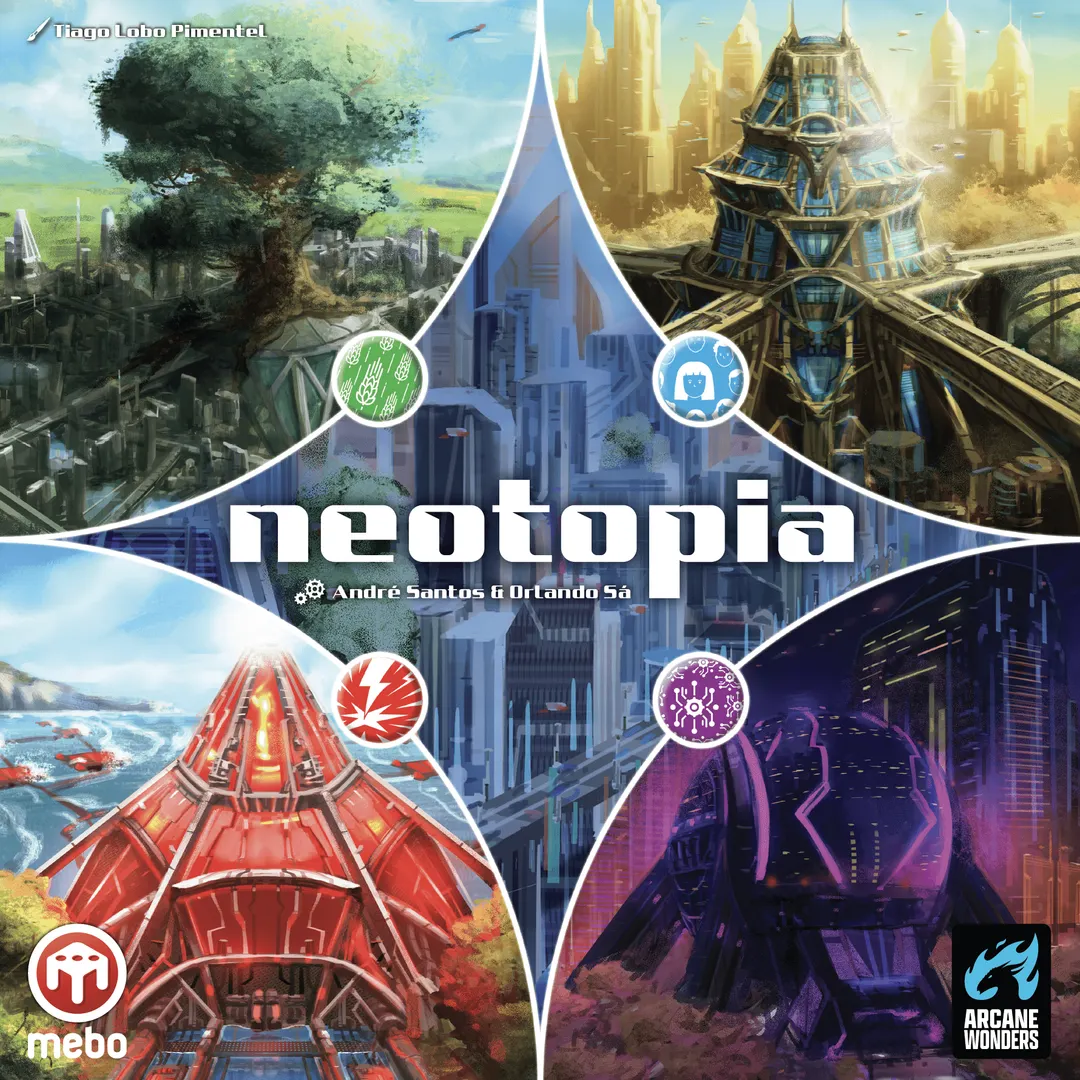
- Місце в рейтингу BGG
- BGG #4 900
- Оцінка BGG
- 7,1
Neotopia
- 2–4 гравці
- 30–60 хв
- Складність 2,0/5
- 2023
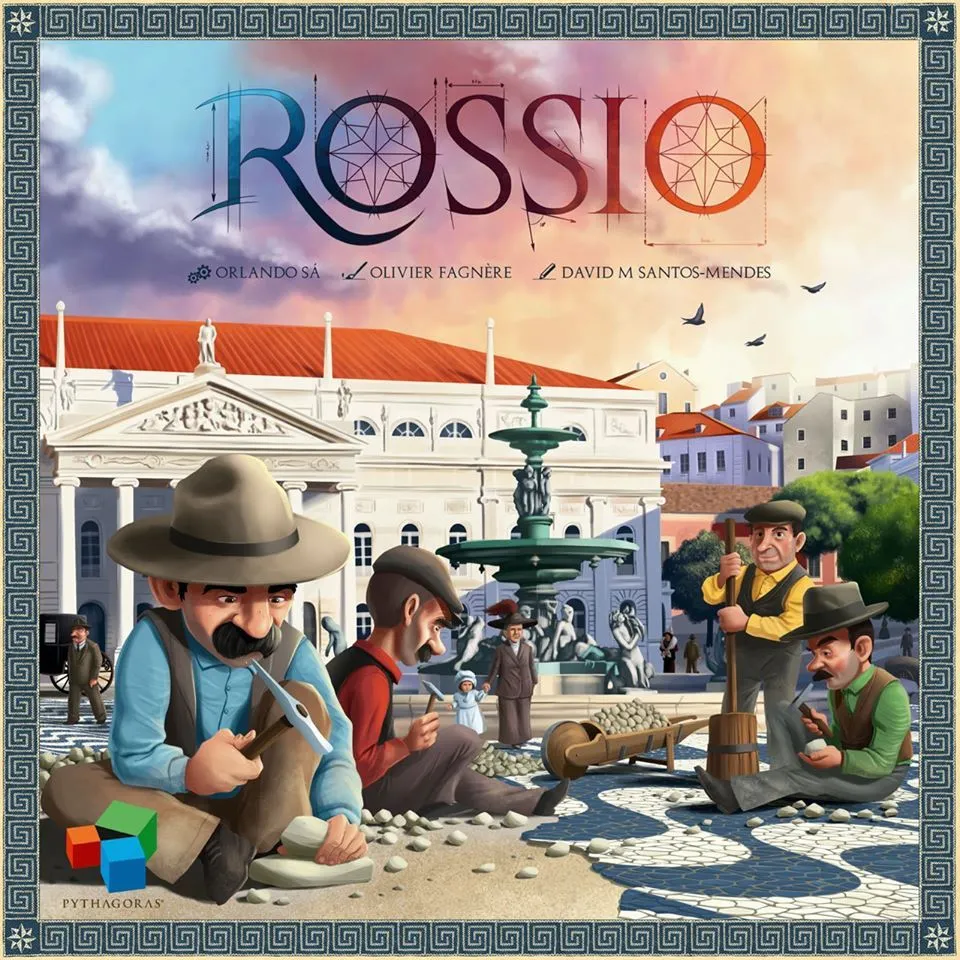
2020
Допомога з правилами Rossio
Зрозумілі пояснення ходів, ефектів карт і спірних ситуацій із посиланнями на офіційні джерела та збереженою історією запитань.
Що ви хочете дізнатися?
Відповіді ґрунтуються на офіційній книзі правил із зазначенням сторінки для перевірки.
«Rossio» — настільна гра, видана у 2020 році: для 1–4 гравців, 30–45 хвилин на партію і вік від 8 років. Автори гри — Orlando Sá; основні механіки — Hand Management, Area Majority / Influence і Tile Placement.





Англійською
The Portuguese King has called the finest stonemasons of the country to pave one of the most important squares with calçada tiles (worldwide famous black and white tiles that pave several squares in Portugal). But the task is enormous and players will have to count with the aid of helper cards who will help them score points and/or collect money. In Rossio, players start the game by drawing five cards and keeping three of them on their hands. On a player's turn, players will first recruit a card from their hands, placing it on the rightmost space under their player board, sliding to the left all cards previously recruited, discarding the card that slides off their boards (under each player board there are only 3 card slots). If the newly recruited card is played face-up, players must pay its cost in coins. If the card is played face-down, no money needs to be spent. Then, ALL cards under a player board will activate: face-up cards will give the player Points for each time the pattern depicted on the card is found on the square. Face-down cards will provide the player 1 coin each. Then, players must build the leftmost calçada tile of their player boards. Players can never voluntarily change the order of the tiles on their board. At any moment players can, however, spend 1 coin to swap 2 pieces on their board that are orthogonally adjacent. The tile must be built in the square orthogonally adjacent to at least 2 elements: 1 tile and 1 wall, or 2 tiles. And must be built on the leftmost available space of the line it is being built. If the players manage to build orthogonally adjacent to a similar tile, they can as bonus build the next leftmost tile, and so on, until they decide to stop or until they can't build more. Players collect then 1 coin for each coin depicted on the spaces that were left free on their player boards after tiles were built. Finally, players end their turn by drawing 1 card into their hand from the 4 cards available on the market. However, the amount of cards players can choose from depends on the number of tiles that they have built. So, if players build only 1 tile, they must take the 1st card. If they build 3 tiles, for example, they can choose between the 1st, 2nd or 3rd cards. Players end their turns by refilling the empty spaces of their player boards with tiles from the facedown stacks. As the square is being cooperatively built, certain patterns appear more often than others and the scoring of face-up cards becomes exponential. Also, when players complete a column, they collect a bonus, that can be either 1 coin or drawing more cards. Money is very tight in this game, so gaining an extra coin can be crucial to recruiting a card from your hand face-up. The game ends when the square is finished and the player with most points wins the game. Rossio is all about timing: Recruit a card face-up late in the game, and then it will score fewer times than expected. Recruit it too early, and it will score you a few points since there are few tiles built on the square. To many cards recruited face down will give that extra amount of money, but, they won't score any points. Build several tiles and you're probably helping your opponents. Build fewer tiles and you probably won't have money next turn to recruit a face-up card. Rossio is a game with very simple rules, but with high interaction between players and interesting decisions every single turn. —description from the designer
За даними каталогу, Rossio розрахована на 1–4 гравців. Цей діапазон указує видавець, тож гру можна підготувати для будь-якої кількості учасників у його межах. Підготовка, правила та підрахунок очок можуть відрізнятися залежно від кількості гравців, тому точні вказівки шукайте в правилах свого видання.
Зазначена тривалість партії в Rossio — 30–45 хвилин. Це оцінка видавця для повної партії. Фактична тривалість залежить від компанії, кількості гравців і знання правил: перші партії зазвичай довші, а досвідчені гравці часто завершують швидше. Час на підготовку та пояснення правил у цю оцінку не входить.
У каталозі для Rossio зазначено вік від 8 років. Це рекомендація видавця, яка враховує необхідність читати, складність правил і дрібні компоненти, а не лише тематику. Молодші гравці часто можуть долучитися за допомогою дорослого, тому перевірте вікову рекомендацію на своєму виданні та врахуйте досвід вашої компанії в настільних іграх.
Гравці BoardGameGeek оцінили складність Rossio у 1,9 із 5, тож це легка гра. Оцінка відображає, скільки знань правил, планування та обмірковування рішень зазвичай потребує партія. Для складніших ігор закладайте більше часу на перше пояснення та скористайтеся посібником із підготовки перед ігровим вечором.
Rossio належить до таких категорій: Card Game. Основні механіки: Hand Management, Area Majority / Influence і Tile Placement. Категорії описують тематику та світ гри, а механіки — те, що гравці роблять під час своїх ходів. Кожна механіка веде до добірки схожих ігор у каталозі, щоб було легше знайти щось подібне.
Автори гри Rossio: Orlando Sá. Ці відомості взято з опублікованих даних про гру. Тут зазначено людей, які розробили гру, а не її ілюстраторів чи видавців. На сторінках авторів у MeepleRules зібрано інші їхні ігри — це допомагає знайти щось подібне до гри, яка вам сподобалася.
У каталозі Rossio зазначена як базова гра. У неї можна грати самостійно, використовуючи компоненти з коробки, без інших ігор. Доповнення, якщо вони є, додають нові матеріали або правила. Їх наведено в каталозі окремо з посиланням на цю базову гру.
