
- BGG-Rang
- BGG #12.083
- BGG-Bewertung
- 6,0
The Hunt for Red October
- 2 Spieler
- 60 Min.
- Komplexität 2,5/5
- 1988
1991
Regelhilfe für A Line in the Sand
Verständliche Erklärungen zu Spielzügen, Karteneffekten und strittigen Situationen mit Verweisen auf offizielle Quellen und gespeichertem Fragenverlauf.
Was möchtest du wissen?
Antworten stammen aus dem offiziellen Regelheft, mit Seitenangabe zum Nachprüfen.
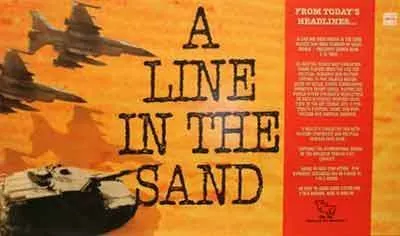
A Line in the Sand ist ein Brettspiel aus dem Jahr 1991 für 2–6 Personen, mit 60–180 Minuten pro Partie und ab 10 Jahren. Entwickelt wurde es von Douglas Niles und Paul Lidberg; die wichtigsten Mechaniken sind Variable Player Powers, Area Movement und Dice Rolling.





Auf Englisch
This is a game detailing the Persian Gulf War fought in the early 1990's. Many of the mechanics are similar to that of one of TSR's other wargames (Red Storm Rising) so players of that game can rather easily go to this game. Two versions of this game are played. With less than 5 players, the game is a "Basic Game" where military might is what wins the game. Players take sides, usually a combination of Middle Eastern nations plus the US. In the two player version, for instance, it is (quite predictably) the US & Allies vs. Iraq; in the three-player game "Holy War", it's Israel vs. Iraq (and Yemen and Jordan) vs. Saudi Arabia (and Syria, Libya, and Lebanon), and so on. Combat rules are rather straightforward, and wargamers will be familiar with many of the mechanics. Land (w/ infantry, Iraqi National Guard, and tanks), sea, and air units are all utilized. Most units can take a few hits before removed from the board. The *real* game, though, is the six-player diplomatic game. The players are now clearly defined: The US (NATO), Iran, Israel, Iraq/Yemen, Moderate Arabs (Saudi Arabia, Egypt, Kuwait, etc.), and Volatile Arabs (Jordan, Libya, etc.) This adds a crucial element of diplomacy and politics, and makes the game much more interesting than the normal wargaming stuff. A "War Fever" and "Jihad" marker change as nations do things--for instance, the first time a US unit is attacked outside of Turkey, War Fever "tripwires" to 10. If Israel attacks a neighbor, Jihad increases by 2. War Fever and Jihad permit certain things to happen--for instance, if War Fever gets too low, the US is restricted in whom they may attack. If Jihad hits either 1 or 10, revolutions may occur--which can switch entire nations to another player! Messages can be sent to other players via a diplomatic pouch--you cannot simply pull another player to the side and whisper in their ear. All messages, once read, go into a big pouch, and players can make diplomatic gestures to read some of the messages after they're read. Victory occurs, in any case, when you meet objectives, which can vary from player to player. "War Aim" chits are drawn before the game begins, and so players are not quite certain as to exactly what other players are going for. For Instance, Iraq may win if they capture and hold Kuwait for the last three turns; if Jihad has reached 10 at least once and 10 non-Muslim units have been destroyed (by anyone); or by controlling three more oil fields than they started with. It all depends on what they looked for. All in all, the Diplomatic game changes the basic game so much that political considerations are as important as military ones. A simplified version of the game with the same name appeared in the TSR comic Warhawks #3. Advanced scenarions for the game in the comic appeared in Warhawks #4.
Laut Katalog unterstützt A Line in the Sand 2–6 Personen. Diese Spanne entspricht der vom Verlag angegebenen Spielerzahl, das Spiel lässt sich also für jede Gruppengröße innerhalb dieser Spanne aufbauen. Aufbau, einzelne Regeln und Wertungsdetails können je nach Personenzahl trotzdem abweichen; prüfe daher die genaue Konfiguration in der Anleitung deiner Ausgabe.
Die angegebene Spieldauer für A Line in the Sand beträgt 60–180 Minuten. Das ist die Schätzung des Verlags für eine vollständige Partie. Die tatsächliche Dauer hängt von der Gruppe, der Personenzahl und der Regelkenntnis ab: Erste Partien dauern meist länger, erfahrene Gruppen sind oft schneller fertig. Aufbau und Regelerklärung sind in dieser Schätzung nicht enthalten.
Im Katalog wird A Line in the Sand ab 10 Jahren empfohlen. Das ist die Empfehlung des Verlags und berücksichtigt Leseanforderungen, Regelkomplexität und Kleinteile, nicht nur das Thema. Jüngere Kinder können oft mit Hilfe eines Erwachsenen mitspielen; beachte die Altersangabe deiner Ausgabe und die Brettspielerfahrung deiner Gruppe.
A Line in the Sand hat bei BoardGameGeek eine Komplexitätswertung von 2,8 von 5 und gilt damit als eher leichtes Spiel. Die Wertung zeigt, wie viel Regelwissen, Planung und Entscheidungen eine typische Partie verlangt. Schwerere Spiele brauchen bei der ersten Erklärung mehr Zeit, daher hilft vor dem Spieleabend eine Vorbereitungsanleitung.
A Line in the Sand gehört zu diesen Kategorien: Wargame, Political und Modern Warfare. Die wichtigsten Mechaniken sind Variable Player Powers, Area Movement und Dice Rolling. Kategorien beschreiben Thema und Setting eines Spiels, Mechaniken dagegen, was die Spielenden in ihrem Zug tatsächlich tun. Jede Mechanik führt zu einer Katalogseite mit ähnlichen Spielen, falls du etwas Vergleichbares suchst.
Als Autoren von A Line in the Sand sind angegeben: Douglas Niles und Paul Lidberg. Diese Angaben stammen aus den veröffentlichten Spieldaten und nennen die für das Spieldesign verantwortlichen Personen, nicht die Illustratoren oder Verlage. Die Autorenseiten auf MeepleRules sammeln weitere Titel derselben Autoren – praktisch, wenn dir ein Spiel gefällt und du ähnliche Spiele suchst.
Im Katalog ist A Line in the Sand als Grundspiel aufgeführt. Es lässt sich eigenständig mit dem Material aus der Schachtel spielen und benötigt keinen weiteren Titel. Erweiterungen, sofern es welche gibt, ergänzen neues Material oder neue Regeln und sind im Katalog separat mit einem Verweis auf dieses Grundspiel aufgeführt.