
- BGG-Rang
- BGG #11.383
- BGG-Bewertung
- 7,1
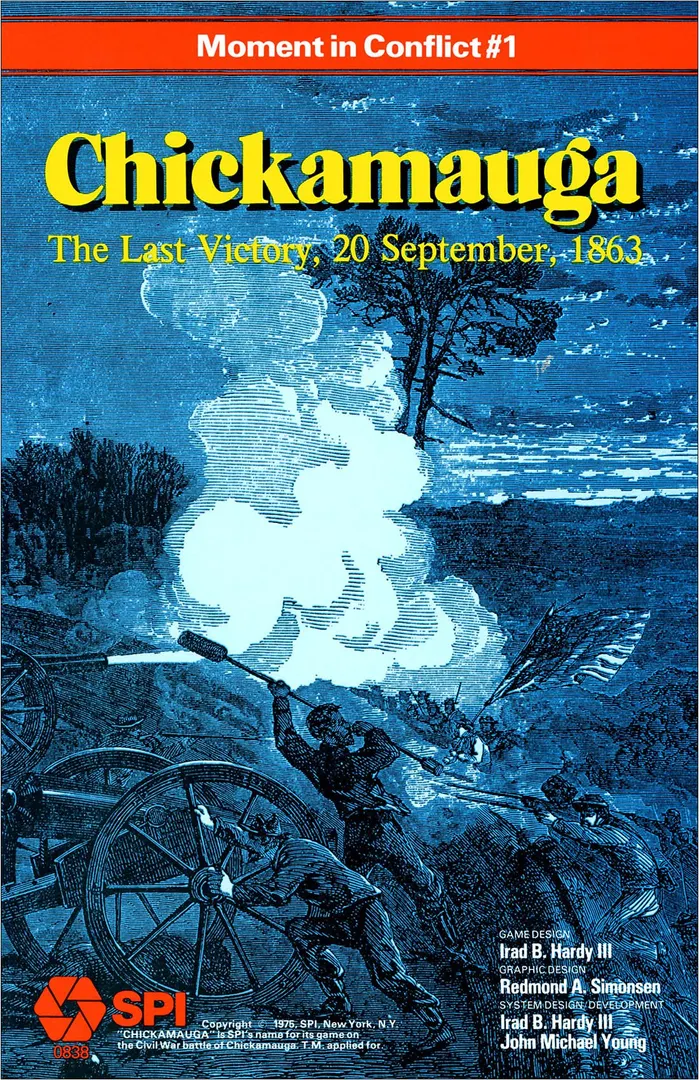
Chickamauga: The Last Victory, 20 September 1863
- 2 Spieler
- 120 Min.
- Komplexität 2,1/5
- 1975
1977
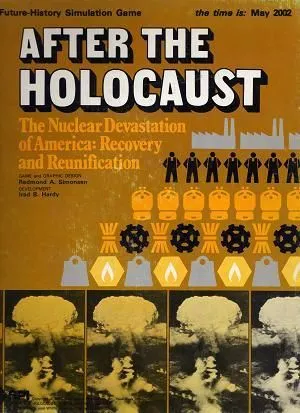
Regelhilfe für After the Holocaust: The Nuclear Devastation of America – Recovery and Reunification
Verständliche Erklärungen zu Spielzügen, Karteneffekten und strittigen Situationen mit Verweisen auf offizielle Quellen und gespeichertem Fragenverlauf.
Für 3 Personen
Was möchtest du wissen?
Antworten stammen aus dem offiziellen Regelheft, mit Seitenangabe zum Nachprüfen.
After the Holocaust: The Nuclear Devastation of America – Recovery and Reunification ist ein Brettspiel aus dem Jahr 1977 für 3–5 Personen, mit 180 Minuten pro Partie und ab 12 Jahren. Entwickelt wurde es von Redmond Aksel Simonsen und Irad B. Hardy; die wichtigsten Mechaniken sind Hexagon Grid und Worker Placement.

Auf Englisch
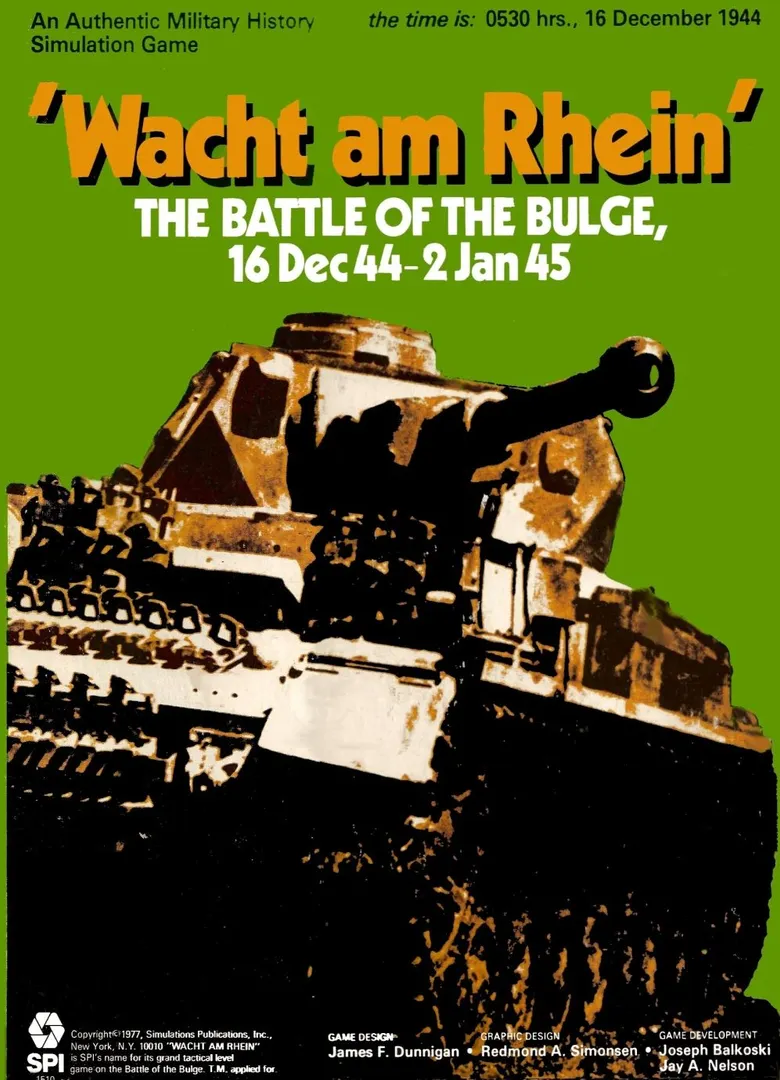
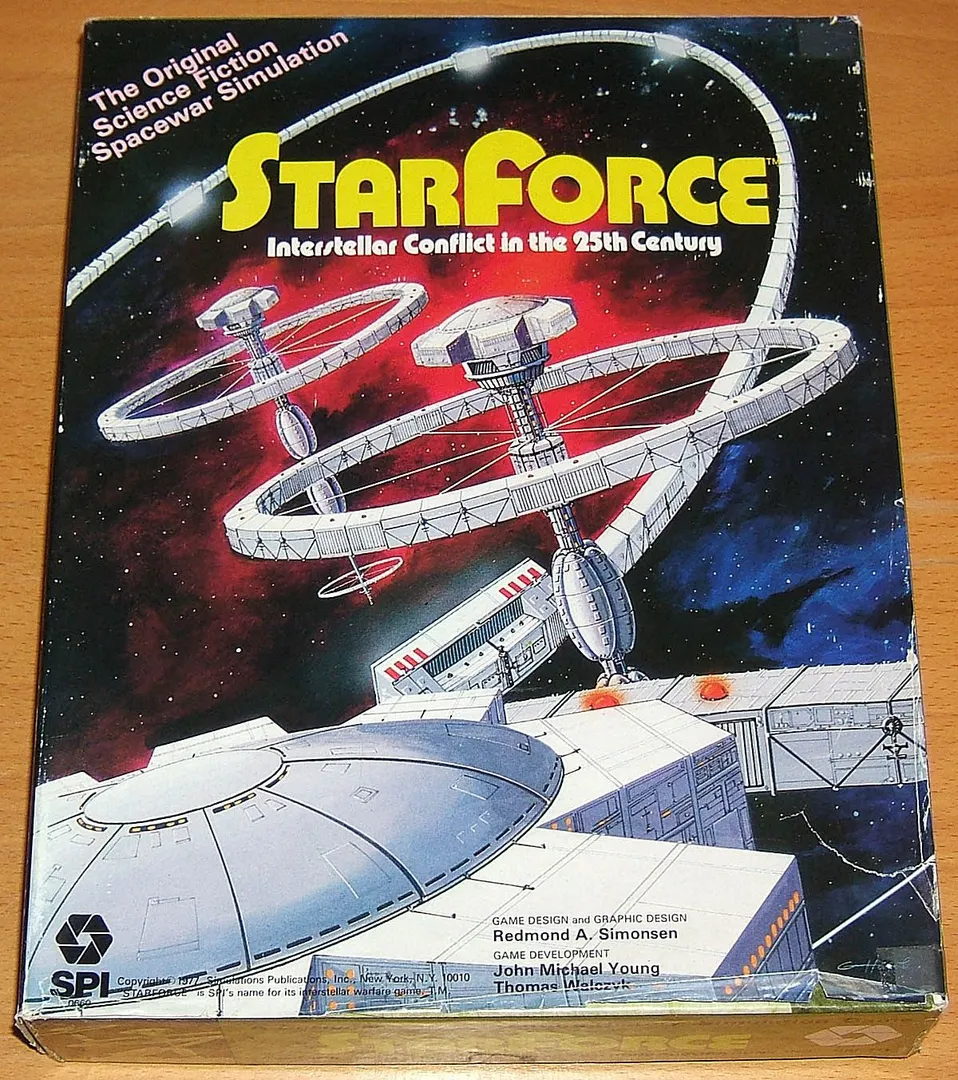
After the Holocaust is an economic, military, and political simulation of events in the United States, twenty years after a large-scale thermonuclear exchange with the Soviet Union. The game is ten turns long, and is designed for four players, each of whom controls a different region of North America and part of Canada. These regions are the Northeast, the Midwest, the Southwest, and the Far West. It is reminsicent of the works of Stafford Beer and Proyecto Synco. Each game turn consists of five distinct rounds. The first is the Production Round, which includes a basic production phase, a secondary production phase, and a mobilization phase. Second is the Trade Round. Third is the Consumption Round, during which a player expends food points, expends consumer points, calculates and declares social status, and provides military supply for any combat units under his control. Fourth is the Military/Political Round, which begins with the political placement phase, followed by initial military movement, secondary military movement, combat, and elections. The fifth and last round of the game turn is the Finance Round, which includes the political disassociation phase, the stockpile/labour reallocation phase, industrial investment phase, taxation, the industrial capacity adjustment phase, the industrial labour reallocation phase, and finally, the depreciation and shrinkage phase. In addition, immediately before the fourth and eighth game turns, the Population Growth Cycle occurs during which the labour population of each region increases by 10%. Inside the Box: Two 17” x 22” hard-backed hexagonal grid Map Boards (with Turn Record Track, Terrain Key, Four Regional Sets of Six Economic Sector Tracks, and Abbreviated Turn Sequence incorporated) 400 ½” cardboard Counters One 8½” x 11” Rules Booklet (with Scenario Instructions included) Four 11” x 17” back-printed, folded combined Charts and Tables Sheets (each with an Initial Resources Chart, Food Table, Secondary Production Costs Table, Trade Transport Movement Point Cost Chart, Strike Table, Political Control Table, Subversion Table, Terrain Effects Chart, Combat Results Table, Unemployment Table, Starvation Table, Stockpiling Cost Chart, Investment Chart, Corruption Table, Depreciation Table, Shrinkage Table, Research and Development Table, Tax Table, and photocopy masters for Tax Forms Eight 8½” x 11” perforated, back-printed sheets of Game Money (144 pieces) Two small six-sided Dice One 20 compartment plastic counter tray
Laut Katalog unterstützt After the Holocaust: The Nuclear Devastation of America – Recovery and Reunification 3–5 Personen. Diese Spanne entspricht der vom Verlag angegebenen Spielerzahl, das Spiel lässt sich also für jede Gruppengröße innerhalb dieser Spanne aufbauen. Aufbau, einzelne Regeln und Wertungsdetails können je nach Personenzahl trotzdem abweichen; prüfe daher die genaue Konfiguration in der Anleitung deiner Ausgabe.
Die angegebene Spieldauer für After the Holocaust: The Nuclear Devastation of America – Recovery and Reunification beträgt 180 Minuten. Das ist die Schätzung des Verlags für eine vollständige Partie. Die tatsächliche Dauer hängt von der Gruppe, der Personenzahl und der Regelkenntnis ab: Erste Partien dauern meist länger, erfahrene Gruppen sind oft schneller fertig. Aufbau und Regelerklärung sind in dieser Schätzung nicht enthalten.
Im Katalog wird After the Holocaust: The Nuclear Devastation of America – Recovery and Reunification ab 12 Jahren empfohlen. Das ist die Empfehlung des Verlags und berücksichtigt Leseanforderungen, Regelkomplexität und Kleinteile, nicht nur das Thema. Jüngere Kinder können oft mit Hilfe eines Erwachsenen mitspielen; beachte die Altersangabe deiner Ausgabe und die Brettspielerfahrung deiner Gruppe.
After the Holocaust: The Nuclear Devastation of America – Recovery and Reunification hat bei BoardGameGeek eine Komplexitätswertung von 4,0 von 5 und gilt damit als schweres Spiel. Die Wertung zeigt, wie viel Regelwissen, Planung und Entscheidungen eine typische Partie verlangt. Schwerere Spiele brauchen bei der ersten Erklärung mehr Zeit, daher hilft vor dem Spieleabend eine Vorbereitungsanleitung.
After the Holocaust: The Nuclear Devastation of America – Recovery and Reunification gehört zu diesen Kategorien: Economic und Negotiation. Die wichtigsten Mechaniken sind Hexagon Grid und Worker Placement. Kategorien beschreiben Thema und Setting eines Spiels, Mechaniken dagegen, was die Spielenden in ihrem Zug tatsächlich tun. Jede Mechanik führt zu einer Katalogseite mit ähnlichen Spielen, falls du etwas Vergleichbares suchst.
Als Autoren von After the Holocaust: The Nuclear Devastation of America – Recovery and Reunification sind angegeben: Redmond Aksel Simonsen und Irad B. Hardy. Diese Angaben stammen aus den veröffentlichten Spieldaten und nennen die für das Spieldesign verantwortlichen Personen, nicht die Illustratoren oder Verlage. Die Autorenseiten auf MeepleRules sammeln weitere Titel derselben Autoren – praktisch, wenn dir ein Spiel gefällt und du ähnliche Spiele suchst.
Im Katalog ist After the Holocaust: The Nuclear Devastation of America – Recovery and Reunification als Grundspiel aufgeführt. Es lässt sich eigenständig mit dem Material aus der Schachtel spielen und benötigt keinen weiteren Titel. Erweiterungen, sofern es welche gibt, ergänzen neues Material oder neue Regeln und sind im Katalog separat mit einem Verweis auf dieses Grundspiel aufgeführt.