
- BGG-Rang
- BGG #11.214
- BGG-Bewertung
- 7,8
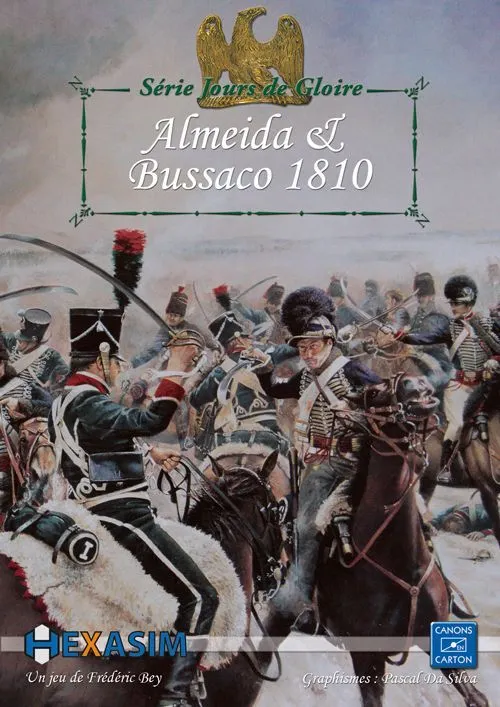
Almeida et Bussaco 1810
- 2 Spieler
- 120–240 Min.
- Komplexität 2,4/5
- 2010
2019
Regelhilfe für Alexandre contre la Perse
Verständliche Erklärungen zu Spielzügen, Karteneffekten und strittigen Situationen mit Verweisen auf offizielle Quellen und gespeichertem Fragenverlauf.
Für 2 Personen
Was möchtest du wissen?
Antworten stammen aus dem offiziellen Regelheft, mit Seitenangabe zum Nachprüfen.
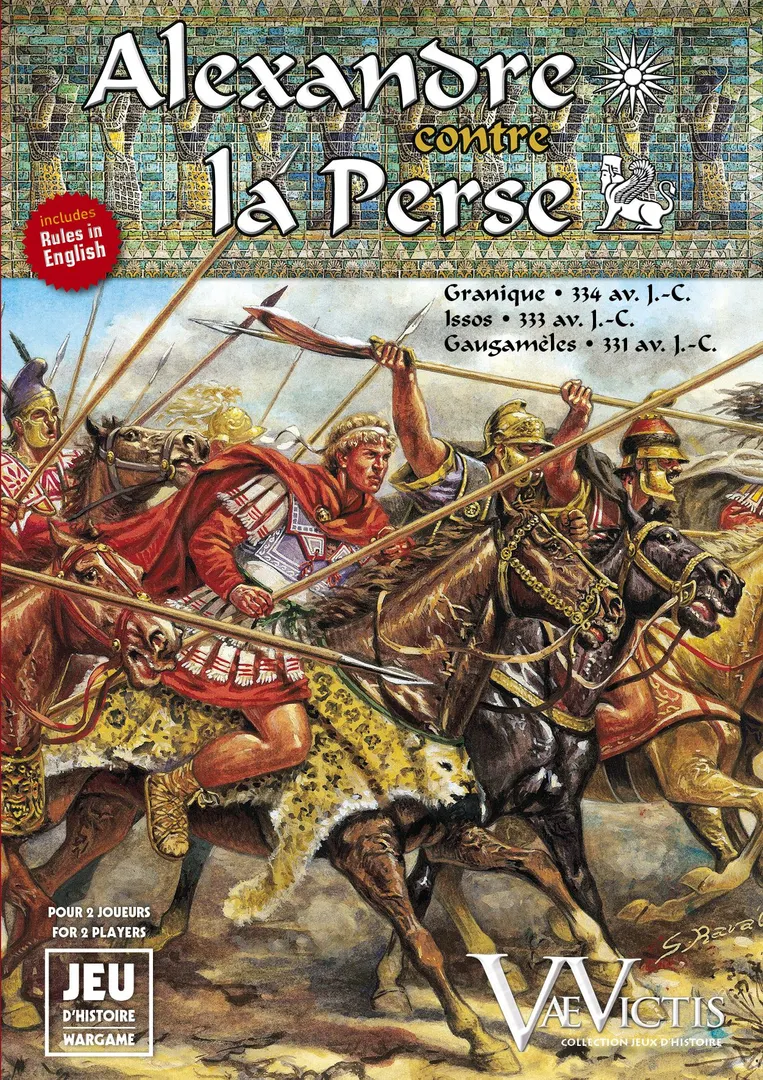
Alexandre contre la Perse ist ein Brettspiel aus dem Jahr 2019 für 2 Personen, mit 60–240 Minuten pro Partie und ab 12 Jahren. Entwickelt wurde es von Frédéric Bey; die wichtigsten Mechaniken sind Dice Rolling, Variable Set-up und Grid Movement.






Auf Englisch
"Alexandre contre la Perse" is a tactical level board wargame which presents the first three battles in the "Au Fil de l'Épée" Antiquity series. They bring onto the stage the greatest conqueror of Antiquity in the course of the mighty confrontations which enabled him to bring Persia to its knees. GRANICUS - In 334 BC, after crushing a revolt by the city of Thebes, the young King Alexander of Macedonia turned toward the east and set out on his conquest of Asia. He crossed the Hellespont with 35,000 men. On the banks of the Granicus River he came up against an army of 40,000 men commanded by Memnon, a Greek who was in the pay of Persia. Thanks to a vigorous attack by his Companion cavalry, Alexander succeeded in dispersing the enemy horsemen and crushing Memnon’s Greek mercenaries. This brilliant victory opened the door to Asia Minor. ISSOS - A year later on the coast of Syria the King of Kings, Darius III, determined to assemble a great army and intercept Alexander. The two armies met at Issos. While repelling an attack on his left by the Persian cavalry, Alexander and his right wing charged across the river under a rain of enemy arrows. By hurling himself into a breach on the Persian left flank, Alexander brought about its collapse and the flight of Darius. The Macedonian phalanx advanced inexorably in the center of the battlefield and completed Alexander’s victory, with the result that he could go on to invade Egypt unhindered. GAUGAMELA - The final clash between Alexander and Darius took place at Gaugamela in 331 B.C. The King of Kings had mobilized impressive forces from the eastern part of his empire. His army, unusually numerous, included elephants as well as war chariots. He compelled Alexander to fight in a vast plain where the 40,000 Macedonians risked being encircled. Once again the king of Macedonia opened the battle with a cavalry attack on his right. The phalanx meanwhile suffered severely from Persian attacks, especially on its left wing where Parmenion was in command. Alexander nevertheless forestalled the enemy by making Darius himself the target of the Companions’ charge. Once they had opened a breach, the Macedonian cavalrymen passed through it and struck the Persians from the rear, causing them to rout. This occurred in the nick of time, because Parmenion’s contingents were by then on the point of breaking. Darius fled in the direction of Arbela. Alexander caught up with him, but by then he was already dead, assassinated by a group of his generals. Alexandre contre la Perse puts the players either at the head of the Macedonian army, at whose core the cavalry and the phalangites played complementary roles, or in command of the Persian army, consisting of highly varied troops collected from all over the empire. The three battles were increasingly important chronologically, in terms of the numbers involved and their complexity. Will you, as Alexander, be able to bring down a multi-national army by means of only three battles? Will you, in the role of the King of Kings, succeed in foiling Alexander’s maneuvers and vanquishing the Macedonians? —description from the publisher
Laut Katalog unterstützt Alexandre contre la Perse 2 Personen. Das ist die vom Verlag angegebene Spielerzahl, das Spiel ist also genau für diese Anzahl von Mitspielenden ausgelegt. Varianten für andere Gruppengrößen sind, sofern vorhanden, in der Anleitung deiner Ausgabe beschrieben; prüfe sie, bevor du eine andere Konfiguration aufbaust.
Die angegebene Spieldauer für Alexandre contre la Perse beträgt 60–240 Minuten. Das ist die Schätzung des Verlags für eine vollständige Partie. Die tatsächliche Dauer hängt von der Gruppe, der Personenzahl und der Regelkenntnis ab: Erste Partien dauern meist länger, erfahrene Gruppen sind oft schneller fertig. Aufbau und Regelerklärung sind in dieser Schätzung nicht enthalten.
Im Katalog wird Alexandre contre la Perse ab 12 Jahren empfohlen. Das ist die Empfehlung des Verlags und berücksichtigt Leseanforderungen, Regelkomplexität und Kleinteile, nicht nur das Thema. Jüngere Kinder können oft mit Hilfe eines Erwachsenen mitspielen; beachte die Altersangabe deiner Ausgabe und die Brettspielerfahrung deiner Gruppe.
Alexandre contre la Perse hat bei BoardGameGeek eine Komplexitätswertung von 2,8 von 5 und gilt damit als eher leichtes Spiel. Die Wertung zeigt, wie viel Regelwissen, Planung und Entscheidungen eine typische Partie verlangt. Schwerere Spiele brauchen bei der ersten Erklärung mehr Zeit, daher hilft vor dem Spieleabend eine Vorbereitungsanleitung.
Alexandre contre la Perse gehört zu diesen Kategorien: Wargame und Ancient. Die wichtigsten Mechaniken sind Dice Rolling, Variable Set-up und Grid Movement. Kategorien beschreiben Thema und Setting eines Spiels, Mechaniken dagegen, was die Spielenden in ihrem Zug tatsächlich tun. Jede Mechanik führt zu einer Katalogseite mit ähnlichen Spielen, falls du etwas Vergleichbares suchst.
Als Autoren von Alexandre contre la Perse sind angegeben: Frédéric Bey. Diese Angaben stammen aus den veröffentlichten Spieldaten und nennen die für das Spieldesign verantwortlichen Personen, nicht die Illustratoren oder Verlage. Die Autorenseiten auf MeepleRules sammeln weitere Titel derselben Autoren – praktisch, wenn dir ein Spiel gefällt und du ähnliche Spiele suchst.
Im Katalog ist Alexandre contre la Perse als Grundspiel aufgeführt. Es lässt sich eigenständig mit dem Material aus der Schachtel spielen und benötigt keinen weiteren Titel. Erweiterungen, sofern es welche gibt, ergänzen neues Material oder neue Regeln und sind im Katalog separat mit einem Verweis auf dieses Grundspiel aufgeführt.