
- BGG-Rang
- BGG #2.212
- BGG-Bewertung
- 7,7
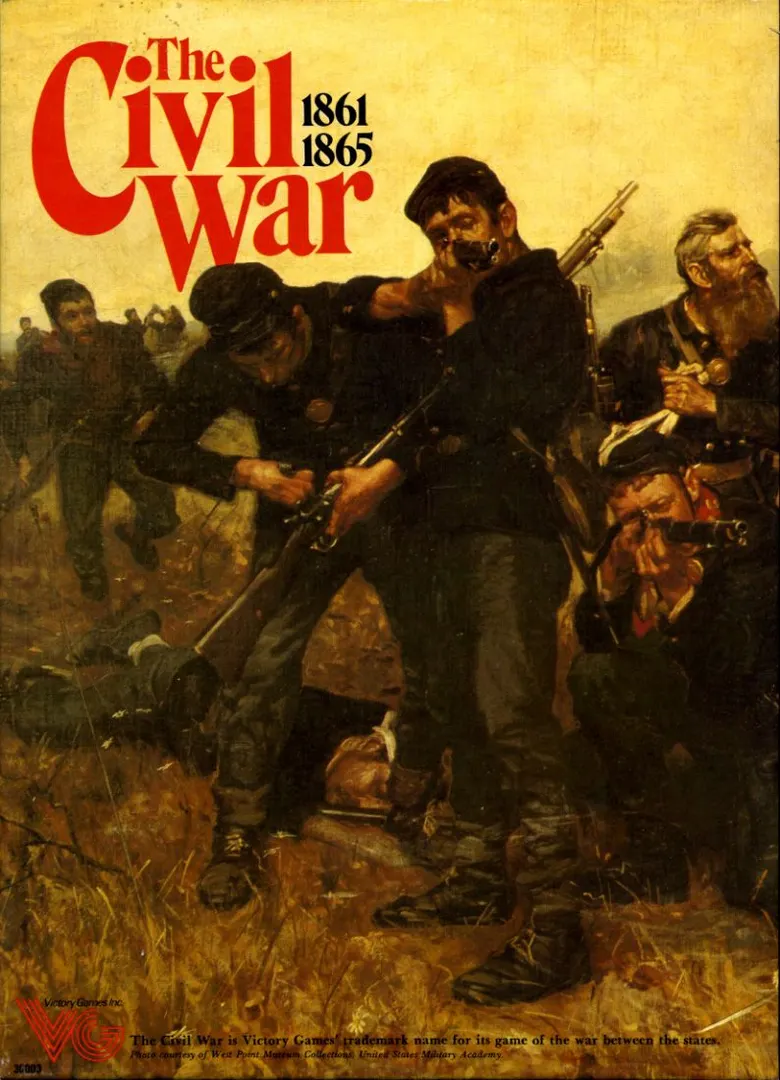
The Civil War 1861-1865
- 1–2 Spieler
- 120–1200 Min.
- Komplexität 3,8/5
- 1983
2025
Regelhilfe für All Are Brothers: Solferino, 1859
Verständliche Erklärungen zu Spielzügen, Karteneffekten und strittigen Situationen mit Verweisen auf offizielle Quellen und gespeichertem Fragenverlauf.
Für 1 Person
Was möchtest du wissen?
Antworten stammen aus dem offiziellen Regelheft, mit Seitenangabe zum Nachprüfen.
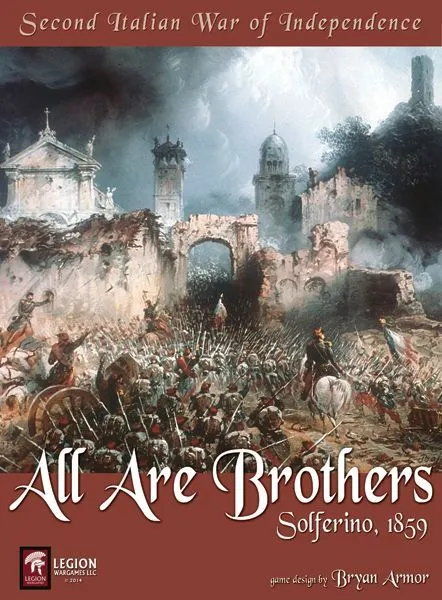
All Are Brothers: Solferino, 1859 ist ein Brettspiel aus dem Jahr 2025 für 1–4 Personen und mit 90–300 Minuten pro Partie. Entwickelt wurde es von Bryan Armor (II); die wichtigsten Mechaniken sind Dice Rolling, Hexagon Grid und Simulation.
Auf Englisch
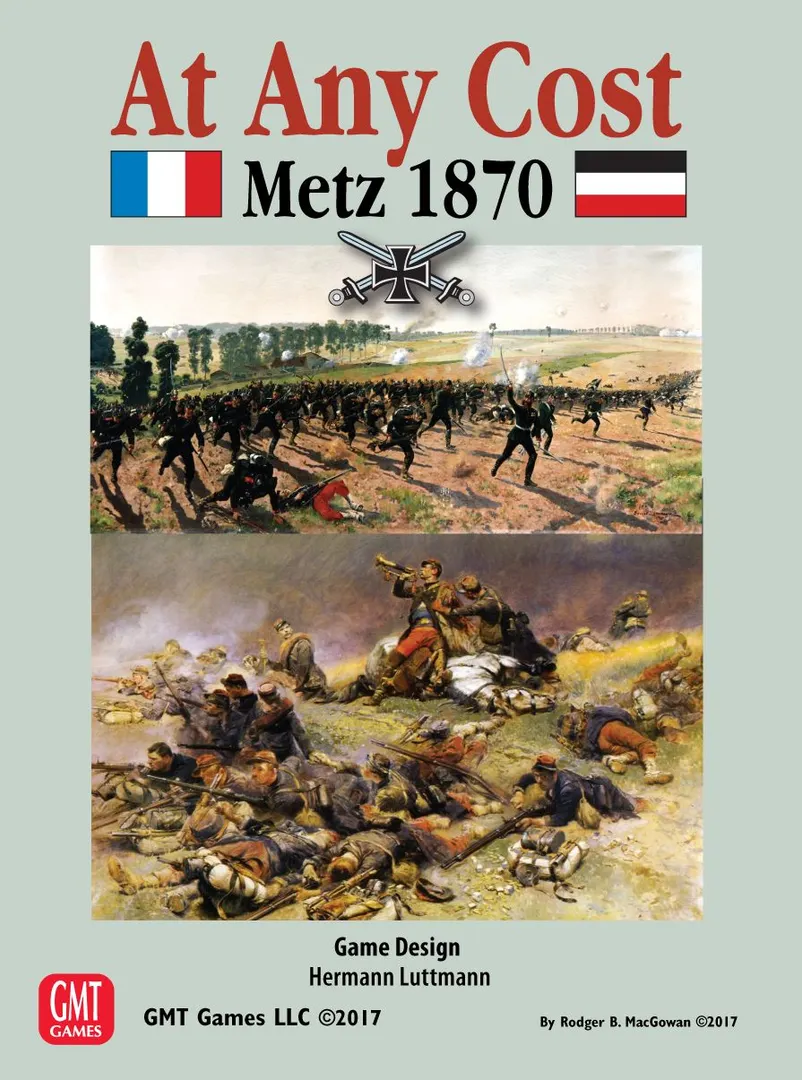
All Are Brothers: Solferino, 1859 simulates the decisive battle of the Second Italian War of Independence at the Brigade-level, with some additional Regimental-size and smaller detachments included. National and corps-level leaders are represented, on a map at 500 meters per hex, with 1-hour turns. Five scenarios are included: three that separately cover the north, central, and southern sectors of the battle, as well as a combined full battle scenario, along with a small introductory scneario. The combined scenario is suitable for up to four players (France, Sardinia-Piedmont, Austrian 1st Army, and Austrian 2nd Army). The battle itself was a grinding slugfest often described as a "soldier's battle" - a deliberate slight to the often uninspired leadership of the generals and a tribute to an allied victory gained only at the tip of the bayonet. Villagers in the surrounding region would do their best in the days after to treat the myriad wounded, and answer as to why Austrians, Hungarians, Czechs, Serbs, and Slovaks were treated as well as the Italians: "Tutti fratelli" (All are brothers). The battle pits two Austrian armies against the combined forces of France and Sardinia-Piedmont, and features the full panoply of colorful period units - Jagers and Grenzers, massed cavalry divisions of all types, Bersaglieri, French Imperial Guard, and the French African Zouaves and Turcos. Advances in infantry and artillery firepower would soon make the tactics of the time obsolete, and the carnage at Solferino reflected the start of this paradigm shift, soon to be highlighted bloodily by the Austro-Prussian and Franco-Prussian wars. This treatment of Solferino features an adaptation of Hermann Luttmann’s Blind Swords system (At Any Cost, Hammerin' Sickles, Stonewall's Sword) as the core ruleset. The system is heavy on unpredictability and fog of war due to the chit pull mechanic. The chit pull mechanic also very much aids in solitaire play, as does variable activation rules and reinforcement tables. A number of other features help make face-to-face play attractive, including a number of scenario variants and optional rules, a free-setup full battle scenario, and the move-and-countermove of event chit play. Nation-specific event chits also inject some period flavor.
Laut Katalog unterstützt All Are Brothers: Solferino, 1859 1–4 Personen. Diese Spanne entspricht der vom Verlag angegebenen Spielerzahl, das Spiel lässt sich also für jede Gruppengröße innerhalb dieser Spanne aufbauen. Aufbau, einzelne Regeln und Wertungsdetails können je nach Personenzahl trotzdem abweichen; prüfe daher die genaue Konfiguration in der Anleitung deiner Ausgabe.
Die angegebene Spieldauer für All Are Brothers: Solferino, 1859 beträgt 90–300 Minuten. Das ist die Schätzung des Verlags für eine vollständige Partie. Die tatsächliche Dauer hängt von der Gruppe, der Personenzahl und der Regelkenntnis ab: Erste Partien dauern meist länger, erfahrene Gruppen sind oft schneller fertig. Aufbau und Regelerklärung sind in dieser Schätzung nicht enthalten.
All Are Brothers: Solferino, 1859 hat bei BoardGameGeek eine Komplexitätswertung von 2,4 von 5 und gilt damit als eher leichtes Spiel. Die Wertung zeigt, wie viel Regelwissen, Planung und Entscheidungen eine typische Partie verlangt. Schwerere Spiele brauchen bei der ersten Erklärung mehr Zeit, daher hilft vor dem Spieleabend eine Vorbereitungsanleitung.
All Are Brothers: Solferino, 1859 gehört zu diesen Kategorien: Wargame und Post-Napoleonic. Die wichtigsten Mechaniken sind Dice Rolling, Hexagon Grid und Simulation. Kategorien beschreiben Thema und Setting eines Spiels, Mechaniken dagegen, was die Spielenden in ihrem Zug tatsächlich tun. Jede Mechanik führt zu einer Katalogseite mit ähnlichen Spielen, falls du etwas Vergleichbares suchst.
Als Autoren von All Are Brothers: Solferino, 1859 sind angegeben: Bryan Armor (II). Diese Angaben stammen aus den veröffentlichten Spieldaten und nennen die für das Spieldesign verantwortlichen Personen, nicht die Illustratoren oder Verlage. Die Autorenseiten auf MeepleRules sammeln weitere Titel derselben Autoren – praktisch, wenn dir ein Spiel gefällt und du ähnliche Spiele suchst.
Im Katalog ist All Are Brothers: Solferino, 1859 als Grundspiel aufgeführt. Es lässt sich eigenständig mit dem Material aus der Schachtel spielen und benötigt keinen weiteren Titel. Erweiterungen, sofern es welche gibt, ergänzen neues Material oder neue Regeln und sind im Katalog separat mit einem Verweis auf dieses Grundspiel aufgeführt.