
- BGG-Bewertung
- 6,6
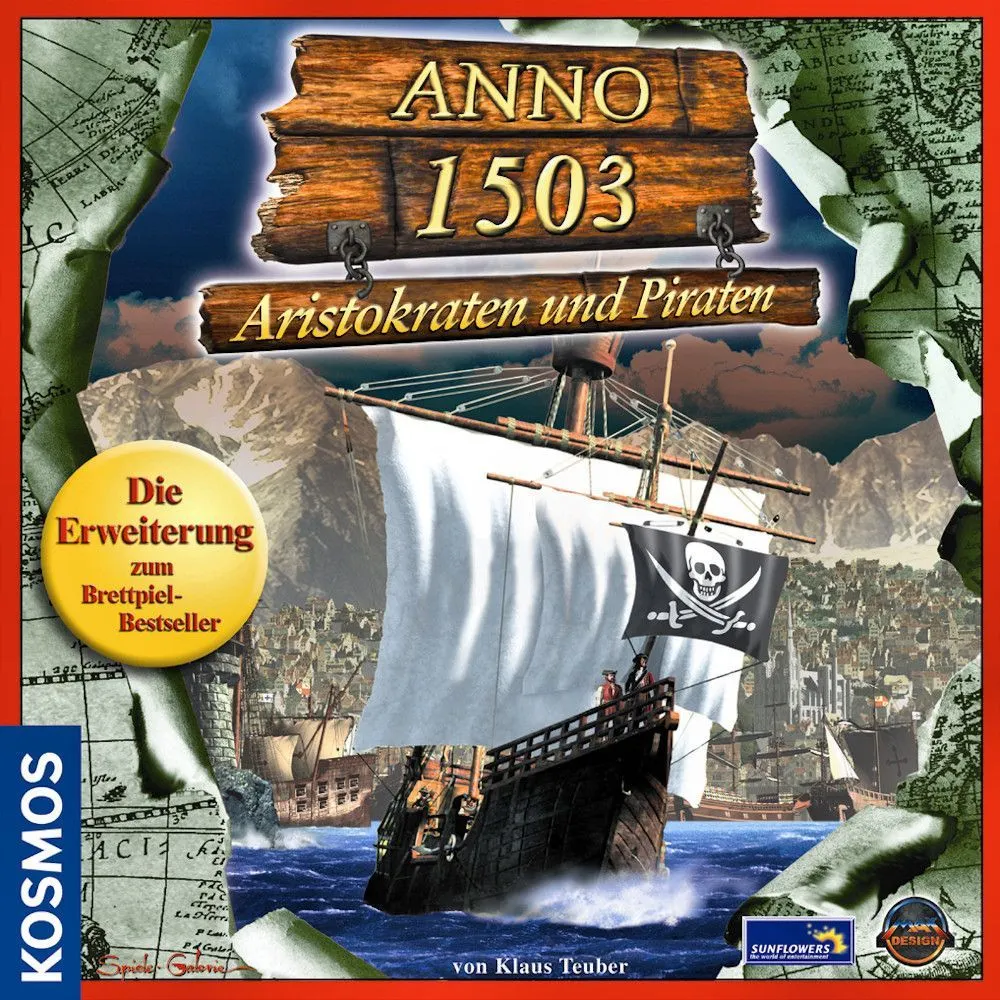
Anno 1503: Aristokraten und Piraten
- 2–4 Spieler
- 90 Min.
- Komplexität 2,5/5
- 2004
2003
Regelhilfe für Anno 1503
Verständliche Erklärungen zu Spielzügen, Karteneffekten und strittigen Situationen mit Verweisen auf offizielle Quellen und gespeichertem Fragenverlauf.
Für 2 Personen
Was möchtest du wissen?
Antworten stammen aus dem offiziellen Regelheft, mit Seitenangabe zum Nachprüfen.
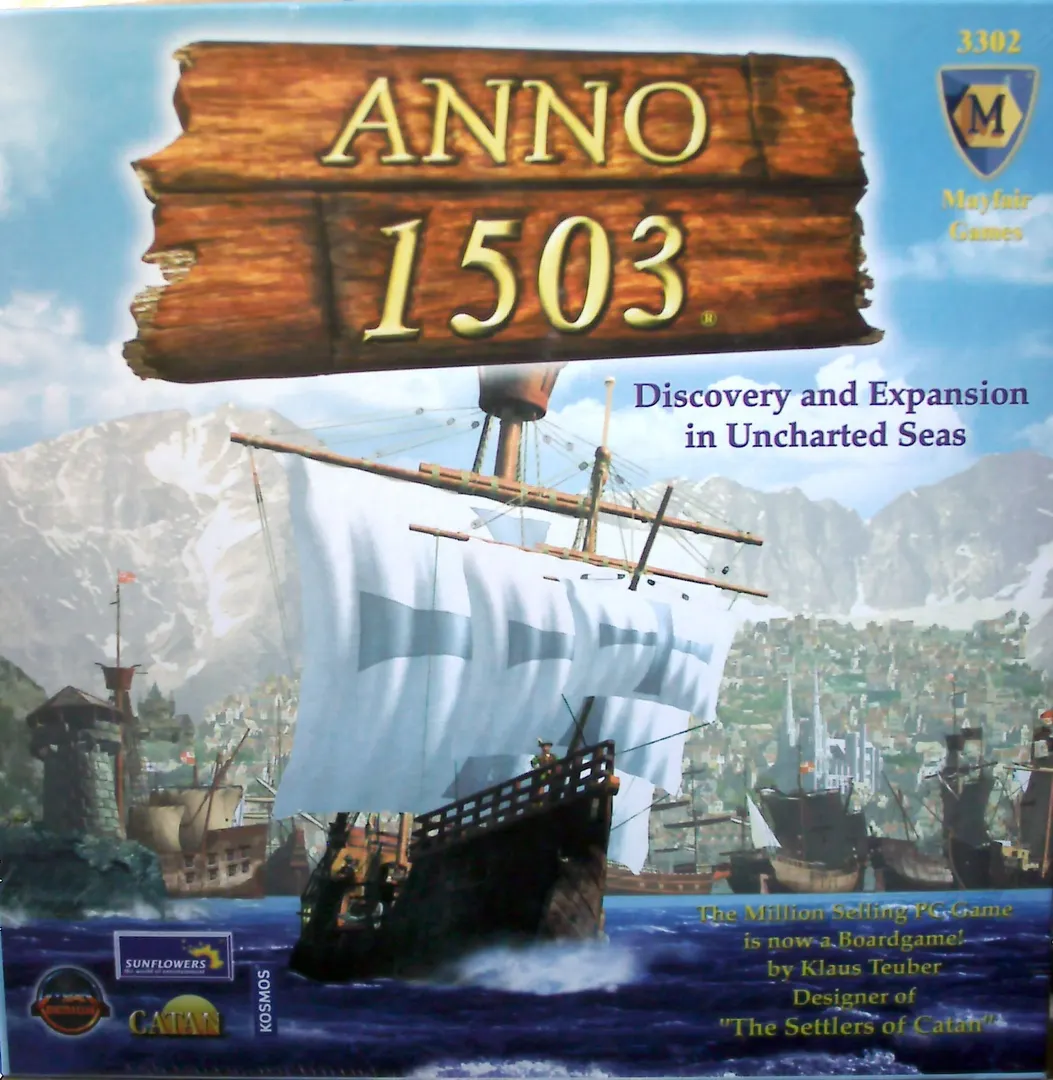
Anno 1503 ist ein Brettspiel aus dem Jahr 2003 für 2–4 Personen, mit 90 Minuten pro Partie und ab 10 Jahren. Entwickelt wurde es von Klaus Teuber; die wichtigsten Mechaniken sind Tile Placement.
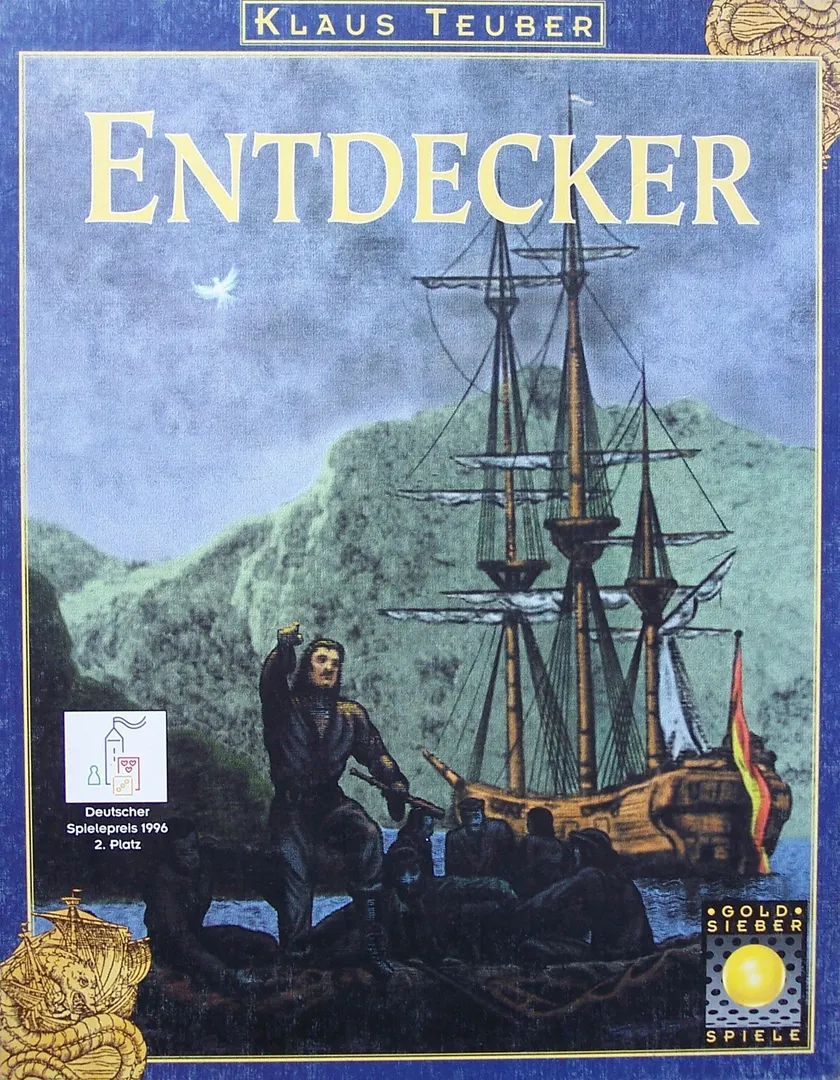
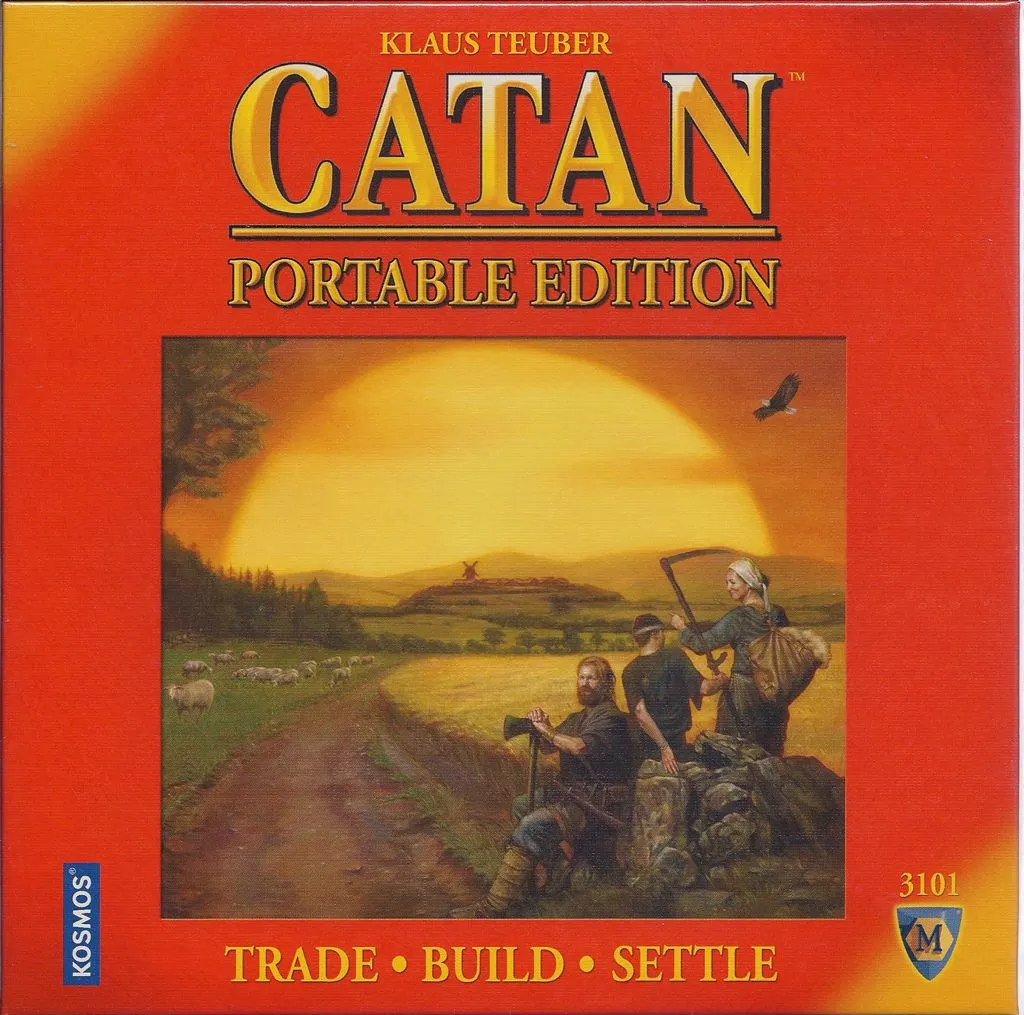
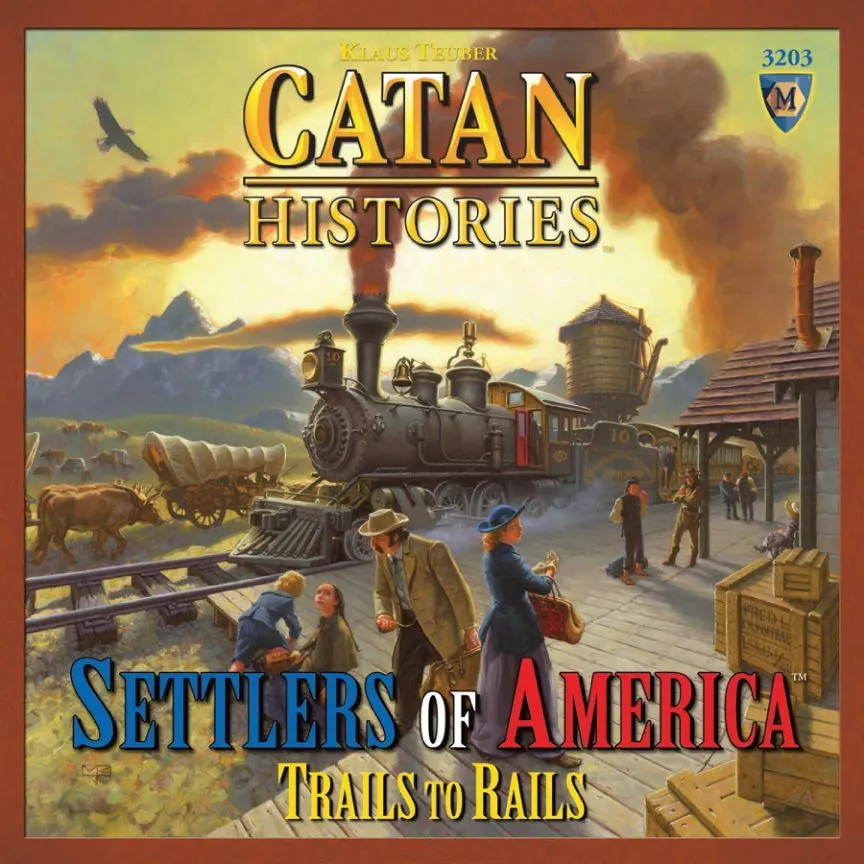
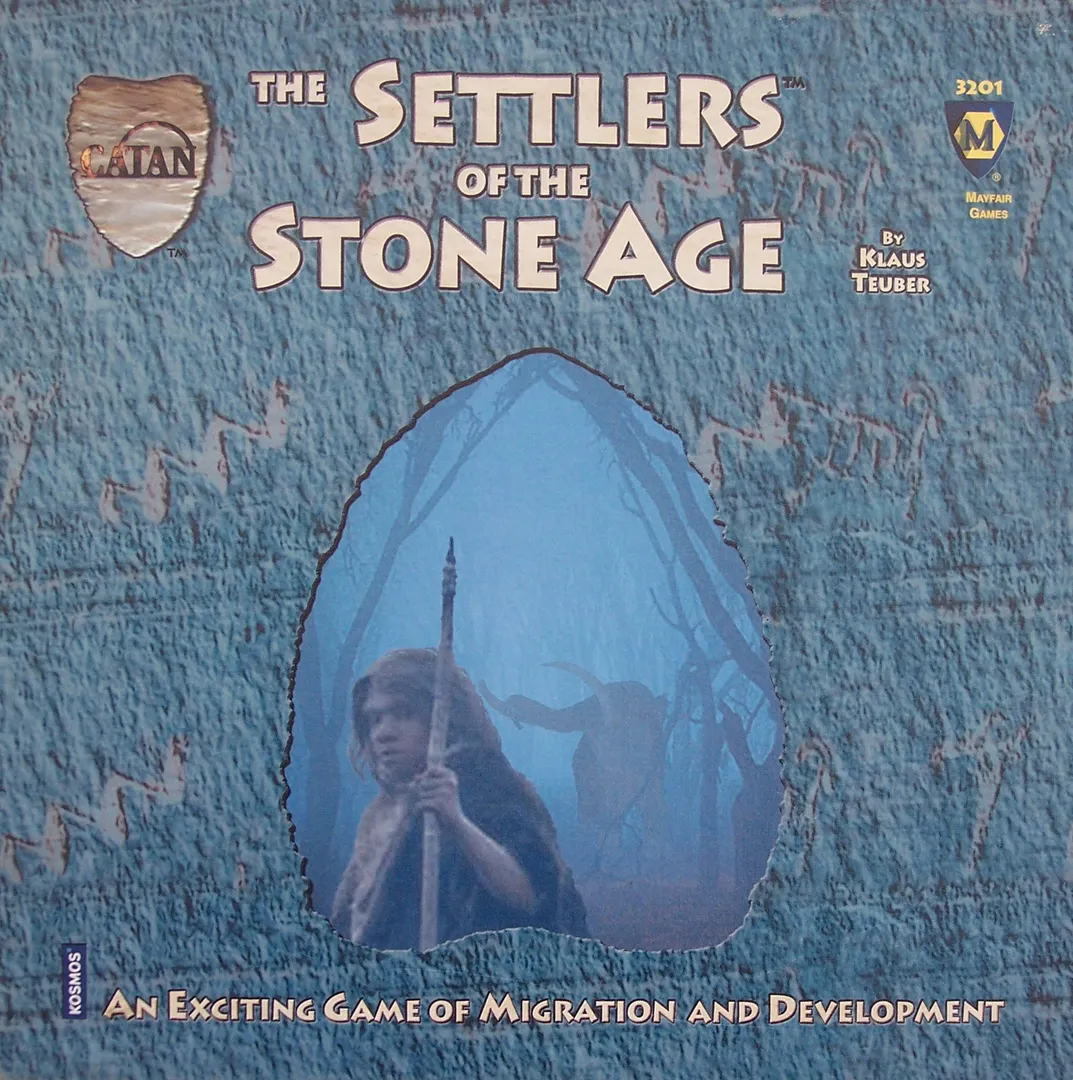
Auf Englisch
A boardgame based on a computer game (instead of the other way around) and designed by Klaus Teuber, Anno 1503 views the era of colonization strictly from the home country perspective. Two to four players send ships to explore islands scattered about a 5 x 12 square ocean (the more players, the more islands). The settlement of the new lands is, however, strictly abstract. Each player's turn begins with the roll of one 6-sided die. A "6" is a random event (pirates, fire or good fortune - bad twice as often as lucky, and most likely to damage players who are doing well). On other results, each player gains a commodity from one of his five workshops. The player who rolled may then buy commodities from the bank, sell them to his colonists for gold (no trading among players), or use them in various combinations to recruit new colonists, promote existing ones, or build ships. After that, ships can sail for the unknown lands. Each island bears on its hidden side an outpost, a treasure or a trade agreement. After being discovered, these items are brought back to the home country (and the ship is removed from play, requiring the player to build a new one in order to keep searching). Outposts increase the productivity of workshops. Treasure yields either gold or free colonist promotions. Trade agreements reduce the gold needed to buy commodities from the bank. Besides being useful in these ways, outposts, gold and agreements are among the game's victory conditions. A player wins by being to first to attain three out of five objectives, namely, four outposts, 30 gold, three trade agreements, three colonists promoted to the top rank of "merchant" and the construction of four public buildings. The buildings (8 types, each bringing some advantage) cost nothing but don't become available until a player has recruited at least four colonists. After that, each new colonist adds a building (unless they've been preempted by other players; there aren't enough for everyone). Overall, the game falls squarely into the "simultaneous solitaire" category. Except in the race for islands, the players scarcely interact at all. They do, however, have a great many choices to make in the course of play.
Laut Katalog unterstützt Anno 1503 2–4 Personen. Diese Spanne entspricht der vom Verlag angegebenen Spielerzahl, das Spiel lässt sich also für jede Gruppengröße innerhalb dieser Spanne aufbauen. Aufbau, einzelne Regeln und Wertungsdetails können je nach Personenzahl trotzdem abweichen; prüfe daher die genaue Konfiguration in der Anleitung deiner Ausgabe.
Die angegebene Spieldauer für Anno 1503 beträgt 90 Minuten. Das ist die Schätzung des Verlags für eine vollständige Partie. Die tatsächliche Dauer hängt von der Gruppe, der Personenzahl und der Regelkenntnis ab: Erste Partien dauern meist länger, erfahrene Gruppen sind oft schneller fertig. Aufbau und Regelerklärung sind in dieser Schätzung nicht enthalten.
Im Katalog wird Anno 1503 ab 10 Jahren empfohlen. Das ist die Empfehlung des Verlags und berücksichtigt Leseanforderungen, Regelkomplexität und Kleinteile, nicht nur das Thema. Jüngere Kinder können oft mit Hilfe eines Erwachsenen mitspielen; beachte die Altersangabe deiner Ausgabe und die Brettspielerfahrung deiner Gruppe.
Anno 1503 hat bei BoardGameGeek eine Komplexitätswertung von 2,4 von 5 und gilt damit als eher leichtes Spiel. Die Wertung zeigt, wie viel Regelwissen, Planung und Entscheidungen eine typische Partie verlangt. Schwerere Spiele brauchen bei der ersten Erklärung mehr Zeit, daher hilft vor dem Spieleabend eine Vorbereitungsanleitung.
Anno 1503 gehört zu diesen Kategorien: Video Game Theme, Exploration und City Building. Die wichtigsten Mechaniken sind Tile Placement. Kategorien beschreiben Thema und Setting eines Spiels, Mechaniken dagegen, was die Spielenden in ihrem Zug tatsächlich tun. Jede Mechanik führt zu einer Katalogseite mit ähnlichen Spielen, falls du etwas Vergleichbares suchst.
Als Autoren von Anno 1503 sind angegeben: Klaus Teuber. Diese Angaben stammen aus den veröffentlichten Spieldaten und nennen die für das Spieldesign verantwortlichen Personen, nicht die Illustratoren oder Verlage. Die Autorenseiten auf MeepleRules sammeln weitere Titel derselben Autoren – praktisch, wenn dir ein Spiel gefällt und du ähnliche Spiele suchst.
Im Katalog ist Anno 1503 als Grundspiel aufgeführt. Es lässt sich eigenständig mit dem Material aus der Schachtel spielen und benötigt keinen weiteren Titel. Erweiterungen, sofern es welche gibt, ergänzen neues Material oder neue Regeln und sind im Katalog separat mit einem Verweis auf dieses Grundspiel aufgeführt.