

- BGG-Rang
- BGG #9.111
- BGG-Bewertung
- 6,8
Daruma
- 2–5 Spieler
- 20–40 Min.
- Komplexität 1,2/5
- 2023
2026
Regelhilfe für ASHES: Blackout Protocol
Verständliche Erklärungen zu Spielzügen, Karteneffekten und strittigen Situationen mit Verweisen auf offizielle Quellen und gespeichertem Fragenverlauf.
Für 1 Person
Was möchtest du wissen?
Antworten stammen aus dem offiziellen Regelheft, mit Seitenangabe zum Nachprüfen.
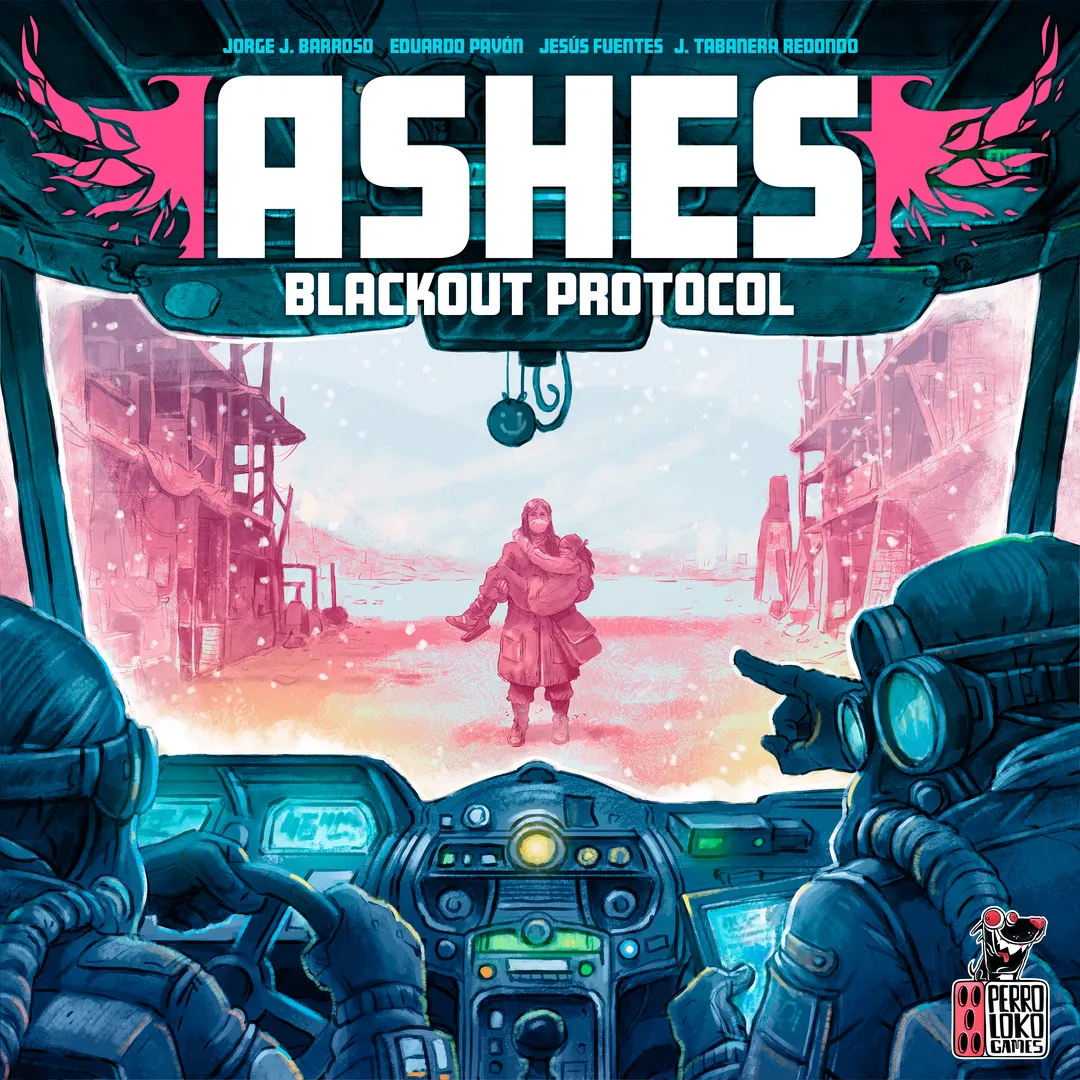
ASHES: Blackout Protocol ist ein Brettspiel aus dem Jahr 2026 für 1–4 Personen, mit 60–120 Minuten pro Partie und ab 14 Jahren. Entwickelt wurde es von Jorge J. Barroso, Jesús Fuentes und Eduardo Pavón; die wichtigsten Mechaniken sind Income, Point to Point Movement und End Game Bonuses.




Auf Englisch
A.S.H.E.S. (Artificial Shelter & Human Evacuation Sequence) From the ashes, the Phoenix will rise. After decades of political tension, the world fell victim to the Great Nuclear War of 1989. In a matter of days, cities were reduced to rubble and the skies burned with fire. Amid the devastation, the remaining survivors united to secure humanity's future. Ancient evacuation systems were reactivated, and the first underground shelters were built. Thus, the A.S.H.E.S. Protocol — Artificial Shelter & Human Evacuation Sequence — was born: a vast network of underground colonies designed to preserve what remained of the human race. Two years later, the last survivors work tirelessly to rescue civilians, rebuild civilization, and develop a project capable of restoring life to the surface: Project Phoenix. In A.S.H.E.S.: Blackout Protocol, you will lead one of these colonies in its struggle for survival. Rescue civilians, expand your shelter network, construct new facilities, and contribute to the development of Project Phoenix—the initiative that may one day restore hope to humanity. HOW TO PLAY The game is played over three rounds. The player with the most Victory Points at the end of the game wins. On your turn, choose one of the following actions: 1. Perform one protocol at Your Base Take a survivor from your base and place them on an action space of your personal board to perform one of the game's main actions: Build Shelters, Install upgrades in the Project Phoenix, or Rescue Survivors. You will also gain a production bonus: Fuel, Data, a Mission Card, or Colony Strength. Build Shelters Use your Colony Strength to construct new shelters capable of housing additional civilians. Gain immediate rewards and receive valuable income at the end of each round. Install upgrades in the Project Phoenix Craft materials and gather data to unlock upgrades for your colony while contributing to humanity's most ambitious undertaking. Rescue Survivors Bring survivors from the wasteland into your shelters to gain immediate benefits and recurring income. Once a shelter is filled, you may flip it to its completed side, sacrificing its income in exchange for a greater Victory Point reward each round. 2. Move Your Evacuation Vehicle Spend Fuel to move your vehicle to a different location on the board. Your vehicle allows you to transport civilians to safety, perform additional actions, and collect materials needed to support Project Phoenix. ADDITIONAL ACTIONS In addition to your main action, you may: Complete a Mission Card from your hand. Craft materials for Project Phoenix. Decontaminate survivors. Seal completed shelters. Search for new survivors. END OF THE ROUND At the end of each round, radiation spreads across the wasteland. Any civilians who remain unrescued on the board will suffer its effects, reducing your Happiness. END OF THE GAME The game ends after the third round. The player with the most Victory Points wins. A.S.H.E.S. Protocol completed. Active shelters: 12 Civilians evacuated: 1,742 Project Phoenix — Phase I initiated "From the ashes, we endure."
Laut Katalog unterstützt ASHES: Blackout Protocol 1–4 Personen. Diese Spanne entspricht der vom Verlag angegebenen Spielerzahl, das Spiel lässt sich also für jede Gruppengröße innerhalb dieser Spanne aufbauen. Aufbau, einzelne Regeln und Wertungsdetails können je nach Personenzahl trotzdem abweichen; prüfe daher die genaue Konfiguration in der Anleitung deiner Ausgabe.
Die angegebene Spieldauer für ASHES: Blackout Protocol beträgt 60–120 Minuten. Das ist die Schätzung des Verlags für eine vollständige Partie. Die tatsächliche Dauer hängt von der Gruppe, der Personenzahl und der Regelkenntnis ab: Erste Partien dauern meist länger, erfahrene Gruppen sind oft schneller fertig. Aufbau und Regelerklärung sind in dieser Schätzung nicht enthalten.
Im Katalog wird ASHES: Blackout Protocol ab 14 Jahren empfohlen. Das ist die Empfehlung des Verlags und berücksichtigt Leseanforderungen, Regelkomplexität und Kleinteile, nicht nur das Thema. Jüngere Kinder können oft mit Hilfe eines Erwachsenen mitspielen; beachte die Altersangabe deiner Ausgabe und die Brettspielerfahrung deiner Gruppe.
ASHES: Blackout Protocol hat bei BoardGameGeek eine Komplexitätswertung von 3,6 von 5 und gilt damit als mittelschweres Spiel. Die Wertung zeigt, wie viel Regelwissen, Planung und Entscheidungen eine typische Partie verlangt. Schwerere Spiele brauchen bei der ersten Erklärung mehr Zeit, daher hilft vor dem Spieleabend eine Vorbereitungsanleitung.
ASHES: Blackout Protocol gehört zu diesen Kategorien: Territory Building, Science Fiction und Civilization. Die wichtigsten Mechaniken sind Income, Point to Point Movement und End Game Bonuses. Kategorien beschreiben Thema und Setting eines Spiels, Mechaniken dagegen, was die Spielenden in ihrem Zug tatsächlich tun. Jede Mechanik führt zu einer Katalogseite mit ähnlichen Spielen, falls du etwas Vergleichbares suchst.
Als Autoren von ASHES: Blackout Protocol sind angegeben: Jorge J. Barroso, Jesús Fuentes und Eduardo Pavón. Diese Angaben stammen aus den veröffentlichten Spieldaten und nennen die für das Spieldesign verantwortlichen Personen, nicht die Illustratoren oder Verlage. Die Autorenseiten auf MeepleRules sammeln weitere Titel derselben Autoren – praktisch, wenn dir ein Spiel gefällt und du ähnliche Spiele suchst.
Im Katalog ist ASHES: Blackout Protocol als Grundspiel aufgeführt. Es lässt sich eigenständig mit dem Material aus der Schachtel spielen und benötigt keinen weiteren Titel. Erweiterungen, sofern es welche gibt, ergänzen neues Material oder neue Regeln und sind im Katalog separat mit einem Verweis auf dieses Grundspiel aufgeführt.