
- BGG-Rang
- BGG #3.932
- BGG-Bewertung
- 6,8
Billabong
- 2–4 Spieler
- 30 Min.
- Komplexität 1,9/5
- 1992
1955
Regelhilfe für Bantu
Verständliche Erklärungen zu Spielzügen, Karteneffekten und strittigen Situationen mit Verweisen auf offizielle Quellen und gespeichertem Fragenverlauf.
Was möchtest du wissen?
Antworten stammen aus dem offiziellen Regelheft, mit Seitenangabe zum Nachprüfen.
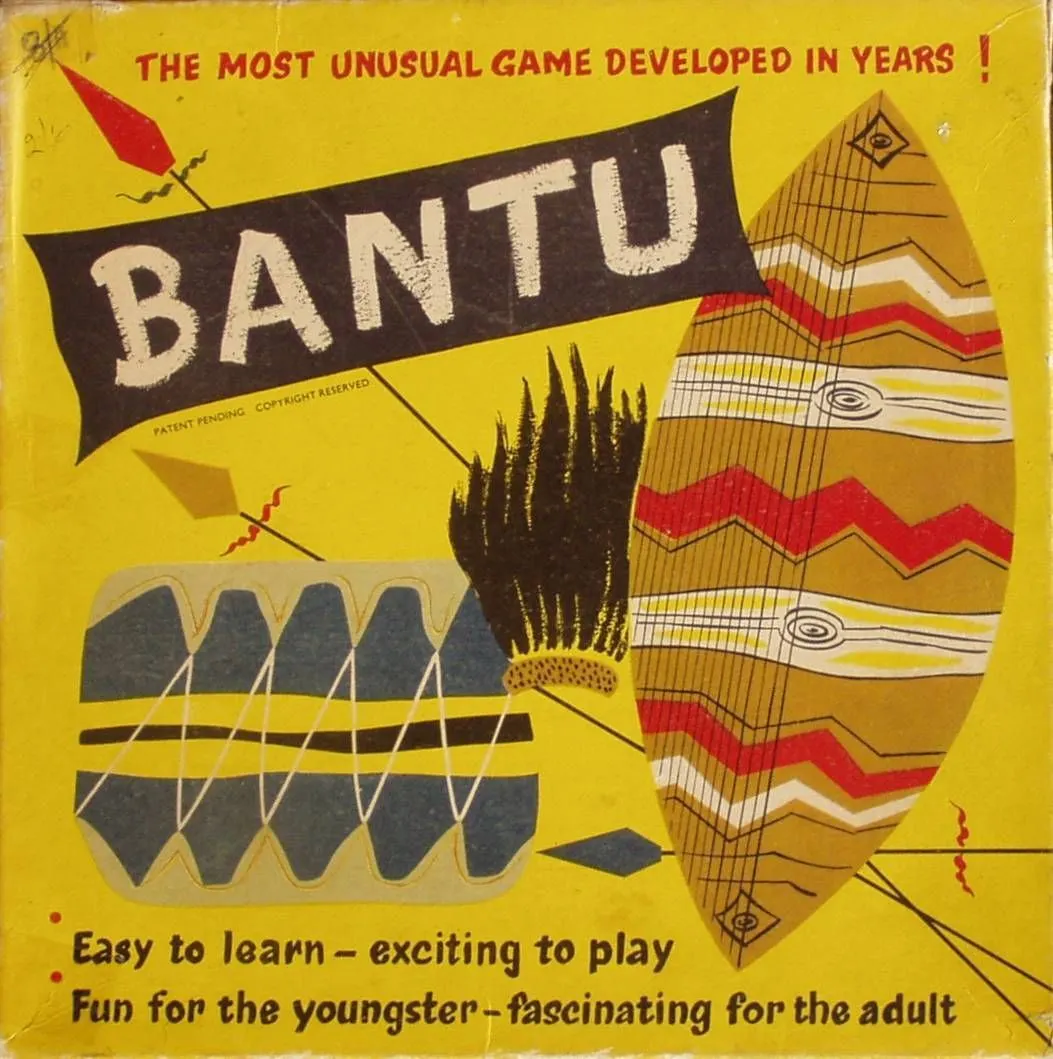
Bantu ist ein Brettspiel aus dem Jahr 1955 für 2–4 Personen, mit 30 Minuten pro Partie und ab 8 Jahren.






Auf Englisch
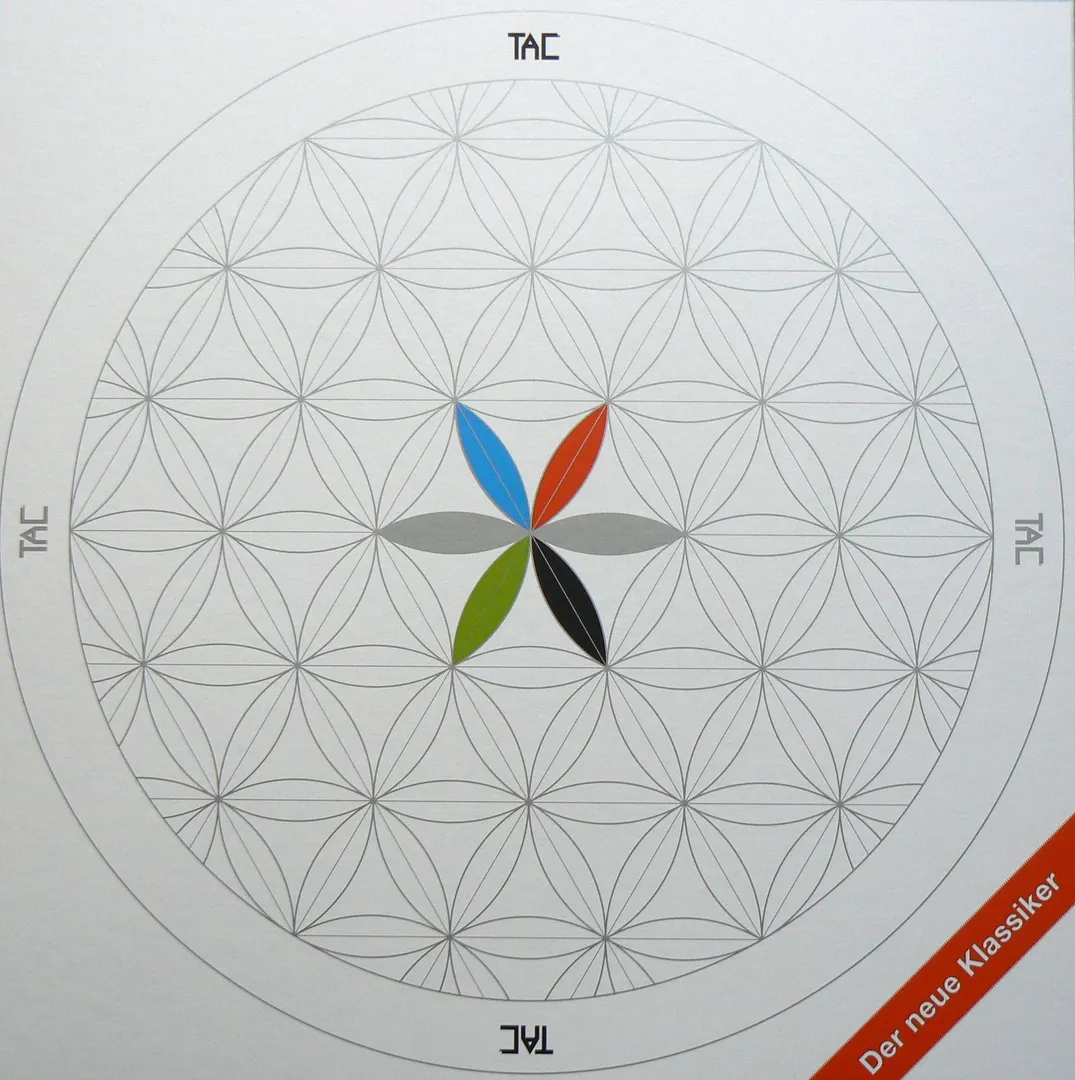
This is the earliest known racing game that does not use dice for the engine, or even contain any elements of luck (according to Parlett and others). A 2nd edition was never published. It was reviewed by Phil Orbanes in Games and Puzzles Magazine #68 under the heading of "Great Games that Never Made It." It has been modified slightly and released as a kit by Paul Jefferies, who renamed it Sack to fit his newly applied theme. In addition to Games and Puzzles #68 (reprinted in Games International (Issue 4 – April 1989)) and Parlett's The Oxford History of Board Games, Bantu has recently been discussed in Abstract Games Magazine. This is a racing game. The track is circular, with four lanes, with some interaction and crossing over between lanes. Each player (2-4) has four pawns numbered 1-4. This number indicates the distance the pawn may move per turn, and where it may be entered onto the board (the fastest pawn (4) must travel the full distance, but each successively slower pawn travels one fourth less distance than its predecessor, so that the (1) pawn travels only one quarter of the board). Pawns may not jump others nor may two pawns occupy the same space. Ending a turn on a space occupied by an opponent's pawn causes the opponent's pawn to be returned to its starting position. Pawns of any ownership that lie on spaces connected by a shaded background add their values together for determining movement. So a (red 1), (blue 4), (green 3) that all lie within the same shaded area would give the first pawn to move, 8 spaces. A player must use all movement without retracing his path on that turn. If the player can not use the entire movement then the pawn can not be moved. If none of his pawns may be moved the entire amount then the player forfeits that turn. First to bear all pawns off wins.
Laut Katalog unterstützt Bantu 2–4 Personen. Diese Spanne entspricht der vom Verlag angegebenen Spielerzahl, das Spiel lässt sich also für jede Gruppengröße innerhalb dieser Spanne aufbauen. Aufbau, einzelne Regeln und Wertungsdetails können je nach Personenzahl trotzdem abweichen; prüfe daher die genaue Konfiguration in der Anleitung deiner Ausgabe.
Die angegebene Spieldauer für Bantu beträgt 30 Minuten. Das ist die Schätzung des Verlags für eine vollständige Partie. Die tatsächliche Dauer hängt von der Gruppe, der Personenzahl und der Regelkenntnis ab: Erste Partien dauern meist länger, erfahrene Gruppen sind oft schneller fertig. Aufbau und Regelerklärung sind in dieser Schätzung nicht enthalten.
Im Katalog wird Bantu ab 8 Jahren empfohlen. Das ist die Empfehlung des Verlags und berücksichtigt Leseanforderungen, Regelkomplexität und Kleinteile, nicht nur das Thema. Jüngere Kinder können oft mit Hilfe eines Erwachsenen mitspielen; beachte die Altersangabe deiner Ausgabe und die Brettspielerfahrung deiner Gruppe.
Bantu hat bei BoardGameGeek eine Komplexitätswertung von 2,0 von 5 und gilt damit als eher leichtes Spiel. Die Wertung zeigt, wie viel Regelwissen, Planung und Entscheidungen eine typische Partie verlangt. Schwerere Spiele brauchen bei der ersten Erklärung mehr Zeit, daher hilft vor dem Spieleabend eine Vorbereitungsanleitung.
Bantu gehört zu diesen Kategorien: Abstract Strategy und Racing. Kategorien beschreiben Thema, Setting und Stil eines Spiels, nicht seine Regeln. Filtere den Katalog nach derselben Kategorie, um ähnliche Spiele zu finden, wenn dir Bantu gefallen hat und du etwas Vergleichbares für den nächsten Spieleabend suchst.
Im Katalog ist Bantu als Grundspiel aufgeführt. Es lässt sich eigenständig mit dem Material aus der Schachtel spielen und benötigt keinen weiteren Titel. Erweiterungen, sofern es welche gibt, ergänzen neues Material oder neue Regeln und sind im Katalog separat mit einem Verweis auf dieses Grundspiel aufgeführt.