

- BGG-Rang
- BGG #8.175
- BGG-Bewertung
- 6,5
Football Strategy
- 2–4 Spieler
- 150 Min.
- Komplexität 1,6/5
- 1959
1960
Regelhilfe für Baseball Strategy
Verständliche Erklärungen zu Spielzügen, Karteneffekten und strittigen Situationen mit Verweisen auf offizielle Quellen und gespeichertem Fragenverlauf.
Für 2 Personen
Was möchtest du wissen?
Antworten stammen aus dem offiziellen Regelheft, mit Seitenangabe zum Nachprüfen.
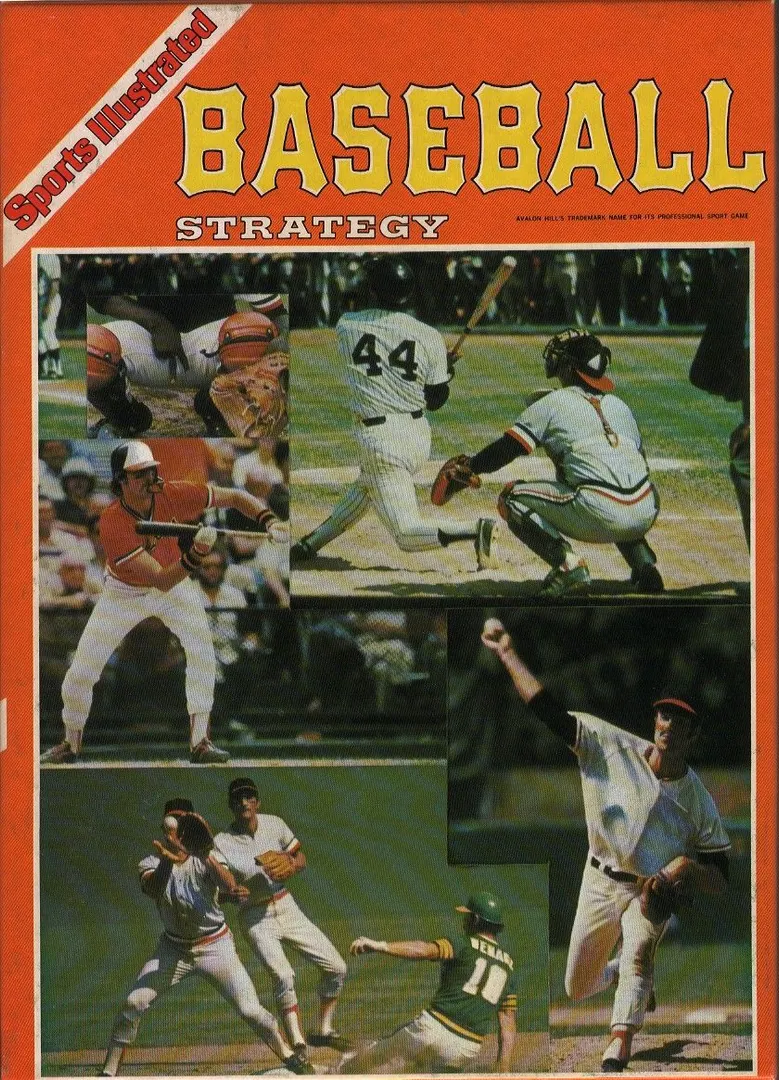
Baseball Strategy ist ein Brettspiel aus dem Jahr 1960 für 2 Personen, mit 60–90 Minuten pro Partie und ab 12 Jahren. Entwickelt wurde es von Don Greenwood und Thomas N. Shaw; die wichtigsten Mechaniken sind Hand Management, Memory und Simulation.







Auf Englisch
Welcome to the best FTF fantasy baseball board game ever created. This baseball game is for people who like meat and potatoes with a side of greens. It is the whole enchilada. When playing it you will use your intuition or feel to pick up patterns leading to decisions to outwit your opponent. If you can deal with, "Take that!", you will like this game. Baseball Strategy is not meant for the shy, but the hearty. Great baseball action. Thrilling too! Never a dull moment and you will actually feel like a batter or a pitcher, manager or a base coach, etc. when you play this game. Then you can live out your fantasies of being a big-league ball player! At least that's the idea is promoting here and what's wrong with that? Let's face it. Even if you just played wiffle ball in your backyard, haven't you fantasied hitting one into the upper deck at Tiger Stadium, especially having seen a slugger do that many times in your life? It would be nice to hear the cheers as you formally rounded the bases with alacrity to score. Baseball Strategy seems to capture the psychological battle between pitcher and batter quite well. Experience the excitement of getting a bases loaded, bases clearing double when you anticipated the pitch correctly, but you will also experience the agony when you don't! This game is unlike any other baseball game this author has ever played. There are rules for series play in order to give proper rest to pitchers where the entire pitching staff is used and not just the "Aces". Series play is highly recommended to have a full "baseball fantasy" playing experience. The game now even has variant injury possibilities, video replay challenges, robs of hit opportunities, MLB Defensive "Leather Larceny" Highlight Plays, setting the infield at DP depth and more. This fantasy is a cat and mouse game (and vice versa) hiding in plain sight where the two gamers enter a complex matrix of double blind decisions that lead to the inevitable think and counter-think, out witting duel. Gamers begin by first selecting their lineups from imaginary players or actual players by converting their stats to the game's parameters. (This is easily done from mlb.com on the net or baseball-reference.com.). If you don’t like agony, this game isn’t for you! Enter The Matrix: The Defensive team is the manager and catcher, selecting pitch types (Fast Ball, Off Speed, Pitch out, etc.) to send batters fuming back to the dugout, sometimes with specific outs in a certain situation. Batters attempt to get a hit, get on base or at the least make an out that moves runners into scoring position/ or of course, scoring. (that's the idea, right?) Each tries to anticipate the other's tendencies throughout the game in order to "exploit" them. After a pitch card is played by the pitcher, the batter must then select a type of offense/ball in play strategy (Steal, Bunt, Hit and Run, Long Ball, etc.)The results of the two choices are found by cross indexing them on a result matrix table. Players can decide on the size of ballpark before the game.
Laut Katalog unterstützt Baseball Strategy 2 Personen. Das ist die vom Verlag angegebene Spielerzahl, das Spiel ist also genau für diese Anzahl von Mitspielenden ausgelegt. Varianten für andere Gruppengrößen sind, sofern vorhanden, in der Anleitung deiner Ausgabe beschrieben; prüfe sie, bevor du eine andere Konfiguration aufbaust.
Die angegebene Spieldauer für Baseball Strategy beträgt 60–90 Minuten. Das ist die Schätzung des Verlags für eine vollständige Partie. Die tatsächliche Dauer hängt von der Gruppe, der Personenzahl und der Regelkenntnis ab: Erste Partien dauern meist länger, erfahrene Gruppen sind oft schneller fertig. Aufbau und Regelerklärung sind in dieser Schätzung nicht enthalten.
Im Katalog wird Baseball Strategy ab 12 Jahren empfohlen. Das ist die Empfehlung des Verlags und berücksichtigt Leseanforderungen, Regelkomplexität und Kleinteile, nicht nur das Thema. Jüngere Kinder können oft mit Hilfe eines Erwachsenen mitspielen; beachte die Altersangabe deiner Ausgabe und die Brettspielerfahrung deiner Gruppe.
Baseball Strategy hat bei BoardGameGeek eine Komplexitätswertung von 1,9 von 5 und gilt damit als leichtes Spiel. Die Wertung zeigt, wie viel Regelwissen, Planung und Entscheidungen eine typische Partie verlangt. Schwerere Spiele brauchen bei der ersten Erklärung mehr Zeit, daher hilft vor dem Spieleabend eine Vorbereitungsanleitung.
Baseball Strategy gehört zu diesen Kategorien: Dice, Memory und Sports. Die wichtigsten Mechaniken sind Hand Management, Memory und Simulation. Kategorien beschreiben Thema und Setting eines Spiels, Mechaniken dagegen, was die Spielenden in ihrem Zug tatsächlich tun. Jede Mechanik führt zu einer Katalogseite mit ähnlichen Spielen, falls du etwas Vergleichbares suchst.
Als Autoren von Baseball Strategy sind angegeben: Don Greenwood und Thomas N. Shaw. Diese Angaben stammen aus den veröffentlichten Spieldaten und nennen die für das Spieldesign verantwortlichen Personen, nicht die Illustratoren oder Verlage. Die Autorenseiten auf MeepleRules sammeln weitere Titel derselben Autoren – praktisch, wenn dir ein Spiel gefällt und du ähnliche Spiele suchst.
Im Katalog ist Baseball Strategy als Grundspiel aufgeführt. Es lässt sich eigenständig mit dem Material aus der Schachtel spielen und benötigt keinen weiteren Titel. Erweiterungen, sofern es welche gibt, ergänzen neues Material oder neue Regeln und sind im Katalog separat mit einem Verweis auf dieses Grundspiel aufgeführt.