
- BGG-Bewertung
- 8,5
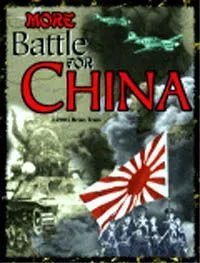
More Battle for China
- 2–3 Spieler
- 180 Min.
- Komplexität 3,0/5
- 2001
1999
Regelhilfe für Battle for China
Verständliche Erklärungen zu Spielzügen, Karteneffekten und strittigen Situationen mit Verweisen auf offizielle Quellen und gespeichertem Fragenverlauf.
Was möchtest du wissen?
Antworten stammen aus dem offiziellen Regelheft, mit Seitenangabe zum Nachprüfen.
Battle for China ist ein Brettspiel aus dem Jahr 1999 für 2–3 Personen, mit 360 Minuten pro Partie und ab 12 Jahren. Entwickelt wurde es von Brian Train; die wichtigsten Mechaniken sind Area Movement, Dice Rolling und Simulation.




Auf Englisch
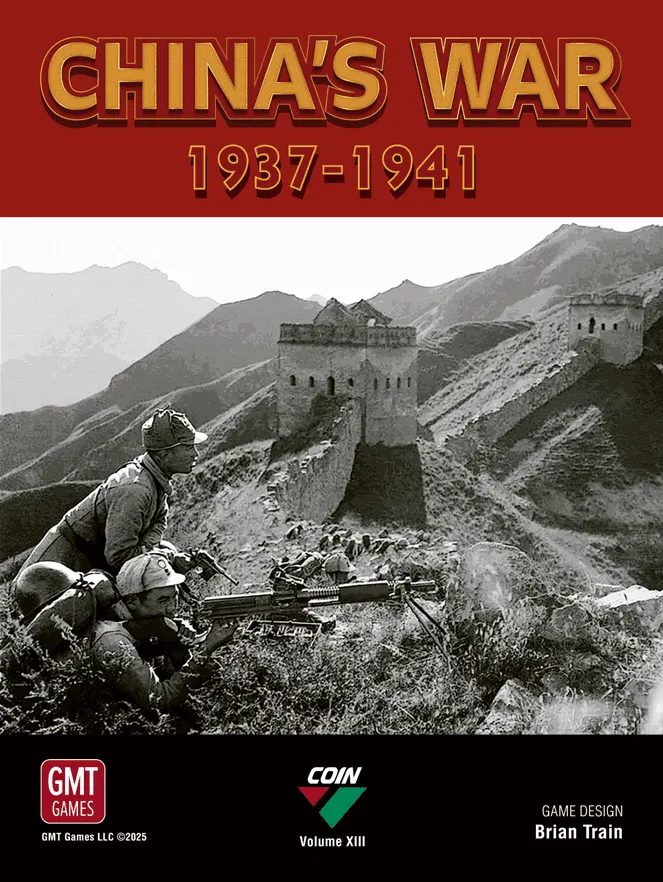
Battle for China is a board game simulation of the War of Resistance against Japan from the initial Japanese invasion in July 1937 to the end of 1941. The game is designed for two players, one directing the military forces acting to defend China against the Japanese invaders (the Chinese Player) and the other the forces of Imperial Japan (the Japanese Player). The game can also be played with a third player taking the Chinese Communist forces. Game comes with a map depicting China, 150 miles to an inch. It is divided into multiple areas, with one or more areas corresponding appproximately to a province. Units are abstract, each representing approximate Corps and Armies for the Chinese and Divisions and Brigades for the Japanese. The Japanese translation of the game came out in Command Magazine Japan #42. It features die-cut counters, an enlarged map, and integrates the More Battle for China expansion kit (more rules, two extra half-maps and more counters to game out the rest of World War Two (1942-45) and the Civil War (1947-49)). June 2009: Fiery Dragon productions has come out with "Battle for China Deluxe", a special edition of the game that includes the expansion kit More Battle for China. The package includes: - 44-page integrated rulebook for all three games, with coil binding - two red dice - 12 cards for the various charts and tables for the three games - 5 sheets of counters, for a total of 480 counters - consisting of the three sheets for the original game, and two new ones for the expansion. Counters might still be a bit thin for some tastes (but then they would not fit in the box) but the diecutting is good. - 3 maps, the original 11x17" central map plus the north and south 8x11" extensions (Siberia-Manchuria and Siam-Burma-India, respectively). The North map matches up well and obviously. For the South map the area north of Burma-1 is Burma-3, and the area north of Burma-2 is Burma-4. The unnamed area north of India-8 is Nepal and is impassable. This was the last version of Battle for China to appear before the Decision Games edition of the basic 1937-41 game in late 2009. Production of the deluxe version is limited, fewer than 125 copies I believe. When the Decision Games edition appears, the designer will post an updated and integrated set of rules and charts for the expansion kit, along with homemade redrawn extension maps to fit the larger 22x34" map. The counter sheets provided do not need to be changed, but be advised that the counters in the Decision Games edition have been changed to iconic style, with a different format. Re-implemented by: Battle for China, 1937-1941 (Second Edition)
Laut Katalog unterstützt Battle for China 2–3 Personen. Diese Spanne entspricht der vom Verlag angegebenen Spielerzahl, das Spiel lässt sich also für jede Gruppengröße innerhalb dieser Spanne aufbauen. Aufbau, einzelne Regeln und Wertungsdetails können je nach Personenzahl trotzdem abweichen; prüfe daher die genaue Konfiguration in der Anleitung deiner Ausgabe.
Die angegebene Spieldauer für Battle for China beträgt 360 Minuten. Das ist die Schätzung des Verlags für eine vollständige Partie. Die tatsächliche Dauer hängt von der Gruppe, der Personenzahl und der Regelkenntnis ab: Erste Partien dauern meist länger, erfahrene Gruppen sind oft schneller fertig. Aufbau und Regelerklärung sind in dieser Schätzung nicht enthalten.
Im Katalog wird Battle for China ab 12 Jahren empfohlen. Das ist die Empfehlung des Verlags und berücksichtigt Leseanforderungen, Regelkomplexität und Kleinteile, nicht nur das Thema. Jüngere Kinder können oft mit Hilfe eines Erwachsenen mitspielen; beachte die Altersangabe deiner Ausgabe und die Brettspielerfahrung deiner Gruppe.
Battle for China hat bei BoardGameGeek eine Komplexitätswertung von 2,9 von 5 und gilt damit als eher leichtes Spiel. Die Wertung zeigt, wie viel Regelwissen, Planung und Entscheidungen eine typische Partie verlangt. Schwerere Spiele brauchen bei der ersten Erklärung mehr Zeit, daher hilft vor dem Spieleabend eine Vorbereitungsanleitung.
Battle for China gehört zu diesen Kategorien: Wargame und World War II. Die wichtigsten Mechaniken sind Area Movement, Dice Rolling und Simulation. Kategorien beschreiben Thema und Setting eines Spiels, Mechaniken dagegen, was die Spielenden in ihrem Zug tatsächlich tun. Jede Mechanik führt zu einer Katalogseite mit ähnlichen Spielen, falls du etwas Vergleichbares suchst.
Als Autoren von Battle for China sind angegeben: Brian Train. Diese Angaben stammen aus den veröffentlichten Spieldaten und nennen die für das Spieldesign verantwortlichen Personen, nicht die Illustratoren oder Verlage. Die Autorenseiten auf MeepleRules sammeln weitere Titel derselben Autoren – praktisch, wenn dir ein Spiel gefällt und du ähnliche Spiele suchst.
Im Katalog ist Battle for China als Grundspiel aufgeführt. Es lässt sich eigenständig mit dem Material aus der Schachtel spielen und benötigt keinen weiteren Titel. Erweiterungen, sofern es welche gibt, ergänzen neues Material oder neue Regeln und sind im Katalog separat mit einem Verweis auf dieses Grundspiel aufgeführt.